


 Africana55 Radio

This website uses cookies so that we can provide you with the best user experience possible. Cookie information is stored in your browser and performs functions such as recognising you when you return to our website and helping our team to understand which sections of the website you find most interesting and useful.
The governments of the four UK nations have agreed that up to three households will be allowed to get together between 23 and 27 December.
The official advice is to avoid travelling if you can. “The safest way to spend Christmas and the festive period is to stay within your own household, in your own home and your own local area,” says the Scottish government.
“Consider ways to celebrate Christmas in other ways, such as the use of technology and meeting outdoors, without bringing households together or travelling between different parts of the country,” says the UK government in its advice for people in England.
Nevertheless, many travel restrictions across the four administrations and between tiers will be lifted for Christmas Day and for the two days on either side.
The decision is likely to put pressure on the UK’s transport network.
The travel team at The Independent has been assessing the impact – and the options for people wanting to make long-distance journeys.
What travel restrictions will there be?
The current coronavirus travel rules will be relaxed to allow people to spend Christmas together in bubbles of up eight people from up to three households. The government says: “You can travel between tiers and UK nations for the purposes of meeting your Christmas bubble.”
Accordingly, travel restrictions across the four administrations and between tiers will be lifted from 23 to 27 December. That means there will be no legal obstacles to travel anywhere in the UK, whether within England, Wales, Scotland and Northern Ireland or between them, so long as you joining a Christmas bubble.
Because of the extra travel issues between Northern Ireland and Great Britain, there will be a day on either side – on 22 and 28 December – for these specific journeys.
The measure is not intended to apply to leisure travel.
How bad will the traffic be?
While Christmas travel patterns in the past have been fairly predictable, the coronavirus pandemic is making advance estimates difficult.
For retail traffic, the AA predicts that Saturday 19 December will be the busiest. For cross-country journeys to see family, tt is likely that 23 December will be the busiest day: it will still be a normal working day for many people, and is likely to see a surge in traffic from people wanting to take maximum advantage of the “Christmas Ease” window.
Christmas Eve, particularly later in the day, is likely to be much quieter, and 25 December itself will be calm.
Because Boxing Day and 27 December fall at the weekend, there will be no significant commuter traffic. But there may be long queues for the sales, which are likely to start that weekend.
The morning of 28 December may be busy if people overstretch the definition of the Christmas window.
Where are the likely trouble spots on the roads?
If previous Christmas congestion provides an indication, the M25 orbital motorway around London is likely to be bad – all the way around from the M23 south to Gatwick and Brighton to the A12 to the north and east. The motorways through Kent should be quiet because hardly anyone will be travelling across the Channel due to the quarantine requirement on return from France.
The motorway network around Birmingham could get congested, and stretches of the M6 all the way from the West Midlands to Lancashire could be problematic.
After Christmas, areas near key shopping locations may be particularly busy.
But with no comparable data, it may turn out to be very different – either with jams popping up in unexpected places, or with roads blissfully clear of traffic. And last year, the busiest day was actually a full week before Christmas.
Can I rent a car?
Yes, if you are quick to book and able to pay more than usual. Because of the rail problems, or perhaps because they don’t want to travel with other passengers, many people may opt to rent a vehicle.
At Birmingham airport, Hertz has no rental cars available from 23 to 27 December. In Edinburgh, a Fiat 500 from from the Avis city centre branch that would normally cost £104 for four days is £95 higher – a 91 per cent increase..
What’s happening on the trains?
The 19 million British people without access to a car could find their journey plans thwarted or extremely crowded.
The usual Christmas Day shutdown and almost complete closedown on Boxing Day will cut the number of days available for travel from five to three – putting a lot of pressure on the remaining “window” days.
Both 23 December and Christmas Eve are likely to be very busy, with problems exacerbated by the early closedown of rail services on 24 December – typically in the early evening.
Long-distance rail operators are insisting on reservations. Most Advance tickets are now available, but many trains have already sold out.
Seating capacity is limited to around 50 per cent of the usual level because of social distancing, and the age-old custom of buying an open ticket and travelling on any train – even if you have to stand between London and Newcastle – will not be permitted.
The transport secretary, Grant Shapps, has advised prospective rail passengers to consider alternatives. is going ahead as normal (with a small reduction on some lines on 24 December).
What about the traditional Christmas engineering work?
Long-planned projects are going ahead as expected, though with some adjustments around the edges to allow a few more trains to run.
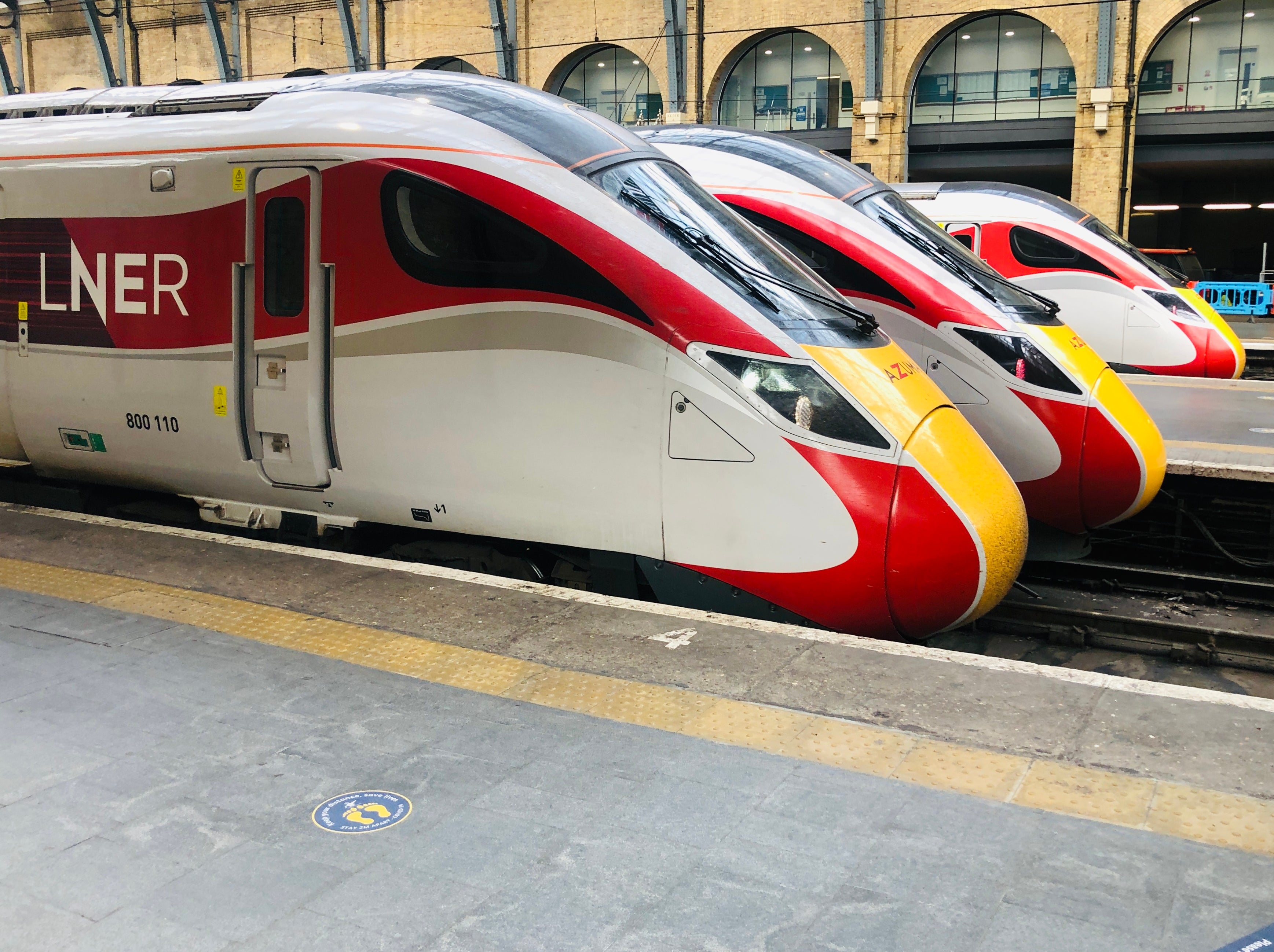
Widespread engineering works mean that journeys back after Christmas get-togethers could be fraught. London King's Cross, the hub for the flagship East Coast main line, will be closed completely – with no trains between the evening of Christmas Eve and the morning of New Year’s Eve.
Disruption will continue until Sunday 3 January. Passengers travelling from London to Yorkshire, Newcastle and Edinburgh will have to find alternatives. LNER trains will terminate at either Peterborough or Stevenage rather than London, with onward services provided by Thameslink to Finsbury Park – where passengers can change to the Tube.
On CrossCountry trains, the line between Bristol Temple Meads and Bristol Parkway is closed on 27 December, which means there will be no direct trains between the southwest, the Midlands and the northeast.
And on the line linking the capital with East Anglia, passengers for Colchester and Ipswich face travelling from London Liverpool Street to Stansted Airport – from where they will need to travel onwards by bus.
How much will tickets cost?
Many people have said that fares are much higher than a year ago. That is likely to be a result of intense demand on 23, 24 and 27 December, the three days on which long-distance rail travel is possible.
A surprising number of cheaper tickets are available during peak hours, especially in what is normally the morning rush-hour.
From London Euston to Liverpool on Avanti West Coast, fares on the first three trains of the day on 23 December are below £30 one way. But on most later trains the standard off-peak fare of £64 applies.
Similarly, between Glasgow and Inverness, there are very few trains on which an Advance fare of £23.80 is available; most services are priced at the Anytime fare of £46.
On some routes where Advance tickets are not yet available, prices are uniformly high.
For some long-distance journeys on Christmas Eve, only full fare tickets are available, including Cardiff to Manchester for £79.
How about coaches?
Over the past few Christmases, both National Express and Megabus have substantially increased the number of services – particular on 25 and 26 December when there are no long-distance trains.
But because they’ve endured such a brutal year there won’t be too much appetite for laying on speculative services. But there are some good-value tickets around, such as Newcastle to Manchester for £25 to £34 one-way on a choice of four different Boxing Day Megabus departures.
Airports?
They will be quieter than for decades, with very few people travelling. But certainly for anyone travelling between Scotland, Northern Ireland, and England there are a good few services – and at good prices, a month ahead.
On Ryanair between Edinburgh and London Stansted, flying out on Christmas Eve and back on 28 December, is just £19 return. (Travelling in the reverse direction on those dates is £58 return.)
And easyJet between Belfast International and Luton seats are still available going out from Northern Ireland on 23 December or Christmas Eve and returning from the capital on 27 December for £61 return.
What if I can’t get where I need to be as planned?
The relevant legislation states a get-together of up to three households can be extended “where one or more persons at the gathering has not been able to return to their home because of unforeseen disruption to travel”.
Anyone seeking to avail of this concession is likely to be asked to provide proof that their journey was disrupted.
All research updated on the afternoon of 6 December