


 Africana55 Radio
This website uses cookies so that we can provide you with the best user experience possible. Cookie information is stored in your browser and performs functions such as recognising you when you return to our website and helping our team to understand which sections of the website you find most interesting and useful.
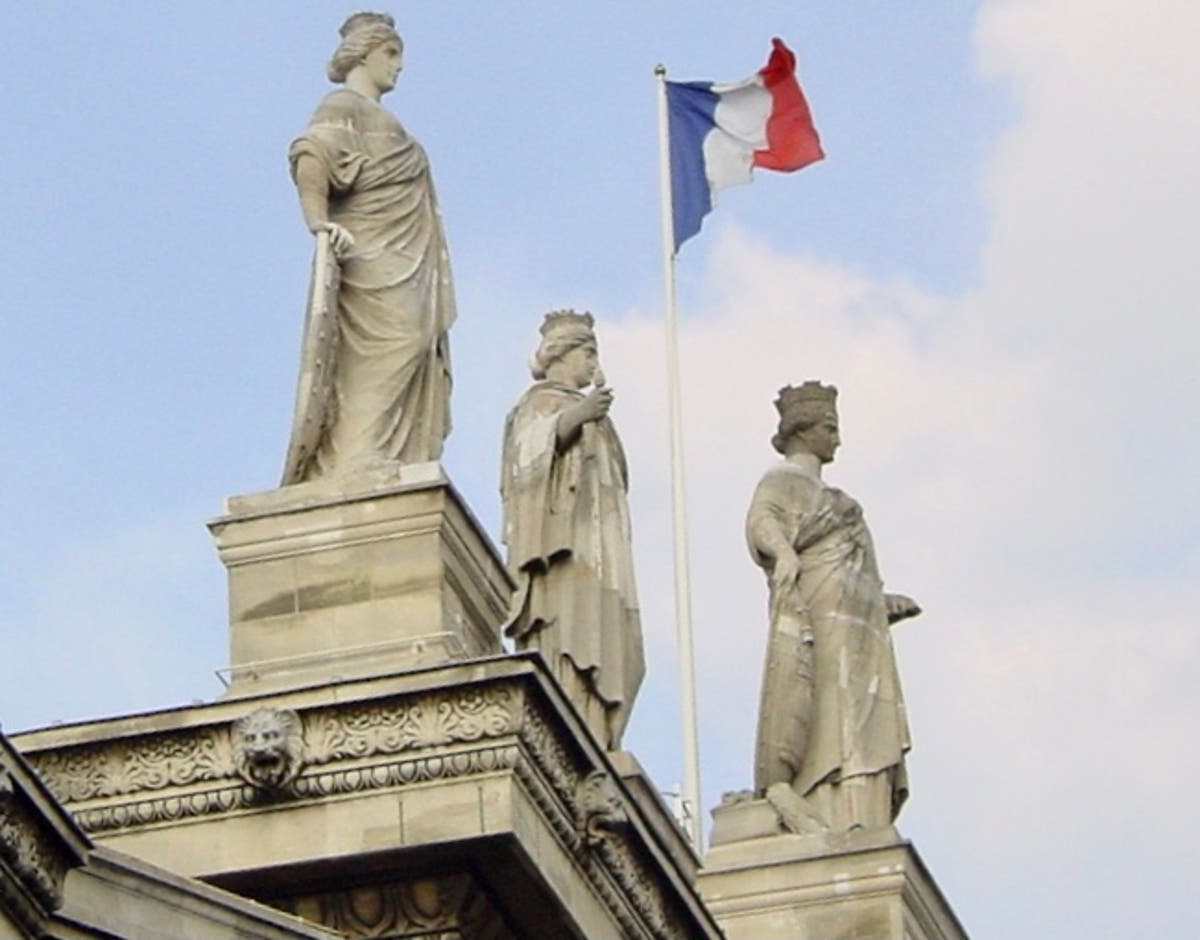
The French ban on British travellers that began on 18 December 2021 has ended.
These are the key questions and answers about travel from the UK to France .
What do I need to travel to France?
As a British traveller going on holiday, visiting family or friends or embarking on a business trip, you will need proof of full vaccination. For the purposes of crossing the frontier, that comprises being double-jabbed with Pfizer, AstraZeneca or Moderna, or a single Janssen dose.
You can upload the QR certificates generated by the NHS showing your vaccinations to the TousAntiCovid app.
This is most easily done using a smartphone with a download of the NHS certificates.
Must I take a test?
Yes. You must have a negative result to a Covid test (lateral flow will do; PCR not necessary) taken within 24 hours of departure to France. This must be privately obtained and paid for; you cannot use an NHS test.
Any forms to fill in?
Yes, two. The first is the passenger arrival form. When you complete this, note that the UK is Royaume-Uni on the drop-down menu.
There is a “zipcode” requirement for your birthplace – unless you were born in France, type 999.
When it asks, “What type of accommodation will you be staying in?” select “Individual accommodation”. Do not select “Jail”, one of the other options on the drop-down menu.
You will need to give an approximate location for where you are staying, for which a zipcode is required. For example, tap 75 into the drop-down menu for Paris and choose the appropriate option for the arrondisement where you will stay.
The document generated is likely to state that you are required to self-isolate for 10 days. This is not accurate. Quarantine is not required any more for fully vaccinated travellers from the UK.
You must also sign a “sworn undertaking to comply with rules for entry” – asserting that you have not been suffering from coronavirus symptoms and “have no knowledge of having been in contact with a confirmed case of Covid-19 during the last 14 days”.
This simple one-page form can be downloaded from near the foot of this document. Ferry firms and airlines may have their own version for you to sign.
What is the position for unvaccinated travellers?
Travel is permitted only for “compelling reasons” such as urgent family issues – but with mandatory quarantine on arrival.
What do I need for travel within France?
Proof that you have been fully vaccinated – which has a tighter definition than simply being double jabbed.
Broadly, all adults who had their second jab over seven months ago must have proof of a booster vaccination.
This weekend the rules toughen, as part of the French president’s plan to cheese off unvaccinated citizens.
The key to enjoying venues in France is the TousAntiCovid smartphone app. It is well designed and intuitive to use, with instructions in clear English.
You can upload the QR codes from NHS vaccinations to the app. Once done, you can tap on “Health pass” to get a QR code that every venue will be keen to scan. You need to use the “Activity” version (for access to venues such as restaurants and museums), not the “Border” one.
Up to now the TousAntiCovid pass has been acceptable with evidence of a negative test or recovery. From some point in the very near future (probably Monday 17 January) it will only apply for people who have been vaccinated.
The term being used is a pass vaccinal, which will also be generated from the TousAntiCovid app.
What about children?
The rules are expected to apply equally to everyone aged 12 and over. Under 12s need not be vaccinated nor take tests.
For proof of vaccination, 16-plus people should be able to access the NHS app. Children aged 12-15, or their parents, can apply online for an NHS Covid Pass letter, which is then posted out to them
The big problem for young British people is that many have received only one jab, which does not count for the purposes of entering France.
For access to venues within France, children aged 12 to 17 are expected to have to prove vaccination, but not being boosted.
How soon will normal transport services to France resume?
Ferry firms, Eurotunnel shuttles (carrying cars from Folkestone to Calais) and Eurostar trains (carrying passengers from London to Paris) have been running services throughout. Ferry operators are reporting “phones red hot” as travellers book trips to France.
Eurostar currently runs only two trains each way between London St Pancras and Paris Nord. The train operator will increase frequency “in line with demand”. There are nine daily returns scheduled for February half term.
Airlines are ramping up quickly. Jet2 says its ski flights to France will begin again on 22 January, one week after the ban is lifted.
Steve Heapy, chief executive of Jet2, said: “This is the positive news that skiers and snowboarders have been looking forward to, and the spike in bookings for ski flights has been both sharp and immediate.
“The snow conditions in the French Alps are said to be excellent, meaning our customers are jumping at the chance to get back on the slopes.
“We know how much our customers want to get back to the French Alps and we are very pleased to be flying them there again from next weekend onwards.”
I only want to drive through France to get somewhere else. Do I need to go through all this?
Yes. You must also meet all requirements for your destination country.
What do I need to do to come back to the UK?
Book a so-called “day two” test (lateral flow will do) to be taken on the day you return or either of the following days, and use the reference number to complete a passenger locator form. More details in this explainer.
Why was a ban imposed on British travellers?
When France closed its borders to UK visitors on Saturday 18 December, the Interior Ministry in Paris said the move was “in response to the extremely swift spread of the Omicron variant in the UK”.
The ban applied regardless of the traveller’s vaccination status. A few “compelling reasons” were permitted for travel from the UK to France, including the automatic right for French citizens to return and for EU nationals to pass through to their main place of residence.
Exemptions were later extended to include essential business trips and for British residents of other European Union nations to be able to transit to their homes on the Continent.
Why did the French ban continued for so long?
The frontiers were closed for almost four weeks. The original purpose – concern about the rapid spread of the Omicron variant – has long since been futile. Since the start of the year, France has had a rate of new Covid infections roughly twice as high as the UK, almost all of them attributable to Omicron.
The ban was very damaging: emotionally to many people deprived of family visits and holidays, and economically to ferry, train and air operators as well as the French tourism industry.
The kindest explanation of why France continued with the pointless closure of its frontiers for so long is that there were fears that large numbers of British visitors testing positive for coronavirus could add to the pressure on the French health service.
But politics provides more plausible explanations – in particular the need leaders around the world feel to look tough by imposing travel bans.
Some say the French ban was a political response to the UK’s bizarre decision in July 2021 to create a special “amber plus” category in coronavirus travel rules, requiring all arrivals from France to quarantine.
British ministers ascribed that effective travel ban to a Covid variant of concern prevalent on the French island of Réunion, but have never fully explained why the isle itself was exempt from the category.
In addition, opening frontiers to Brits while closing down big events in France and making people work from home is unlikely to prove popular – except among people and businesses who benefit directly from UK tourism.
But the continuation of a pointless travel ban may simply have been yet another example of the tendency of governments to be very swift to impose Covid restrictions yet to be very slow to ease them.
Do other countries have a blanket ban on British travellers?
China, Australia, New Zealand and other nations in the Asia-Pacific region have very strict rules in force against arrivals from most or all foreign locations, which amount to travel bans.
Elsewhere, restrictions are less onerous – although the Foreign Office says: “Entry to Turkmenistan is prohibited except for Turkmen nationals and accredited diplomats, permanently registered foreigners and some employees of international companies and organisations.”
What is the general view on travel bans?
The World Health Organization (WHO) does not believe they do much good. On 30 November 2021, as concern grew about the Omicron variant of coronavirus, the body said: “Blanket travel bans will not prevent the international spread, and they place a heavy burden on lives and livelihoods.
“In addition, they can adversely impact global health efforts during a pandemic by disincentivising countries to report and share epidemiological and sequencing data.”