


 Africana55 Radio

This website uses cookies so that we can provide you with the best user experience possible. Cookie information is stored in your browser and performs functions such as recognising you when you return to our website and helping our team to understand which sections of the website you find most interesting and useful.
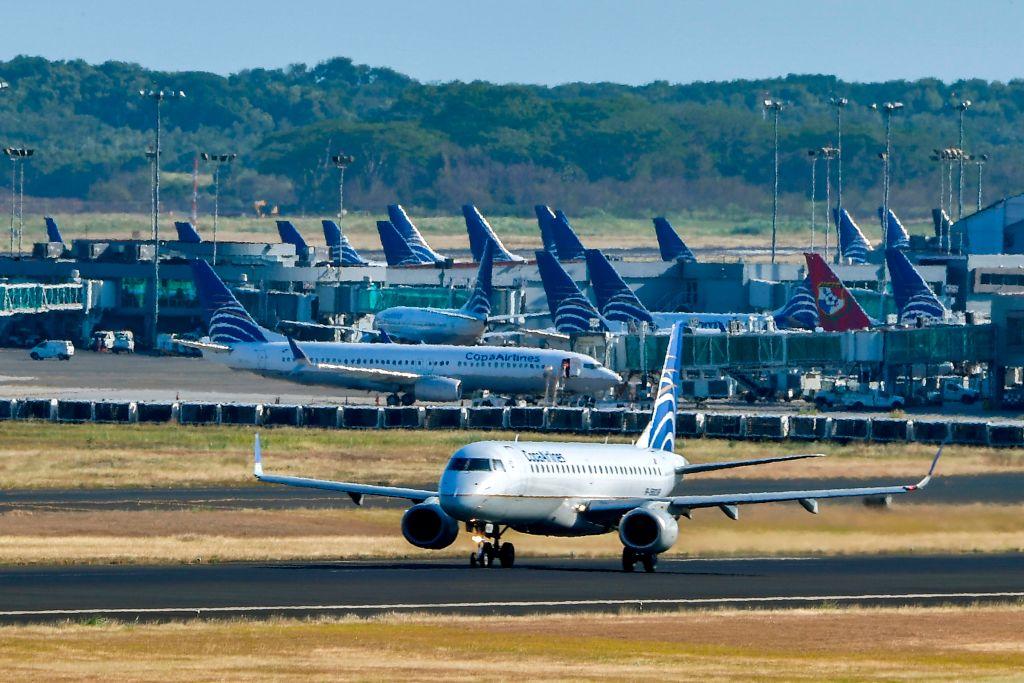
The airline industry will wear the scars of the coronavirus pandemic for a very long time.
On 19 March, Qantas announced it was grounding its entire international fleet. American Airlines suspended three quarters of its long haul international flights on 16 March.
Significant demand shocks aren’t new to the airline industry. In this century alone, it has weathered the storms caused by the 2001 September 11 attacks and the 2002-04 Severe Acute Respiratory Syndrome (SARS) pandemic.
But we have never before seen a shock of this magnitude affecting the entire world for what looks as if it will be a very long time.
So, will the airline industry be able to handle this predicament? What role will and should the governments play? And, when all this is over, what will have changed for good?
Many airlines can’t survive as they are
Right now, the name of the game, not only for the airlines but for most businesses, is liquidity – having money regularly coming in through the door.
An otherwise-solvent enterprise incapable of securing sufficient liquidity to cover its current costs can be forced into bankruptcy, and extreme uncertainty doesn’t help.
Although the airline industry had a good decade overall, finishing each of the last ten years in the black, its profit margins remain low, and profitability differences between regions and carriers are rather high.
Most airlines only have enough cash reserves to cover a few months of their fixed costs (costs that have to be paid regardless of whether their planes are flying).
Three options
The dynamics of the disease's spread suggest that the extreme disruption we are seeing will stay with us for many months.
Governments will have to make hard decisions.
Broadly, they’ve three options:
- let the struggling private airlines fall
- offer them liquidity to help weather the storm
- nationalise them, as the Italian government already has with Alitalia
I expect governments to use (and misuse) all three, with a significant number of small airlines (and potentially several mid-sized airlines) going out of business in the process.
Created with Sketch.
Created with Sketch.
1/29 Saudi Arabia
An eerie emptiness enveloped the sacred Kaaba in Mecca's Grand Mosque, Islam's holiest site, where attendance at Friday prayers was hit by measures to protect against coronavirus
AFP via Getty
2/29 China
An empty street in Wuhan. Hubei will relax travel restrictions to allow healthy people to move within the hard-hit province
AFP via Getty
3/29 Thailand
The Legend Siam theme park, usually attracts up to 20,000, mainly Chinese customers, a day in the high season, is temporarily closed due to the lack of visitors during the coronavirus outbreak
AFP via Getty
4/29 Italy
An empty Piazza Duomo in Milan
Getty
5/29 US
Aerial photo shows the Covid-19 isolation and monitoring site, where the first patient Joey Camp is being isolated at Hard Labor Creek State Park, about 50 miles east of Atlanta
Atlanta Journal-Constitution via AP
6/29 Spain
Aerial view taken of the Ipurua stadium in Eibar while the Spanish league football match SD Eibar against Real Sociedad is played behind closed doors in light of the coronavirus outbreak
AFP via Getty
7/29 Albania
An aerial view of empty Tirana's outer ring. Albania has stepped up measures to contain the spread of Covid-19 caused by the novel coronavirus and banned circulation of all cars (except ambulances and supplies) for 3 days and urged people to stay home as the number of infected people increased to 33
AFP via Getty
8/29 Iraq
An empty cafe during a curfew imposed by Iraqi Kurdish authorities, following the outbreak of coronavirus, near the castle in the old city of Erbil
Reuters
9/29 South Korea
An aerial view shows hygiene officials riding a vehicle disinfecting public buses at a depot in Gwangju
EPA
10/29 Belgium
A woman runs though the nearly empty historic center of Antwerp
AP
11/29 China
Jingyue bridge, spanning the Yangtze river, leading to Hubei province
AFP via Getty
12/29 Vietnam
Formula One Vietnam Grand Prix race track in Hanoi
AFP via Getty
13/29 Spain
Restaurant terraces remain closed at the usually overcrowded Plaza Mayor in central Madrid
AFP via Getty
14/29 Thailand
Tourist buses parked on a lot near Suvarnabhumi Airport in Bangkok
AFP via Getty
15/29 Poland
An aerial view of Jagiellonian University's new campus during the 2 weeks closure of universities, schools, museums and other public facilities in Krakow
Getty
16/29 Italy
A canal and the roads next to it are seen completely empty in Venice
Getty
17/29 Greece
An aerial view taken with a drone showing the yard of an empty school at Nafplio, Peloponnese
EPA
18/29 Saudi Arabia
An aerial view shows an empty white-tiled area surrounding the Kaaba in Mecca's Grand Mosque
AFP via Getty
19/29 Italy
Rome's office district EUR, at what would have otherwise been rush hour, virtually empty after a government decree has limited circulation
AP
20/29 Italy
Galleria Vittorio Emanuele in Milan
Getty
21/29 Thailand
Legend Siam theme park in Pattaya
AFP via Getty
22/29 Belgium
Empty shelves in a supermarket in Brussels
AFP via Getty
23/29 Iran
A satellite view shows Tehran airport
Maxar Technologies via Reuters
24/29 Italy
The deserted Via Manzoni street in Milan
Reuters
25/29 Saudi Arabia
AFP via Getty
26/29 Italy
An empty street and canal in Venice
Reuters
27/29 Thailand
An aerial photo shows unused tourist buses parked on a lot near Suvarnabhumi Airport in Bangkok
AFP via Getty
28/29 China
An almost empty street in Wuhan
AFP via Getty
29/29 Poland
A view of the deserted Krakowskie Przedmiescie and tahe Old Town Square in Warsaw
EPA
1/29 Saudi Arabia
An eerie emptiness enveloped the sacred Kaaba in Mecca's Grand Mosque, Islam's holiest site, where attendance at Friday prayers was hit by measures to protect against coronavirus
AFP via Getty
2/29 China
An empty street in Wuhan. Hubei will relax travel restrictions to allow healthy people to move within the hard-hit province
AFP via Getty
3/29 Thailand
The Legend Siam theme park, usually attracts up to 20,000, mainly Chinese customers, a day in the high season, is temporarily closed due to the lack of visitors during the coronavirus outbreak
AFP via Getty
4/29 Italy
An empty Piazza Duomo in Milan
Getty
5/29 US
Aerial photo shows the Covid-19 isolation and monitoring site, where the first patient Joey Camp is being isolated at Hard Labor Creek State Park, about 50 miles east of Atlanta
Atlanta Journal-Constitution via AP
6/29 Spain
Aerial view taken of the Ipurua stadium in Eibar while the Spanish league football match SD Eibar against Real Sociedad is played behind closed doors in light of the coronavirus outbreak
AFP via Getty
7/29 Albania
An aerial view of empty Tirana's outer ring. Albania has stepped up measures to contain the spread of Covid-19 caused by the novel coronavirus and banned circulation of all cars (except ambulances and supplies) for 3 days and urged people to stay home as the number of infected people increased to 33
AFP via Getty
8/29 Iraq
An empty cafe during a curfew imposed by Iraqi Kurdish authorities, following the outbreak of coronavirus, near the castle in the old city of Erbil
Reuters
9/29 South Korea
An aerial view shows hygiene officials riding a vehicle disinfecting public buses at a depot in Gwangju
EPA
10/29 Belgium
A woman runs though the nearly empty historic center of Antwerp
AP
11/29 China
Jingyue bridge, spanning the Yangtze river, leading to Hubei province
AFP via Getty
12/29 Vietnam
Formula One Vietnam Grand Prix race track in Hanoi
AFP via Getty
13/29 Spain
Restaurant terraces remain closed at the usually overcrowded Plaza Mayor in central Madrid
AFP via Getty
14/29 Thailand
Tourist buses parked on a lot near Suvarnabhumi Airport in Bangkok
AFP via Getty
15/29 Poland
An aerial view of Jagiellonian University's new campus during the 2 weeks closure of universities, schools, museums and other public facilities in Krakow
Getty
16/29 Italy
A canal and the roads next to it are seen completely empty in Venice
Getty
17/29 Greece
An aerial view taken with a drone showing the yard of an empty school at Nafplio, Peloponnese
EPA
18/29 Saudi Arabia
An aerial view shows an empty white-tiled area surrounding the Kaaba in Mecca's Grand Mosque
AFP via Getty
19/29 Italy
Rome's office district EUR, at what would have otherwise been rush hour, virtually empty after a government decree has limited circulation
AP
20/29 Italy
Galleria Vittorio Emanuele in Milan
Getty
21/29 Thailand
Legend Siam theme park in Pattaya
AFP via Getty
22/29 Belgium
Empty shelves in a supermarket in Brussels
AFP via Getty
23/29 Iran
A satellite view shows Tehran airport
Maxar Technologies via Reuters
24/29 Italy
The deserted Via Manzoni street in Milan
Reuters
25/29 Saudi Arabia
AFP via Getty
26/29 Italy
An empty street and canal in Venice
Reuters
27/29 Thailand
An aerial photo shows unused tourist buses parked on a lot near Suvarnabhumi Airport in Bangkok
AFP via Getty
28/29 China
An almost empty street in Wuhan
AFP via Getty
29/29 Poland
A view of the deserted Krakowskie Przedmiescie and tahe Old Town Square in Warsaw
EPA
The main argument that will be used for not allowing airlines to fail will be that connectivity will be an important driver of the post-crisis recovery.
This wider economic benefit will be emphasised by the governments that choose to bail out or nationalise their carriers.
Big airlines might get help, even if they’re weak
I expect larger carriers to receive priority treatment by governments based on the fact that they provide more connectivity, sometimes without regard to their long term viability.
This means that once the pandemic is over, travellers will likely find a more concentrated airline market, with fewer carriers in operation. A greater proportion of them will be government owned.
To start with, flight frequency will be lower and planes might be emptier, depending on the fleet mix the surviving airlines will use.
Whether prices will be higher or lower will depend on the interplay of demand and supply.
Fewer airlines and fewer flights would tend to drive airfares up, while lower demand and lower fuel prices after what is shaping up to be a global recession would drive airfares down. The net outcome is anyone’s guess.
I also expect an acceleration of product unbundling (food, drinks, baggage allowances and so on being sold separately), especially if recovery is slow and surviving airlines are under pressure to cut costs.
Last but not least, I should mention that it’s not only the airlines. Airports, aircraft manufacturers, and air navigation service providers will also find themselves under financial stress as demand evaporates.
The COVID-19 pandemic will stress-test the entire civil aviation industry, and when it is over – at least in the first months and maybe for years – the travelling public will return to an industry that has changed.
Volodymyr Bilotkach is an Associate Professor at Singapore Institute of Technolog. This article first appeared on The Conversation.