


 Africana55 Radio

This website uses cookies so that we can provide you with the best user experience possible. Cookie information is stored in your browser and performs functions such as recognising you when you return to our website and helping our team to understand which sections of the website you find most interesting and useful.

Want to bookmark your favourite articles and stories to read or reference later? Start your Independent Membership today.
Already a member? Log in
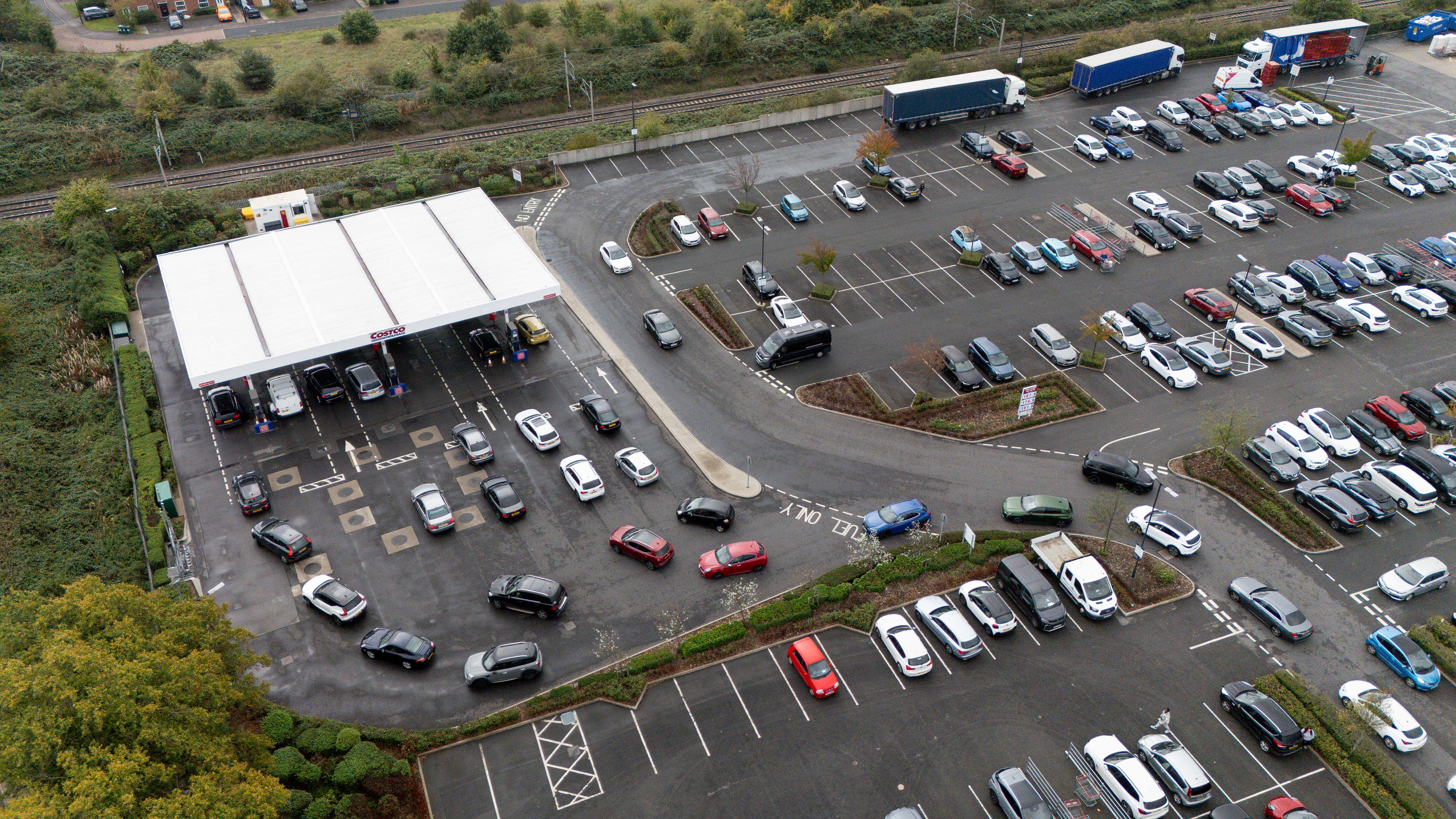
The shock rise in the cost of diesel could push Britons’ food bills even higher, an expert has warned, as the fuel’s price hitting £2 a litre for the first time becomes a supply chain issue.
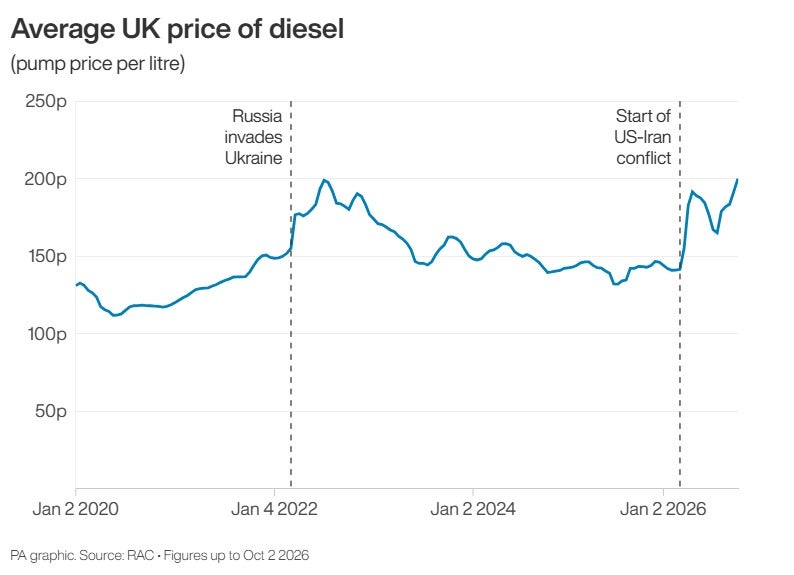
Fuel analysis by the RAC showed that diesel has risen to a record of 200.01p a litre, up from 199.79p on Thursday.
This means the cost of filling up an average family car now stands at £110, according to the RAC – close to £32 more than at the start of the United States’ war with Iran in February.
The RAC’s head of policy, Simon Williams, said that it was a threshold that “no one wanted to cross”.
“This will be very challenging for households and companies that drive a lot of miles, from commuters, haulage and delivery firms, businesses with large fleets all the way through to sole traders”, he said.
The price increase will have knock-on effects for other essential parts of household budgets as the rising cost of moving goods works its way through the supply chain, according to Dr Jonathan Owens, operations and supply chain expert at the University of Salford.
He said: “The impact will not stop at the petrol station. Almost everything we buy has travelled through a supply chain, often involving several diesel-powered journeys.
“Food, construction materials, manufactured goods and online deliveries are therefore all exposed to higher transport costs. That creates another source of inflationary pressure at precisely the point households and businesses can least afford it.”
Dr Owens believes that businesses will be watching the duration of these prices just as closely as the level itself.
“Companies can manage a short-lived spike; a sustained period around or above £2 will be much more difficult because it begins to influence contracts, pricing decisions, investment and ultimately consumer prices”, he added.
Transport research organisation New AutoMotive’s analysis of the government’s Fuel Finder data shows 2,208 forecourts are now charging at least £2 a litre, compared with 562 just a week earlier.
Ben Nelmes, chief executive of New AutoMotive, said: “£2 a litre has gone from almost nowhere to almost everywhere in a matter of weeks.
“A typical diesel-driving family is suddenly looking at an extra £340 a year just to cover the same miles. That is a real hit to household budgets, and with the average price now above the all-time record, millions of drivers will be wondering how much worse this gets.
“Many drivers will be wondering whether this is the time to get an electric car – Ministers should use every tool in the box to help them to escape rising diesel prices and go electric.”
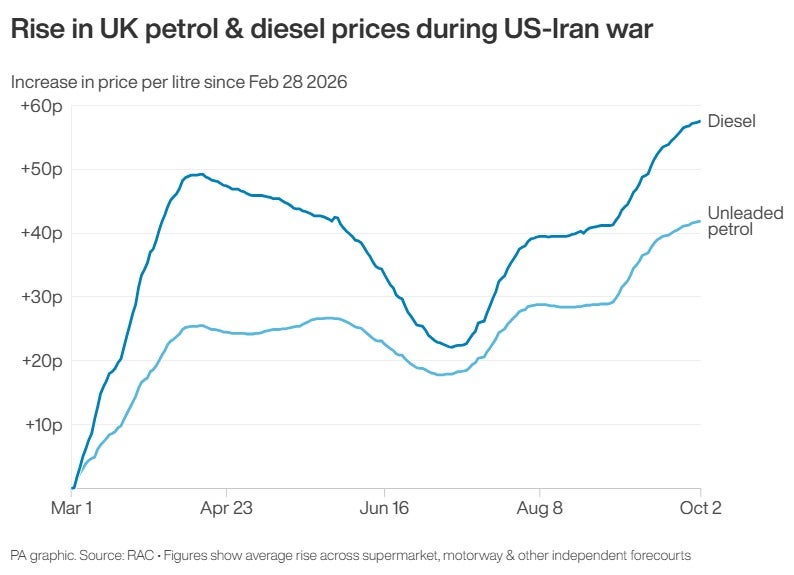
Petrol prices have also been on the rise, with a litre of unleaded now standing at 174.71p on average, around 42p more than at the start of the conflict. It means that the cost to fill an average-sized petrol car now stands at £96 overall.
Mr Williams added: “For an average 45mpg diesel car, the cost works out at an extraordinary 20p per mile, so a driver covering 10,000 miles a year is now spending £2,020 on fuel a year. Households will be tightening the purse strings, while businesses may have no option but to pass these additional costs onto customers.
“The previous highest price of 199.09p seen in June 2022 is already becoming a distant memory as the conflict in the Middle East continues with no sign of a deal to reopen the critical oil and gas shipping route through the Strait of Hormuz.”
The RAC said that drivers “will be looking to the government” to assist with the rising fuel bills by “lowering fuel duty further or reducing VAT in October’s budget”.
Similarly, Hannah Peaker, deputy chief executive at the New Economics Foundation, said the price rise is further proof that the country needs to reduce its exposure to shocks and reduce its dependence on fossil fuels.
She added: "For now, instead of discounting every litre - which will increase demand at the pump and subsidise those with greater means - the government should use the revenue from those who benefit from this latest shock to fund a targeted and temporary package of support for businesses.
The government has said people should not worry about diesel shortages, however,
Transport minister Keir Mather said Britain’s supply of diesel was “robust” and “resilient” and the country had a wide range of sources.
Britain joined crisis talks with Brussels on Thursday, as they discussed whether to release fuel stocks amid rocketing prices.
The UK imports nearly 55 per cent of its diesel. The US provides nearly a third of that amount.
Mr Mather told Sky News on Friday: “I want to reassure people this morning that the United Kingdom has got a diverse range of supply when it comes to diesel.
“We have resilience built into our system for that reason.
“We are working very closely with our US counterparts to stress the importance of that relationship, and the importance of sustaining flows of diesel around the world, but also working through international fora in the International Energy Agency and partners in Europe from whom we get a proportion of our diesel imports as well.”
He added: “Although prices have gone up at the pump, the government is aware of that and the freeze in fuel duty is still in place.
“People shouldn’t be concerned about shortages because of the inherent resilience that is built into that system.”