South Korea’s global influence is often introduced through the language of entertainment: K-pop, cinema, TV dramas, and the ever-expanding Korean Wave (Hallyu). Yet to experience the country firsthand is to discover that Hallyu is not simply something South Korea exports. It is a living, breathing landscape that visitors enter, participate in, and reinterpret for themselves. From storytelling and spicy food to fermentation and family-centred values, there is a surprising familiarity to Korean culture that draws travellers in, offering a sense of recognition while opening the door to a world deeply complex, historic, and continually evolving.
That journey of discovery has never been more accessible. With Virgin Atlantic launching its new direct service from London Heathrow to Seoul, reaching the heart of East Asia is a seamless affair. And the holiday starts from the moment you step onboard. Settle in, choose from more than 1,000 hours of onboard entertainment and let the Virgin Atlantic experience make the journey part of your holiday from the moment you take off.
Seoul: A city where culture is always in motion
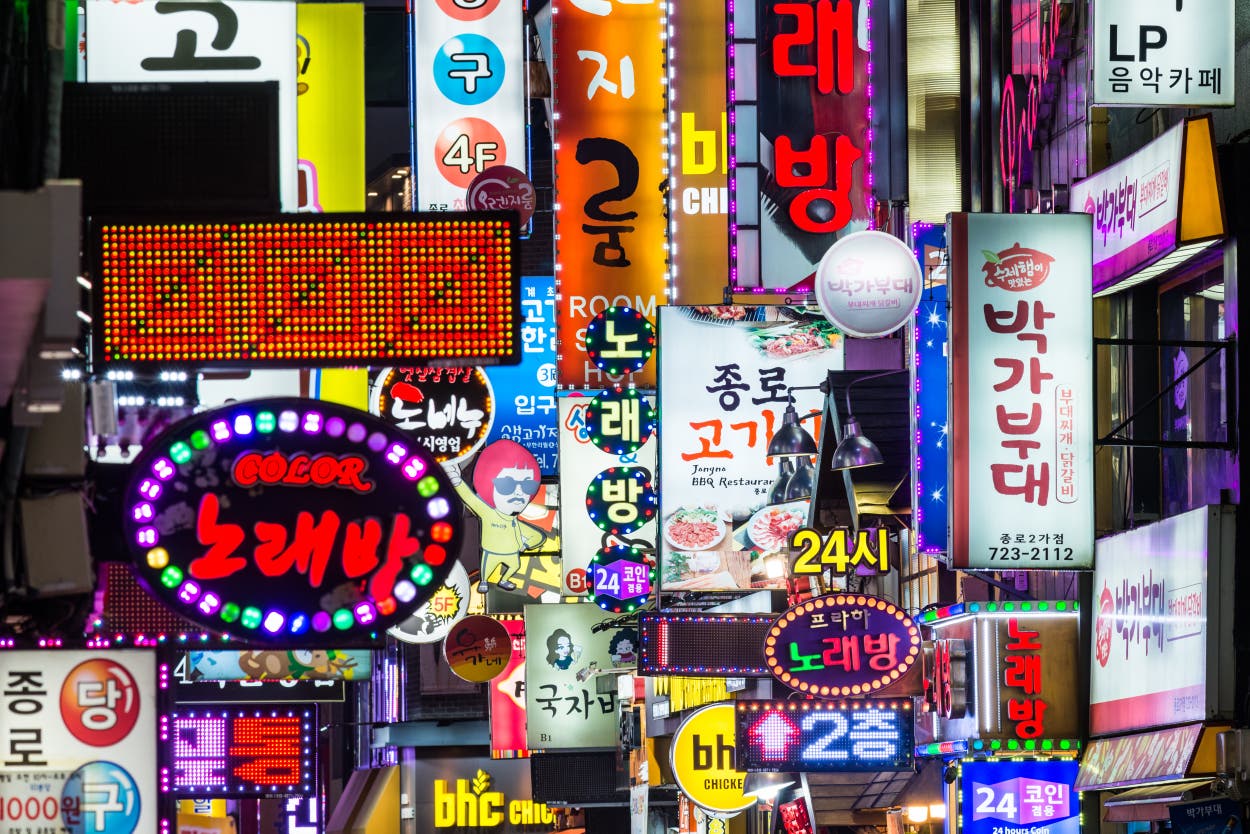
Seoul isn’t merely a backdrop to Korean culture; it is an engine where heritage and innovation shape the everyday rhythm of design, music, food, and fashion. Nowhere is this creative collision clearer than in Seongsu-dong. Once an industrial district dominated by shoe factories and manufacturing warehouses, Seongsu has transformed into Seoul’s creative epicentre. Here, weathered brick structures and repurposed industrial sites now house independent designer labels, concept retail spaces such as Musinsa Standard, and experimental culinary hubs. Pop-up exhibitions and gallery spaces change with remarkable frequency, ensuring the neighbourhood preserves traces of its working-class past while remaining perpetually fresh.
Beneath a dense canopy of glowing neon, Seoul’s vibrant entertainment districts seamlessly blend late-night noraebang (karaoke) rooms, indie venues, and local eateries (Getty Images)
For a different expression of the city’s creative energy, head towards Hongdae. Centred around Hongik University, this bustling district has long been synonymous with youth culture, street performance, and independent music. Beyond the global shine of mainstream K-pop exists a rich, underground ecosystem of indie, rock, hip-hop, and experimental musicians. Small venues and subterranean clubs offer intimate settings where emerging artists hone their craft. Events like Live Club Day allow visitors to explore multiple venues through a single pass, moving between celebrated spaces like Channel 1969 or stepping into the late-night nocturnal energy of Itaewon and Hannam at venues like Bolero.
Where ancient palaces sit beside neon-lit entertainment hubs within a remarkably compact footprint – that make Seoul such a captivating environment to explore
Yet for all its forward-looking intensity, Seoul’s historical roots are never far away. Standing in sharp contrast to the surrounding glass towers, royal landmarks such as Gyeongbokgung Palace offer essential grounding. Nearby, the historic districts of Ikseon-dong and Bukchon Hanok Village reveal a slower side of the capital, defined by tiled roofs, quiet stone-paved lanes, and restored traditional wooden houses (hanok). It is precisely these vivid contrasts – where ancient palaces sit beside neon-lit entertainment hubs within a remarkably compact footprint – that make Seoul such a captivating environment to explore.
Food: History, resilience, and the spirit of hospitality
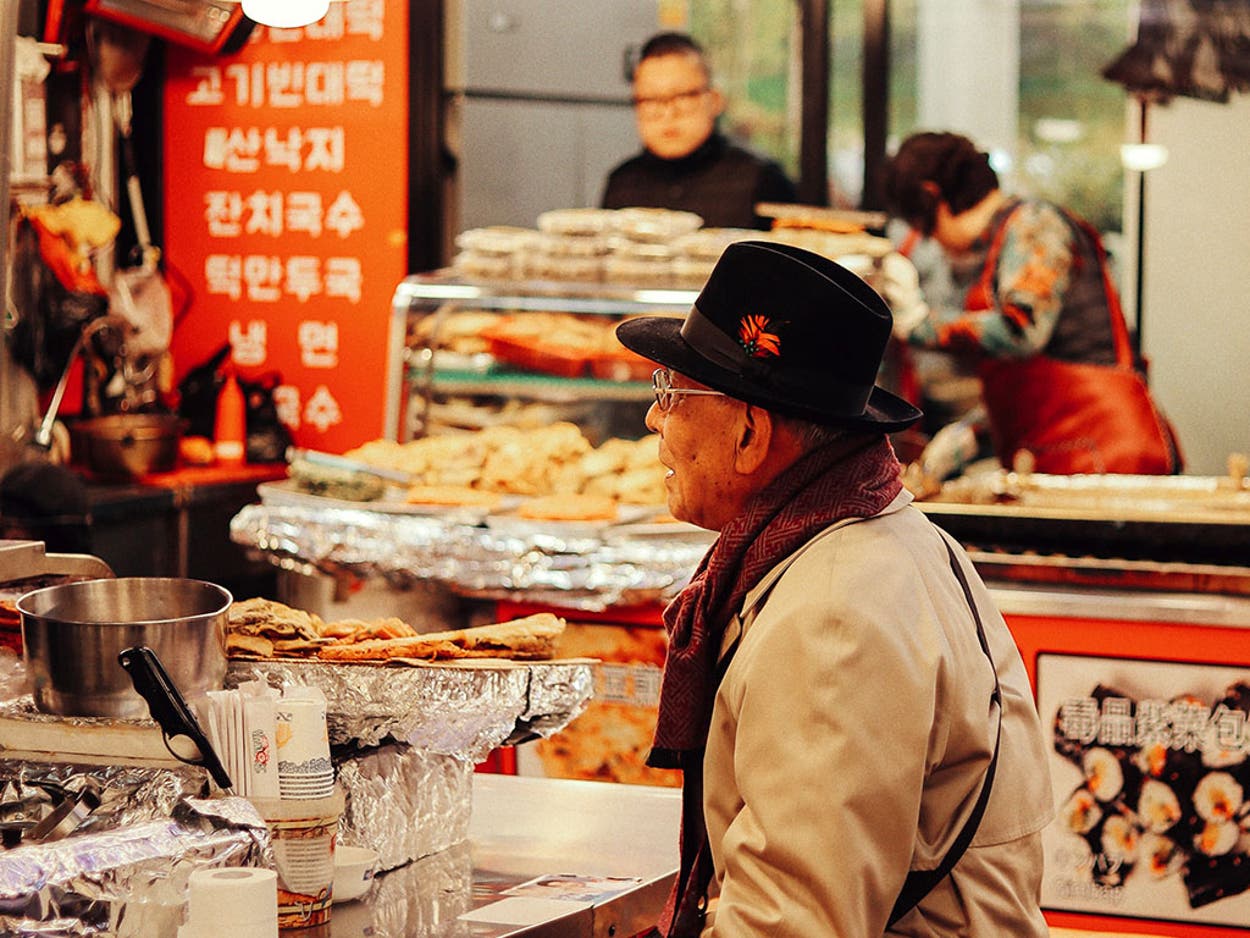
Food offers another immediate route into the Korean Wave, but Korean cuisine extends far beyond trending dishes. Its true depth lies in the relationship between seasonal ingredients, preservation, communal ritual, and historical resilience. Gwangjang Market serves as an ideal entry point for the uninitiated. Navigating its bustling aisles, visitors can pull up a bench to try bindaetteok – a golden, savoury mung-bean pancake – or sample fresh dumplings, hand-pulled noodles, and mayak gimbap. The market is best experienced slowly; its real magic lies as much in the movement, conversation, and shared wooden tables as in the dishes themselves.
Pushing up to a shared wooden bench at Gwangjang Market offers a front-row seat to South Korea's rich culinary heritage, from sizzling bindaetteok to steaming bowls of noodles (Virgin Atlantic Korea)
Other dishes tell fascinating stories about the nation's cultural evolution. Tteokbokki, now world-famous for its fiery, rich gochujang sauce, actually originated as a mild, soy-based dish served in royal courts. To sample its contemporary street-food identity, head to Sindang-dong Tteokbokki Town, where the dish evolved into the comfort food loved today. Meanwhile, the beloved social ritual of chimaek – the simple pairing of crispy fried chicken and cold beer – demonstrates how food seamlessly anchors contemporary urban life after dark.
Central to Korean dining is the concept of fermentation, represented by staples like kimchi, doenjang-jjigae (fermented soybean stew), and aged seafood. The practice of transforming and preserving ingredients reflects a historical determination to adapt and endure – a trait deeply embedded in the nation's story.
This warm exchange makes visitors feel less like tourists being served and more like guests welcomed into a home
This sense of connection extends naturally into Korean hospitality. Visitors will quickly encounter the practice of service (서비스) – the customary gesture of offering a small complimentary dish, dessert, or drink to welcome a guest (sonnim). More than mere generosity, these thoughtful extras encourage diners to sample unfamiliar flavours, turning an ordinary meal into a lasting, personal memory. In neighborhood restaurants across districts like Hannam-dong and Euljiro, this warm exchange makes visitors feel less like tourists being served and more like guests welcomed into a home.
From Capital to Coast: Taking the KTX to Busan
While Seoul could easily occupy a full itinerary, South Korea’s compact geography and efficient infrastructure make multi-centre travel effortless. Boarding the high-speed KTX train from Seoul Station whisks travellers south to Busan in just two and a half hours, swapping the capital's urban density for coastal landscapes and maritime history.
Busan introduces a noticeably different rhythm of Korean life. As a major port city, its identity is inextricably linked to the sea, best demonstrated at the famous Jagalchi Fish Market. Here, stallholders display a dizzying array of fresh seafood against the backdrop of the working harbour. Nearby, BIFF Square links Busan's food culture directly with its international cinematic heritage, hosting annual film festival events amidst vibrant street-food stalls.
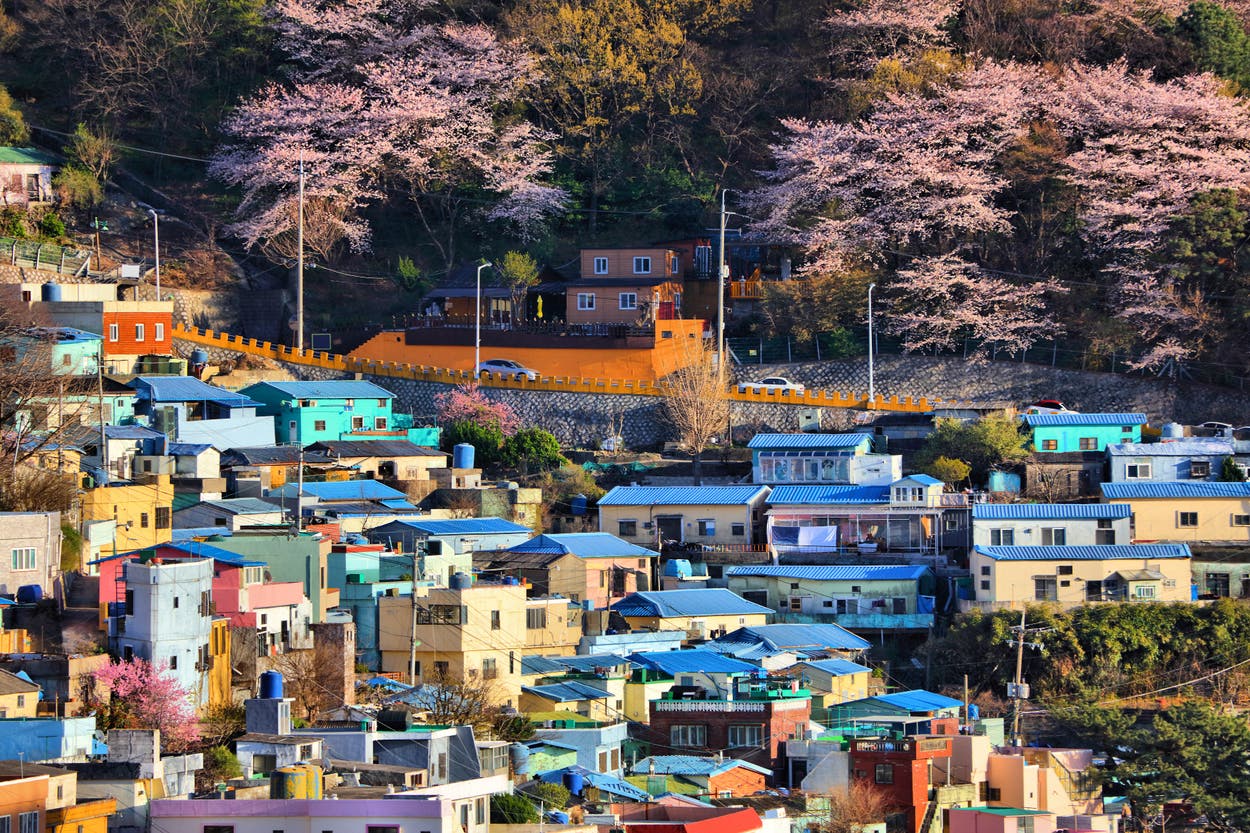
Framed by spring cherry blossoms, the colorful stacked houses of Gamcheon Culture Village showcase the maritime history and art-filled hillsides of Busan (Getty Images)
The coastal terrain also yields striking visual landscapes. Gamcheon Culture Village features colorful houses stacked along steep hillsides, connected by narrow alleyways filled with public art and sweeping ocean views. Further along the coastline, Haeundae Blueline Park repurposes a former seaside railway line, allowing visitors to ride the colorful Sky Capsule or Beach Train directly above the rocky shore. Together, Seoul and Busan present two complementary sides of South Korea: one defined by fast-paced contemporary culture, the other by coastal heritage and maritime traditions.
The journey begins at 30,000 feet
A destination as dynamic as South Korea deserves a journey that leaves you ready to experience every moment of it. Fly direct with Virgin Atlantic and the adventure begins long before you touch down, turning the journey from London to Seoul into the first chapter of your South Korean story.
For Upper Class customers, it starts at London Heathrow with a seamless journey through the dedicated Upper Class Wing, before settling into the award-winning Clubhouse for restaurant-style dining or a little downtime ahead of the flight. Onboard, whether you’re travelling in Economy, Premium or Upper Class, Virgin Atlantic’s famously warm and individual service helps make the journey feel every bit as memorable as the destination.
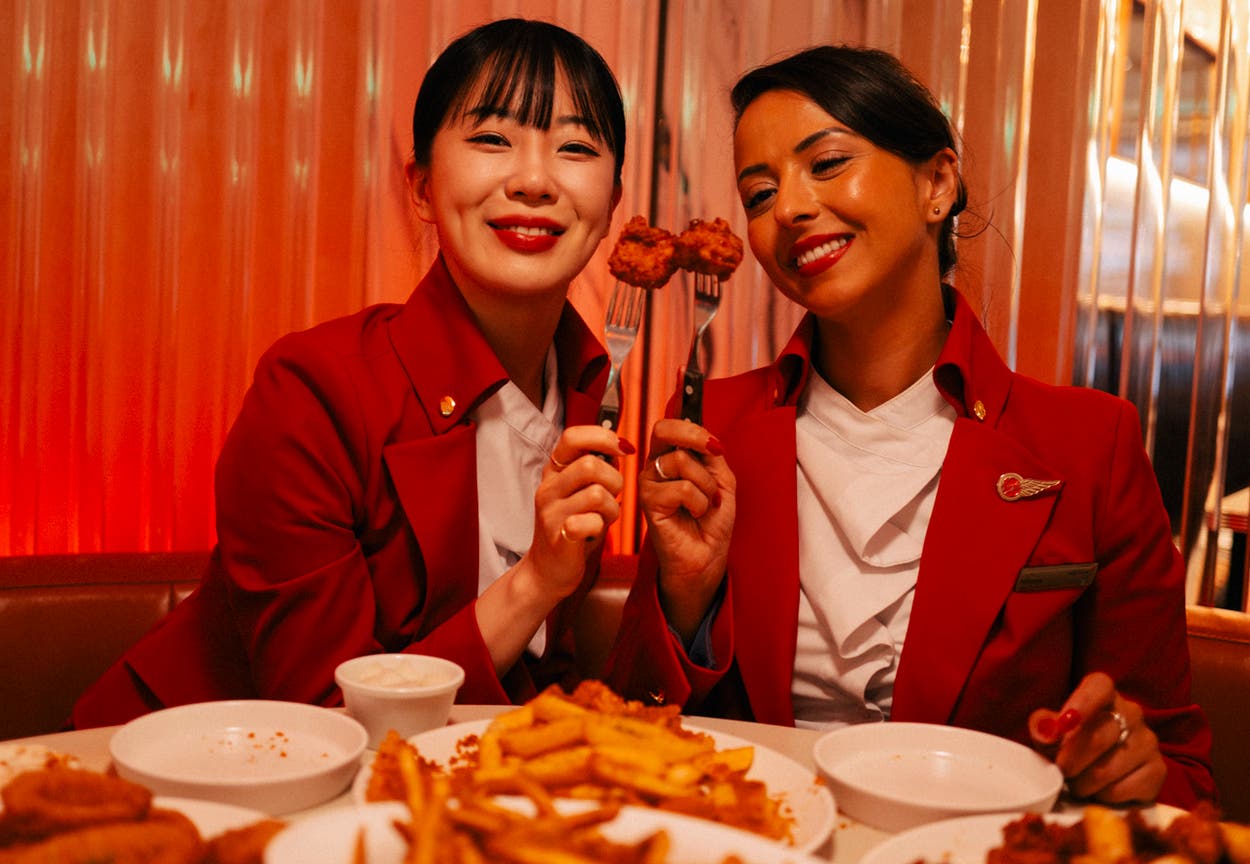
The journey starts at 30,000 feet: Direct flights from London Heathrow to Seoul onboard Virgin Atlantic bring warm service, tailored dining, and over 1,000 hours of entertainment before you even touch down (Virgin Holidays)
Settle in with great food, explore Korean entertainment onboard and start getting excited about everything waiting for you when you land at Incheon. And if you’re planning to experience more than one side of South Korea, Virgin Atlantic Holidays’ friendly experts can help bring your trip together, from finding the right places to stay to building a multi-centre adventure taking in Seoul, Busan and beyond.
Because when there’s this much to discover, why wait until you land to start the adventure? Your South Korean story starts the moment you step onboard.
Views From the Crew
Dan Harris, Virgin Atlantic crew member, shares his favorite street eats, hidden spots and regional tips
What’s your favourite thing about flying the new London-to-Seoul route?
The adventure! Seoul is such a great city with so much culture to absorb – as soon as the route was announced I knew I wanted to get back ASAP! Brilliant food, amazing people and so many new experiences to be had!
Where’s the first place you head for food after dropping your bags in Seoul?
Gwangjang Market, it might be really touristy but the atmosphere is amazing with so many neon lights and varied store fronts. Plenty of sit down restaurants and cat cafes, but the street food is the winner – bungeoppang are a vital must-do, it’s a stuffed waffle in the shape of a fish, sweet or savoury available but custard is the best! (Washed down with that melon flavoured milk!)
What’s a hidden gem in the city that most first-time visitors miss?
There’s so much to uncover every time, I think Lotte world is brilliant and maybe not an instant association with a Korea trip – first time around for me it was all about the Royal Palace, DMZ border with the north and soaking everything up I completely missed out on a theme park! There are so many Hanok villages to uncover down side streets too, you can just spend the day getting lost and discovering!
What’s your top tip for travellers wanting to explore beyond the capital?
Do it! The transport network is really easy to navigate and whilst communication can be daunting at times people will always help point things out on a map or use a phone to translate. Busan & Jeju are great coastal destinations with lots of traditional buildings and mountain landscapes to be found in the middle! Seoul’s also great for onward connections to places like Japan!
How would you describe the spirit of Korean hospitality to someone visiting for the first time?
Korean hospitality is second to none, I not only feel safer in Seoul than most cities around the world, but people are always willing to help and whilst there may be a language barrier there is always a smile and as much assistance as can be provided. It seems to be really appreciated when you try and speak some Korean such as Annyeonghaseyo (hello) and Gamsahamnida (thank you).
This website uses cookies so that we can provide you with the best user experience possible. Cookie information is stored in your browser and performs functions such as recognising you when you return to our website and helping our team to understand which sections of the website you find most interesting and useful.
Strictly Necessary Cookies
Strictly Necessary Cookie should be enabled at all times so that we can save your preferences for cookie settings.
If you disable this cookie, we will not be able to save your preferences. This means that every time you visit this website you will need to enable or disable cookies again.



 Africana55 Radio