


 Africana55 Radio

This website uses cookies so that we can provide you with the best user experience possible. Cookie information is stored in your browser and performs functions such as recognising you when you return to our website and helping our team to understand which sections of the website you find most interesting and useful.
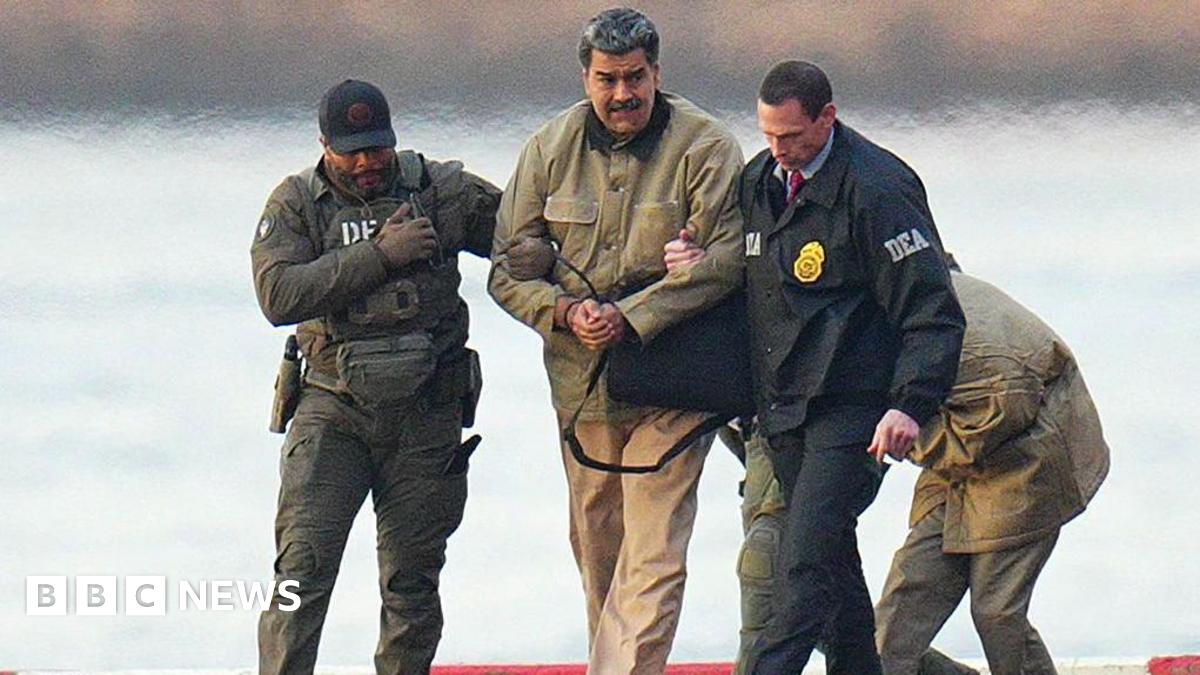
The courtroom was packed with spectators, with some people lining up for hours for the chance to glimpse Maduro in person.
Before the hearing began, a court officer warned the public to remain seated and that that they "can't say anything to him."
Anyone who disobeyed decorum "might have some legal issues of your own," the officer warned.
The gallery mostly follows his instructions as Maduro and Flores were led into the chamber shortly after noon, but some murmured or inhaled breath as he walked past.
Maduro, who wore a beige jail uniform but was not handcuffed, gave the gallery a nod as he walked to his seat at the defence table.
He and Flores sat quietly, wearing headphones for translation while their attorneys conferred with the judge.
When it was time to leave, Maduro stood. He faced the public and gave a single wave of his hands, before disappearing into the bowels of the courthouse in the custody of US Marshalls.
Outside the courtroom, anti-war protesters condemned the US military operation that resulted in Maduro's capture, holding up signs that read "Free President Maduro," and decrying, in the words of one protester with a bullhorn, the "sham trial" taking place inside.
"The US is endeavouring to bring Venezuela, Latin America, and the Middle East under its thumb," said a speaker with the Anti-War Action Network.
Some Venezuelans, draped in the country's flag, supported the prosecution.
"Maduro is a criminal," said Wilmer Contreras, 53, who moved to the US about 30 years ago. "He's a part of the government, they destroyed my country completely."
Contreras said he "absolutely" supported the Trump administration's military capture of Maduro.
"What they did was something that we were expecting, and waiting for, for a long time. And when that happened, things changed in my country," he told the BBC.