


 Africana55 Radio
This website uses cookies so that we can provide you with the best user experience possible. Cookie information is stored in your browser and performs functions such as recognising you when you return to our website and helping our team to understand which sections of the website you find most interesting and useful.
Danielle Graph, 41, from London, was doing her regular check of her daughter’s internet search history when she saw it; coronavirus. Among the usual searches for make-up tutorials and “what is skinny dipping?” her 10-year-old had also been googling the virus, which has to date infected more than 70,000 people, including nine in the UK, and has a death toll exceeding 2,200.
“She had asked me about it previously when we heard news reports on the radio in the car; I think her interest was piqued,” Graph tells The Independent. “I like to think we have a very open relationship and she can ask me anything but from looking at her search history she is [googling] a lot more than she used to.”
Graph says she is worried about misinformation her young daughter sees online, as well as on social media platforms like TikTok and Instagram. “The kids also have a group chat on Whatsapp and [I know] they have been chatting about it on there,” she adds. The mother-of-two also spoke to a teacher, who said that although it hasn’t been mentioned officially at school, she has heard playground murmurings.
“At the weekend my six-year-old girl also said, ‘Chinese people are bad’ – we set the record straight on that right away. I have tried to take the sensationalism out of it all, keep it straight and simple with the facts – this is just like flu. But I have no idea [where she got that from], which is really depressing,” she says.
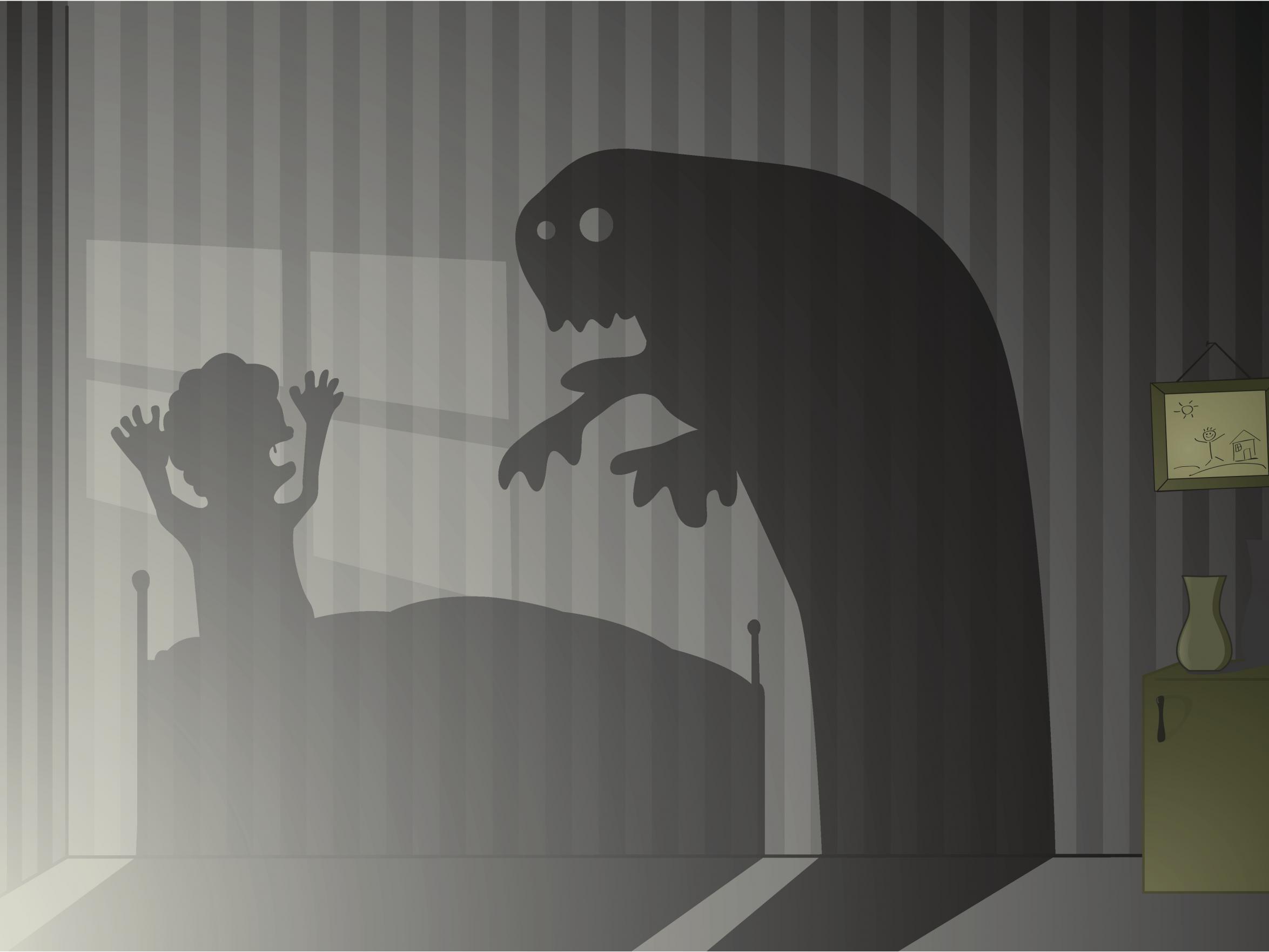
Talking to children about adult issues like disease, terrorism or war has never been an easy job for parents – particularly when fear is fuelled by classroom chatter and rumours. But in previous generations children’s choices were somewhat limited when it came to finding out more information. Today misinformation and hysteria can be spread online and easily accessed, leaving parents in the dark about how to talk to their children.
Sarah*, 51, says that on the handful of occasions her eight-year-old daughter has heard people talking about coronavirus on the news she “tears up”. “My daughter is now petrified,” she explains.
Martin Gregg, 42, from Bristol, says in the last couple of weeks his 11-year-old son has become obsessed with washing his hands and using hand sanitiser when he is at school or out of the house. “Maybe I should be pleased about his new levels of hygiene,” jokes Gregg. “But it doesn’t feel healthy, he is so worried about catching something. I’ve tried to put it in context and explain that even if he did catch something it is unlikely to be a big problem but the message isn’t getting through.”
Gregg says he particularly noticed when a family friend came round for dinner – the dog sneezed and they made a joke about the dog having coronavirus and his son got really upset. “We won’t be making anymore jokes, that’s for sure,” he says.
Scarlet* says her nine-year-old son has become increasingly paranoid about catching coronavirus, despite being homeschooled because of his autism. “He has been so worried. We have had sleepless nights and worn face masks for three weeks in our house.
“Obviously his worries can be magnified due to his autism, but it’s been hard work trying to get him to even leave the house,” she says.
Graph says she wants to be able to talk to her daughters but also wants to avoid whipping up hysteria, or drawing their attention to something if they don’t know about it already. “For instance when that Momo thing [in March 2019 rumours spread that a ‘Momo’ character was appearing during YouTube videos and asking them to engage in dangerous behaviour] was happening most of the kids didn’t even know about it until one mentioned it,” she says. “So we have to be careful as parents not to create the hysteria.”
Although parents might be wary about bringing up an issue, Stevie Goulding, a team leader at YoungMinds, tells The Independent: “Children and teenagers may understandably be concerned or worried by what they see, read or hear in the news or online. As a parent or carer, it’s good to talk to them honestly but calmly about what is happening, and to not ignore or shield them from what is going on in the world. Children look to adults in their life for comfort when they are distressed and will take a lead on how to view things from you.”
Diane Bales, professor of family science at the University of Georgia in the US, agrees it is important that parents are always viewed as the most reliable source of information for a child, which will sometimes mean being open about an issue.
“Depending on how old your kid is, a lot of what they’re seeing may be from social media, which is not always the most reliable source of information. You want to make sure to watch and contextualise what your child is reading or hearing. Answer their questions honestly without going into too much detail, if it’s not required,” she says.
One of the best ways to contextualise the information, says Emma Kenny, psychologist at ChannelMum, is to – without diminishing the effect the outbreak is having in China – remind them that the numbers within the UK are not huge. “Remind your child that no matter how much they hear people talking about the coronavirus, the reality is that even if they were unlucky enough it catch it, they would be ok,” she tells The Independent.
“Reassure them that germs and viruses are a natural part of life and evidence this by bringing up any coughs and sniffles that they have had in the past as this anchors them into reality and dispels any myths that they have formed.”
Created with Sketch.
Created with Sketch.
1/14 Marley Dias @iammarleydias
At just 11 years old, Marley Dias gained international attention in 2016 after becoming frustrated with the lack of diversity in her school curriculum. What followed was a viral social media campaign, #1000blackgirlbooks, calling for titles featuring black girls as protagonists to be donated. Nearly 4,000 books were donated, and Dias now tackles prejudice and advocates for diversity in literature.
Getty
2/14 Rina Sawayama @rinasonline
Rina Sawayama came in a blaze of neon and sci-fi coolness in early 2016 when she released the single 'Where U Are', which explored how humans interact with digital media. Since then, the singer and model from north London has been a trailblazer for intersectional feminism. Whether it’s singing about her experiences as a pansexual woman or starting Twitter conversations about cultural appropriation in the media, Sawayama has taken both the music world and social media by storm with her politically vibrant work. A quick look at her Instagram account (@rinasonline) will reveal a confident woman who is not afraid to voice her opinions to her 141,000 followers.
Getty
3/14 Chidera Eggerue @theslumflower
At only 24 years old, Eggerue came to prominence with her viral 2017 social media campaign #SaggyBoobsMatter. 'It was only small-boobed women who were ‘allowed’ to not wear a bra,' the author said in an interview with The Guardian. “I couldn’t understand why … I had to challenge it.” Her decision to not wear a bra shouldn’t be deemed radical, yet here she is in 2019 challenging the ideas that women are pressured to confirming too. Women of all ages and shapes use the hashtag to show pride in themselves, as a result of the body positivity Eggerue championed. Her blog, The Slumflower, also discusses sexism, feminism and racism.
Getty Images
4/14 Scarlett Curtis @scarcurtis
You may know her as the writer who exposed Philip Green’s willingness to profit off feminism but reject the idea of having a pink pop-up stall in Topshop back in October 2018. However, Scarlett Curtis is a trail-blazing feminist in other ways too. The author of Feminists Don’t Wear Pink & Other Lies co-founded The Pink Protest – a collective helping young feminist activist to take action online – in 2017, all while using her social media to challenge misogyny whenever she encounters it.
Getty
5/14 Tarana Burke @TaranaBurke
Also known as the mother of the #MeToo movement, Tarana Burke is an American social activist who is largely responsible for the international movement against sexual harassment that went viral in October 2017. The phrase was first used in 2006 on Burke’s Myspace account after she responded to a 13-year-old girl who had been sexually assaulted. The hashtag gained traction after actress Alyssa Milano encouraged victims of harassment to tweet the phrase. The call-out followed sexual abuse allegations against disgraced film producter Harvey Weinstein and has been used at least 19 million times on social media. Burke is a life-long activist for victims of sexual assault and harassment and continues to campaign such issues on social media. She has single-handedly changed the conversation on sexual violence.
Getty
6/14 Sophie Sandberg @catcallsofnyc
Tired of being unable to walk down the street without being constantly catcalled by men, activist Sophie Sandberg took to Instagram to expose an epidemic rife in society. Armed with multi-coloured chalk, she began documenting the horrific words that had been said to her all over New York in late 2016. Talking to the BBC about the project she stated: 'By writing [catcalls] in the same place that it happened, I hope the words may remember and think "Oh those were my words".' Women around the globe have been inspired by Sandberg’s work and Instagram accounts of women chalking messages have since sprung up from Columbia to Bangladesh.
Sophie Sandberg
7/14 Hannah Witton @hannahwitton
Hannah Witton is a sex-positive YouTuber and author who has vlogged candidly about sexual health, relationships and women’s issues since 2011. Over the years, the Mancunian has amassed over 500,000 subscribers. Witton is inspirationally confident and isn’t afraid of talking about her sex life to her thousands of subscribers in videos such as 'How Many People Have I Slept With?' and 'The Benefits of Porn'. The vlogger is also a champion for body positivity (her most viewed video with over 8 million views is about the struggles of large boobs) and invisible illnesses – as she herself suffers from ulcerative colitis and proudly wears a stoma.
Getty
8/14 Adwoa Aboah @adwoaaboah
British model Adwoa Aboah is no stranger to the crippling effect of depression having suffered from it herself. This is why the star established the mental health community Gurls Talk. It began in 2015 with an Instagram account and now serves as a place to discuss topics affecting women without any fear of judgement. It has since grown into a weekly podcast and a series of organised events that have brought women together from across the globe. Talking to the BBC about the project, Aboah noted: 'At school there still isn’t a place for girls and boys to realise they’re not alone …There is a light at the end of the tunnel. I promise that.'
Getty
9/14 Laci Green @gogreen18
YouTuber Laci Green has been educating her subscribers on the nuances of sex education for over 10 years and has amassed over 1.4 million subscribers. The vlogger's videos, which are prominent in the sex-positive movement due to their candour, cover topics such as birth control, hormones and abortion in an attempt to remove the stigma surrounding them. Green is also very outspoken against slut-shaming and sexual harassment, being one of the first YouTubers to address the sexual harassment claims levied against vlogger Sam Pepper in 2014.
Getty
10/14 Ash Sarkar @AyoCaesar
From describing broadcaster Piers Morgan an 'idiot' to declaring herself a communist on Good Morning Britain, Ash Sarkar is a dynamic journalist making waves on the internet and TV. The north London native champions the rights of women and immigrants on social media, with a Twitter account that is rife with political commentary with a humorous edge. Meanwhile, her Instagram showcases all her campaigning work including protests on climate change and Brexit. Sarkar is also a senior editor at Novara Media – an independent, radical left-wing news organisation.
Ash Sarkar
11/14 Gina Martin @ginamartin
Writer and activist Gina Martin hit national headlines when she began a viral campaign to make 'upskirting' illegal. Taking to Facebook, Martin explained how a man took photos of her crotch without her permission and got away with it in a post that subsequently went viral in 2017. She then launched a petition for her case to be reopened and for the action to be made part of the 2003 Sexual Offences Act. Using the hashtag, #StopSkirtingTheIssue, the petition managed to get over 100,000 signatures. As of 2019, 'upskirting' is now illegal and this is largely down to the efforts of Martin. The activist continues to promote feminist causes to her 40,000 Instagram followers.
AFP
12/14 Rowan Blanchard @rowanblanchard
When Rowan Blanchard isn’t taking over the world of acting, she’s taking to Twitter and Instagram to talk to her 5.1 million followers about various activist pursuits. The 17-year-old uses her platform to discuss social and economic issues, with topics as diverse as human rights and gun control, and isn’t afraid to give a voice to those who haven’t been heard. Blanchard was very vocal in the aftermath of the Stoneman Douglas shootings earlier this year, talking with activists and highlighting their plight on social media.
Getty
13/14 Liv Little @livlittle
As the founder of Gal-dem, a magazine produced by women of colour, Liv Little has gained international recognition for her work in diversifying print media. After becoming frustrated with the lack of representation at Bristol University where Little attended, the 25-year-old created the publication in an attempt to give women of colour a voice in the media. Her business is growing rapidly, alongside Gal-dem’s social media following which stands at more than 111,000. Little can be found on Twitter talking about everything from activism to literature.
Getty
14/14 Kat Blaque @kat_blaque
Blaque is a transgender activist who forged her career calling out racism, transphobia and white privilege on her successful YouTube channel of the same name. In an interview with The Huffington Post she said: 'I’m a woman. I’m black. I’m curvy and I’m trans … when I talk about those things, I am literally talking about my embodiment of those intersections.' Her series, 'True Tea', is where she candidly embraces controversial topics in an attempt to change the narrative around them. Videos include 'Why is "LeftTube" So White' and 'Cultures Are Not Costumes'.
Getty
1/14 Marley Dias @iammarleydias
At just 11 years old, Marley Dias gained international attention in 2016 after becoming frustrated with the lack of diversity in her school curriculum. What followed was a viral social media campaign, #1000blackgirlbooks, calling for titles featuring black girls as protagonists to be donated. Nearly 4,000 books were donated, and Dias now tackles prejudice and advocates for diversity in literature.
Getty
2/14 Rina Sawayama @rinasonline
Rina Sawayama came in a blaze of neon and sci-fi coolness in early 2016 when she released the single 'Where U Are', which explored how humans interact with digital media. Since then, the singer and model from north London has been a trailblazer for intersectional feminism. Whether it’s singing about her experiences as a pansexual woman or starting Twitter conversations about cultural appropriation in the media, Sawayama has taken both the music world and social media by storm with her politically vibrant work. A quick look at her Instagram account (@rinasonline) will reveal a confident woman who is not afraid to voice her opinions to her 141,000 followers.
Getty
3/14 Chidera Eggerue @theslumflower
At only 24 years old, Eggerue came to prominence with her viral 2017 social media campaign #SaggyBoobsMatter. 'It was only small-boobed women who were ‘allowed’ to not wear a bra,' the author said in an interview with The Guardian. “I couldn’t understand why … I had to challenge it.” Her decision to not wear a bra shouldn’t be deemed radical, yet here she is in 2019 challenging the ideas that women are pressured to confirming too. Women of all ages and shapes use the hashtag to show pride in themselves, as a result of the body positivity Eggerue championed. Her blog, The Slumflower, also discusses sexism, feminism and racism.
Getty Images
4/14 Scarlett Curtis @scarcurtis
You may know her as the writer who exposed Philip Green’s willingness to profit off feminism but reject the idea of having a pink pop-up stall in Topshop back in October 2018. However, Scarlett Curtis is a trail-blazing feminist in other ways too. The author of Feminists Don’t Wear Pink & Other Lies co-founded The Pink Protest – a collective helping young feminist activist to take action online – in 2017, all while using her social media to challenge misogyny whenever she encounters it.
Getty
5/14 Tarana Burke @TaranaBurke
Also known as the mother of the #MeToo movement, Tarana Burke is an American social activist who is largely responsible for the international movement against sexual harassment that went viral in October 2017. The phrase was first used in 2006 on Burke’s Myspace account after she responded to a 13-year-old girl who had been sexually assaulted. The hashtag gained traction after actress Alyssa Milano encouraged victims of harassment to tweet the phrase. The call-out followed sexual abuse allegations against disgraced film producter Harvey Weinstein and has been used at least 19 million times on social media. Burke is a life-long activist for victims of sexual assault and harassment and continues to campaign such issues on social media. She has single-handedly changed the conversation on sexual violence.
Getty
6/14 Sophie Sandberg @catcallsofnyc
Tired of being unable to walk down the street without being constantly catcalled by men, activist Sophie Sandberg took to Instagram to expose an epidemic rife in society. Armed with multi-coloured chalk, she began documenting the horrific words that had been said to her all over New York in late 2016. Talking to the BBC about the project she stated: 'By writing [catcalls] in the same place that it happened, I hope the words may remember and think "Oh those were my words".' Women around the globe have been inspired by Sandberg’s work and Instagram accounts of women chalking messages have since sprung up from Columbia to Bangladesh.
Sophie Sandberg
7/14 Hannah Witton @hannahwitton
Hannah Witton is a sex-positive YouTuber and author who has vlogged candidly about sexual health, relationships and women’s issues since 2011. Over the years, the Mancunian has amassed over 500,000 subscribers. Witton is inspirationally confident and isn’t afraid of talking about her sex life to her thousands of subscribers in videos such as 'How Many People Have I Slept With?' and 'The Benefits of Porn'. The vlogger is also a champion for body positivity (her most viewed video with over 8 million views is about the struggles of large boobs) and invisible illnesses – as she herself suffers from ulcerative colitis and proudly wears a stoma.
Getty
8/14 Adwoa Aboah @adwoaaboah
British model Adwoa Aboah is no stranger to the crippling effect of depression having suffered from it herself. This is why the star established the mental health community Gurls Talk. It began in 2015 with an Instagram account and now serves as a place to discuss topics affecting women without any fear of judgement. It has since grown into a weekly podcast and a series of organised events that have brought women together from across the globe. Talking to the BBC about the project, Aboah noted: 'At school there still isn’t a place for girls and boys to realise they’re not alone …There is a light at the end of the tunnel. I promise that.'
Getty
9/14 Laci Green @gogreen18
YouTuber Laci Green has been educating her subscribers on the nuances of sex education for over 10 years and has amassed over 1.4 million subscribers. The vlogger's videos, which are prominent in the sex-positive movement due to their candour, cover topics such as birth control, hormones and abortion in an attempt to remove the stigma surrounding them. Green is also very outspoken against slut-shaming and sexual harassment, being one of the first YouTubers to address the sexual harassment claims levied against vlogger Sam Pepper in 2014.
Getty
10/14 Ash Sarkar @AyoCaesar
From describing broadcaster Piers Morgan an 'idiot' to declaring herself a communist on Good Morning Britain, Ash Sarkar is a dynamic journalist making waves on the internet and TV. The north London native champions the rights of women and immigrants on social media, with a Twitter account that is rife with political commentary with a humorous edge. Meanwhile, her Instagram showcases all her campaigning work including protests on climate change and Brexit. Sarkar is also a senior editor at Novara Media – an independent, radical left-wing news organisation.
Ash Sarkar
11/14 Gina Martin @ginamartin
Writer and activist Gina Martin hit national headlines when she began a viral campaign to make 'upskirting' illegal. Taking to Facebook, Martin explained how a man took photos of her crotch without her permission and got away with it in a post that subsequently went viral in 2017. She then launched a petition for her case to be reopened and for the action to be made part of the 2003 Sexual Offences Act. Using the hashtag, #StopSkirtingTheIssue, the petition managed to get over 100,000 signatures. As of 2019, 'upskirting' is now illegal and this is largely down to the efforts of Martin. The activist continues to promote feminist causes to her 40,000 Instagram followers.
AFP
12/14 Rowan Blanchard @rowanblanchard
When Rowan Blanchard isn’t taking over the world of acting, she’s taking to Twitter and Instagram to talk to her 5.1 million followers about various activist pursuits. The 17-year-old uses her platform to discuss social and economic issues, with topics as diverse as human rights and gun control, and isn’t afraid to give a voice to those who haven’t been heard. Blanchard was very vocal in the aftermath of the Stoneman Douglas shootings earlier this year, talking with activists and highlighting their plight on social media.
Getty
13/14 Liv Little @livlittle
As the founder of Gal-dem, a magazine produced by women of colour, Liv Little has gained international recognition for her work in diversifying print media. After becoming frustrated with the lack of representation at Bristol University where Little attended, the 25-year-old created the publication in an attempt to give women of colour a voice in the media. Her business is growing rapidly, alongside Gal-dem’s social media following which stands at more than 111,000. Little can be found on Twitter talking about everything from activism to literature.
Getty
14/14 Kat Blaque @kat_blaque
Blaque is a transgender activist who forged her career calling out racism, transphobia and white privilege on her successful YouTube channel of the same name. In an interview with The Huffington Post she said: 'I’m a woman. I’m black. I’m curvy and I’m trans … when I talk about those things, I am literally talking about my embodiment of those intersections.' Her series, 'True Tea', is where she candidly embraces controversial topics in an attempt to change the narrative around them. Videos include 'Why is "LeftTube" So White' and 'Cultures Are Not Costumes'.
Getty
Emma Citron, a consultant clinical psychologist, agrees that this is the best approach: “[Reassure] them that for the majority of people the virus is no more serious than regular flu and incidents in the UK are extremely low,” she says.
But this doesn’t mean being dismissive of their fears: “Children, like some adults, can worry about current events and as parents and carers we need to be sensitive to that.”
Goulding adds: “You can start by asking them what they think is going on, if their friends are talking about it and what they are saying, and if they have any questions.”
If you think that giving your child practical strategies to cope with the fear would be more useful, Kenny says you can show them how to wash their hands thoroughly and remind them to cover their mouth when they cough and sneeze. This can be a useful reminder in health and wellness etiquette.
But you don’t need to have all the answers. A spokesperson for the NSPCC says when encountering difficult conversations with your children, ultimately they just need reassurance: “It’s OK to ask your child what they’d like you to do about the situation but it could be something where you can’t do anything at all. What you can always do is reassure and support – starting with a big hug.”
*Some names have been changed to protect anonymity