


 Africana55 Radio

This website uses cookies so that we can provide you with the best user experience possible. Cookie information is stored in your browser and performs functions such as recognising you when you return to our website and helping our team to understand which sections of the website you find most interesting and useful.
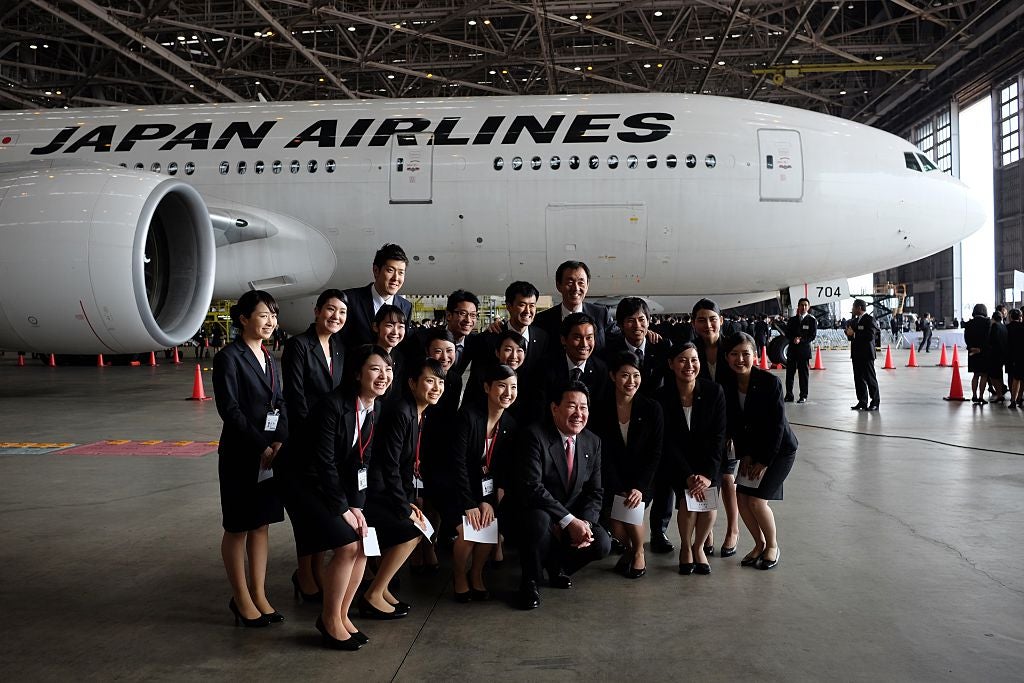
A Japanese airline is finally letting female flight attendants wear trousers and flat shoes instead of skirts and high heels following a nationwide campaign.
Japan Airlines announced the changes on Thursday, confirming they will come into force from 1 April.
“This will be the first time to introduce trousers and to provide additional options for footwear,” an airline spokesperson told Reuters.
It means just under 6,000 women who work for the carrier will be able to choose footwear that “best fits their needs” for the first time.
The decision follows a nationwide social media movement, #KuToo, which calls for workplaces to ditch dress code rules that force women to wear high heels.
Started by actor and activist Yumi Ishikawa, the feminist movement plays on the Japanese words for shoe (kutsu) and pain (kutsuu).
Ishikawa launched the KuToo hashtag when she tweeted about her experience of being obliged to wear high heels when working at a funeral parlour.
“It’s a great step given that Japan Airlines is such a big company,” she said. “It’s not only airlines – there are also hotels, department stores, banks and a lot of other companies with this requirement. I hope they follow this example.”
It follows Virgin Atlantic’s announcement last March that female cabin crew would no longer be required to wear makeup to work.
The airline’s female cabin crew, known for their red uniform, were also given trousers as standard, rather than having to specially request them.
Created with Sketch.
Created with Sketch.
1/4 Jessica Sundquist: 787 Dreamliner captain at Norwegian
Jessica Sundquist, a Swedish 787 Dreamliner captain for Norwegian, has spoken extensively about being a woman in the industry. In the past she’s spoken about the concept of “putting your femininity aside” in order to succeed. Sundquist says today that she felt she “didn’t have to do it”, but also wanted to fit into the industry “without being known as ‘the girl’”. Today, times are changing, she says, and more women are joining the industry – but it’s not all good news. “Despite working hard to get to where I am today as a captain at one of the most modern and exciting airlines, the industry still has a lot more work to do to give women more opportunities,” she says In the future, she’d like the discussion on gender inequality to remain “open and ongoing”, but argues that real action also needs to take place to make any difference.
Norwegian
2/4 Joanna Riggs: A380 first officer at British Airways
First officer Joanna Riggs says she was never “particularly exposed to aviation as a career choice”, but became a BA cabin crew member after university in order to see more of the world. She says that entering such a highly male-dominated profession wasn’t daunting, but that she felt “lucky to have two other females” on her course. Colleagues have always been supportive in Riggs’ experience as have – for the most part – passengers, though some are “surprised” when they see a female pilot. “I hope it will one day be normal to everyone,” she adds. Some passengers give a “thumbs up or a girl power sign”. As for gender differences on the flight deck, Riggs says, “We are very professional on the flight deck so it doesn’t matter what the gender, race or sexuality of my colleague is. “Flying with a fellow female is always a treat though. My brother is also a British Airways pilot, and although I haven’t flown with him, I get the feeling we would be very similar.
British Airways
3/4 Lucy Tardrew: Boeing 747 captain at Virgin Atlantic
Lucy Tardrew had always wanted to join the RAF, she says, but it was never allowed to happen – because ”they weren’t taking girls at the time”. Instead, she travelled to America, where she trained before becoming a flying instructor. After returning to the UK and converting her licences, she began flying night mail – “literally all the posts around the country at night” – before stints flying executive jets, and last-minute jobs including air ambulances and freighting transplant organs, before joining Virgin 23 years ago. Tardrew is enthusiastic about the company, but is saddened that the ratio of women in the industry as a whole remains low. As for challenges in the workplace, she’s never experienced any discrimination. Noting the rare pay equality in the piloting industry, Tardrew feels the reason there aren’t more female pilots is down to the fact that ”there aren’t enough female role models for schoolchildren to think, ‘I’m going to become an airline pilot’.”
Virgin Atlantic
4/4 Kate McWilliams: captain at easyJet
At 26, Kate McWilliams became the youngest commercial captain in the world. “I love being a captain for easyJet,” she says. “And I’m really happy to be working for an airline that is working hard to increase the number of female pilots.” Flying was always her goal – but she didn’t realise how far she could take it. “I joined the air cadets at 13-years-old, but it wasn’t until much later that I realised I could become a commercial pilot,” she says. “EasyJet is aiming to inspire young women, with the Amy Johnson Flying Initiative and their sponsorship of the Brownies, giving girls aged seven to 10 the opportunity to earn an Aviation Badge. The work it’s doing is really important.” The Amy Johnson Flying Initiative was launched in October 2015 with the aim of doubling the number of female new entrant pilots, to 12 per cent, over a two-year period. After achieving its aim in the first year, the airline set a target of 20 per cent for new entrant cadet pilots in 2020.
easyJet
1/4 Jessica Sundquist: 787 Dreamliner captain at Norwegian
Jessica Sundquist, a Swedish 787 Dreamliner captain for Norwegian, has spoken extensively about being a woman in the industry. In the past she’s spoken about the concept of “putting your femininity aside” in order to succeed. Sundquist says today that she felt she “didn’t have to do it”, but also wanted to fit into the industry “without being known as ‘the girl’”. Today, times are changing, she says, and more women are joining the industry – but it’s not all good news. “Despite working hard to get to where I am today as a captain at one of the most modern and exciting airlines, the industry still has a lot more work to do to give women more opportunities,” she says In the future, she’d like the discussion on gender inequality to remain “open and ongoing”, but argues that real action also needs to take place to make any difference.
Norwegian
2/4 Joanna Riggs: A380 first officer at British Airways
First officer Joanna Riggs says she was never “particularly exposed to aviation as a career choice”, but became a BA cabin crew member after university in order to see more of the world. She says that entering such a highly male-dominated profession wasn’t daunting, but that she felt “lucky to have two other females” on her course. Colleagues have always been supportive in Riggs’ experience as have – for the most part – passengers, though some are “surprised” when they see a female pilot. “I hope it will one day be normal to everyone,” she adds. Some passengers give a “thumbs up or a girl power sign”. As for gender differences on the flight deck, Riggs says, “We are very professional on the flight deck so it doesn’t matter what the gender, race or sexuality of my colleague is. “Flying with a fellow female is always a treat though. My brother is also a British Airways pilot, and although I haven’t flown with him, I get the feeling we would be very similar.
British Airways
3/4 Lucy Tardrew: Boeing 747 captain at Virgin Atlantic
Lucy Tardrew had always wanted to join the RAF, she says, but it was never allowed to happen – because ”they weren’t taking girls at the time”. Instead, she travelled to America, where she trained before becoming a flying instructor. After returning to the UK and converting her licences, she began flying night mail – “literally all the posts around the country at night” – before stints flying executive jets, and last-minute jobs including air ambulances and freighting transplant organs, before joining Virgin 23 years ago. Tardrew is enthusiastic about the company, but is saddened that the ratio of women in the industry as a whole remains low. As for challenges in the workplace, she’s never experienced any discrimination. Noting the rare pay equality in the piloting industry, Tardrew feels the reason there aren’t more female pilots is down to the fact that ”there aren’t enough female role models for schoolchildren to think, ‘I’m going to become an airline pilot’.”
Virgin Atlantic
4/4 Kate McWilliams: captain at easyJet
At 26, Kate McWilliams became the youngest commercial captain in the world. “I love being a captain for easyJet,” she says. “And I’m really happy to be working for an airline that is working hard to increase the number of female pilots.” Flying was always her goal – but she didn’t realise how far she could take it. “I joined the air cadets at 13-years-old, but it wasn’t until much later that I realised I could become a commercial pilot,” she says. “EasyJet is aiming to inspire young women, with the Amy Johnson Flying Initiative and their sponsorship of the Brownies, giving girls aged seven to 10 the opportunity to earn an Aviation Badge. The work it’s doing is really important.” The Amy Johnson Flying Initiative was launched in October 2015 with the aim of doubling the number of female new entrant pilots, to 12 per cent, over a two-year period. After achieving its aim in the first year, the airline set a target of 20 per cent for new entrant cadet pilots in 2020.
easyJet
The move was a “significant change” for the aviation industry, according to Virgin.
Virgin Atlantic executive vice president of customer, Mark Anderson, said at the time that the airline had “always stood out from the crowd and done things differently”.
“We want our uniform to truly reflect who we are as individuals while maintaining that famous Virgin Atlantic style,” he added.