


 Africana55 Radio

This website uses cookies so that we can provide you with the best user experience possible. Cookie information is stored in your browser and performs functions such as recognising you when you return to our website and helping our team to understand which sections of the website you find most interesting and useful.
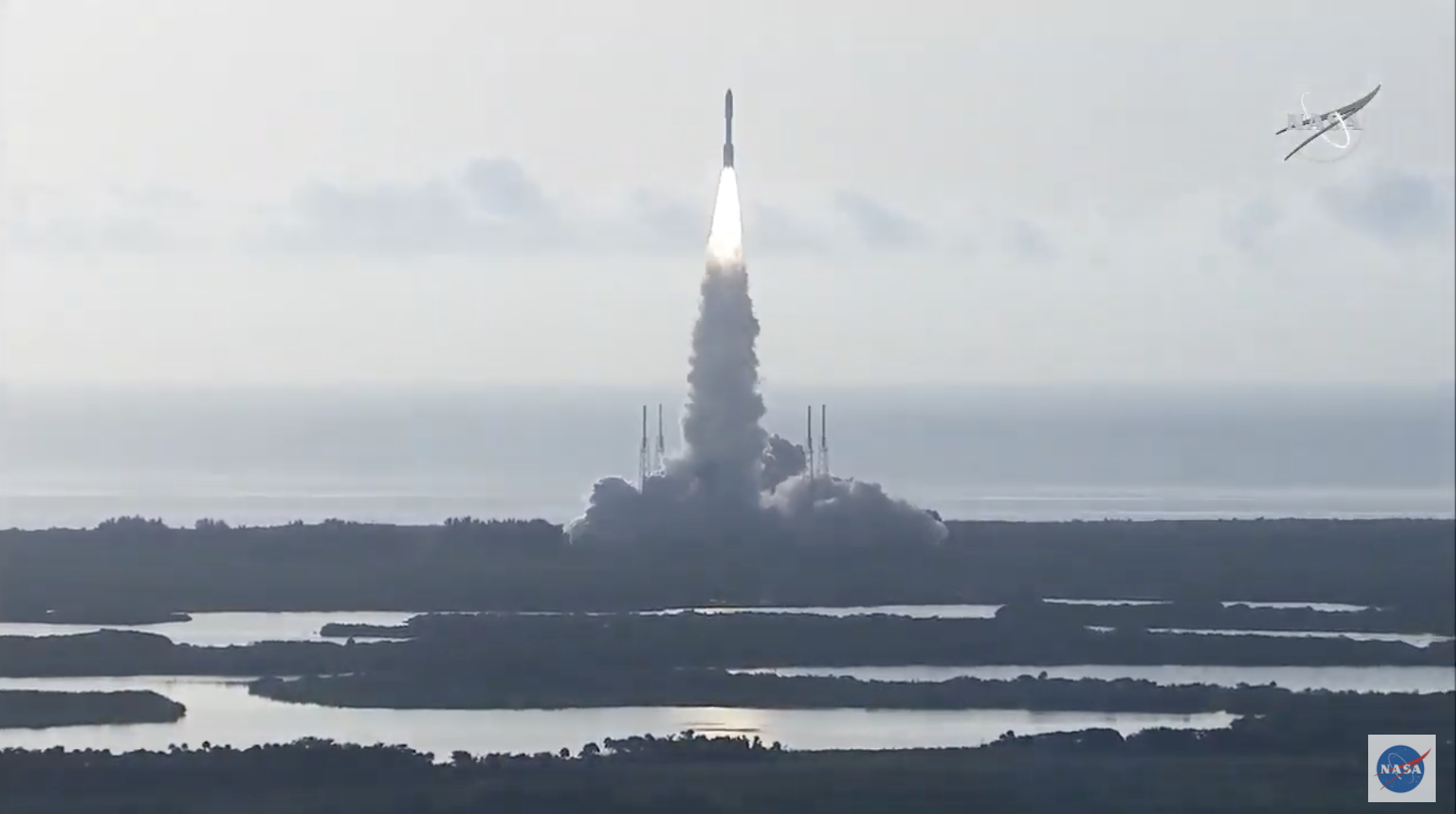
Nasa has launched its mission to Mars, in search of evidence of past alien life on its surface.
The Perseverance rover lifted off from the Cape Canaveral Air Force Station in Florida on Thursday at 12.50pm UK time aboard a United Launch Alliance Atlas V rocket.
Just moments before the launch, California was hit by an earthquake that could be felt by mission controllers at Nasa's Jet Propulsion Laboratory, based in Pasadena. Though that left engineers surprised – and prompted remarks about how, alongside the coronavirus outbreak, events seem to have made the rover's name especially apposite – the rocket took off right on time.
After some anxious minutes during which the rocket fired the spacecraft into space, and then onto a trajectory for Mars, as mission controllers waited for the spacecraft to power up with solar energy so that it could phone home, signals sent back from the spacecraft confirmed that it had safely launched and was on track for the Red Planet.
It will now cruise to Mars until February, when it drops down onto the surface ready to look for evidence of alien life. Engineers said they were hoping that the journey would be "quiet and boring", ahead of the stressful descent that will see the rover land on its surface.
Perseverance will travel 314 million miles over a period of nearly seven months attempting to land on a crater named Jezero. Only eight Nasa missions have successfully pulled off a descent to Mars, a feat that has been described as "seven minutes of terror".
The rover is Nasa's smartest and strongest yet, packed with a range of technologies intended to better understand the Martian landscape, and hunt for evidence of life. It is also packing a helicopter that will become the first ever craft sent by humans to fly across another planet.
It is the third mission heading to the Red Planet this month after launches by the UAE and China.
Satellite images suggest Jezero used to be a lake more than 3.5 billion years ago, when Mars was warmer and wetter.
The crater houses rocks that contain clays and carbonates, which scientists believe may have the potential to preserve organic molecules that could provide evidence of past life.
Along with several sophisticated instruments that will gather information about Mars' geology, atmosphere, environmental conditions and signs of life, the rover is also carrying a small 1.8kg helicopter.
Called Ingenuity, the copter will fly short distances and marks the first attempt at powered, controlled flight on another planet.
If successful, it could lead to more flying probes on other planets.
Perseverance will also trial technologies to help astronauts make future expeditions to Mars.
This includes testing a method for producing oxygen from the Martian atmosphere, and identifying other resources such as subsurface water.
Meanwhile, scientists in the UK will help Perseverance select the Martian samples to be brought back to Earth.
Created with Sketch.
Created with Sketch.
1/10
Mystic Mountain, a pillar of gas and dust standing at three-light-years tall, bursting with jets of gas from fledgling stars buried within, was captured by Nasa's Hubble Space Telescope in February 2010
Nasa/ESA/STScI
2/10
The first ever selfie taken on an alien planet, captured by Nasa's Curiosity Rover in the early days of its mission to explore Mars in 2012
Nasa/JPL-Caltech/MSSS
3/10
Death of a star: This image from Nasa's Chandra X-ray telescope shows the supernova of Tycho, a star in our Milky Way galaxy
Nasa
4/10
Arrokoth, the most distant object ever explored, pictured here on 1 January 2019 by a camera on Nasa's New Horizons spaceraft at a distance of 4.1 billion miles from Earth
Getty
5/10
An image of the Large Magellanic Cloud galaxy seen in infrared light by the Herschel Space Observatory in January 2012. Regions of space such as this are where new stars are born from a mixture of elements and cosmic dust
Nasa
6/10
The first ever image of a black hole, captured by the Event Horizon telescope, as part of a global collaboration involving Nasa, and released on 10 April 2019. The image reveals the black hole at the centre of Messier 87, a massive galaxy in the nearby Virgo galaxy cluster. This black hole resides about 54 million light-years from Earth
Getty
7/10
Pluto, as pictured by Nasa's New Horizons spacecraft as it flew over the dwarf planet for the first time ever in July 2015
Nasa/APL/SwRI
8/10
A coronal mass ejection as seen by the Chandra Observatory in 2019. This is the first time that Chandra has detected this phenomenon from a star other than the Sun
Nasa
9/10
Dark, narrow, 100 meter-long streaks running downhill on the surface Mars were believed to be evidence of contemporary flowing water. It has since been suggested that they may instead be formed by flowing sand
Nasa/JPL/University of Arizona
10/10
Morning Aurora: Nasa astronaut Scott Kelly captured this photograph of the green lights of the aurora from the International Space Station in October 2015
Nasa/Scott Kelly
1/10
Mystic Mountain, a pillar of gas and dust standing at three-light-years tall, bursting with jets of gas from fledgling stars buried within, was captured by Nasa's Hubble Space Telescope in February 2010
Nasa/ESA/STScI
2/10
The first ever selfie taken on an alien planet, captured by Nasa's Curiosity Rover in the early days of its mission to explore Mars in 2012
Nasa/JPL-Caltech/MSSS
3/10
Death of a star: This image from Nasa's Chandra X-ray telescope shows the supernova of Tycho, a star in our Milky Way galaxy
Nasa
4/10
Arrokoth, the most distant object ever explored, pictured here on 1 January 2019 by a camera on Nasa's New Horizons spaceraft at a distance of 4.1 billion miles from Earth
Getty
5/10
An image of the Large Magellanic Cloud galaxy seen in infrared light by the Herschel Space Observatory in January 2012. Regions of space such as this are where new stars are born from a mixture of elements and cosmic dust
Nasa
6/10
The first ever image of a black hole, captured by the Event Horizon telescope, as part of a global collaboration involving Nasa, and released on 10 April 2019. The image reveals the black hole at the centre of Messier 87, a massive galaxy in the nearby Virgo galaxy cluster. This black hole resides about 54 million light-years from Earth
Getty
7/10
Pluto, as pictured by Nasa's New Horizons spacecraft as it flew over the dwarf planet for the first time ever in July 2015
Nasa/APL/SwRI
8/10
A coronal mass ejection as seen by the Chandra Observatory in 2019. This is the first time that Chandra has detected this phenomenon from a star other than the Sun
Nasa
9/10
Dark, narrow, 100 meter-long streaks running downhill on the surface Mars were believed to be evidence of contemporary flowing water. It has since been suggested that they may instead be formed by flowing sand
Nasa/JPL/University of Arizona
10/10
Morning Aurora: Nasa astronaut Scott Kelly captured this photograph of the green lights of the aurora from the International Space Station in October 2015
Nasa/Scott Kelly
Researchers at Imperial College London and the Natural History Museum will identify samples of Mars that could contain evidence of past life and study the mineralogy and geochemistry of the different rocks found in the crater.
Professor Mark Sephton, from Imperial, said: "I hope that the samples we select and return will help current and future generations of scientists answer the question of whether there was ever life on the Red Planet.
"With one carefully chosen sample from Mars, we could discover that the history of life on the Earth is not unique in the Universe."
It is also a busy week for Nasa, as it gears up to welcome two astronauts home as they attempt a splashdown off the Florida coast on Sunday.
Bob Behnken and Doug Hurley will arrive in the Crew Dragon spacecraft, called Endeavour, which was designed and built by SpaceX.
The duo will close out a mission that was designed to test SpaceX's human spaceflight system, including launch, docking, splashdown, and recovery operations, Nasa said.
Additional reporting by agencies