


 Africana55 Radio

This website uses cookies so that we can provide you with the best user experience possible. Cookie information is stored in your browser and performs functions such as recognising you when you return to our website and helping our team to understand which sections of the website you find most interesting and useful.
Want to bookmark your favourite articles and stories to read or reference later? Start your Independent Premium subscription today.
`; document.body.appendChild(modal); modal.addEventListener('click', () => { document.cookie = 'mos-plan-select=; Max-Age=0; path=/; expires=Thu, 01 Jan 1970 00:00:00 UTC;'; }); modal.querySelector('.subscribe-link')?.addEventListener('click', (e) => { e.preventDefault(); document.cookie = 'mos-plan-select=; Max-Age=0; path=/; expires=Thu, 01 Jan 1970 00:00:00 UTC;'; setTimeout(() => { window.location.href = 'https://www.independent.co.uk/subscribe?regSourceMethod=Bookmarks'; }, 500); });
});
]]>
In the backyard of a single-story home in Austin, Texas, rises a towering attraction known as the “Cathedral of Junk.”
The 35-foot structure is made up of 60 tons of metal, rubber, concrete and glass, and built from old tires, light fixtures and whirlybirds fashioned into a pyramid-like shape.
“Skis, crutches — I think I’ve got enough shopping carts finally,” the artist and homeowner Vince Hannemann, 63, told The Independent.
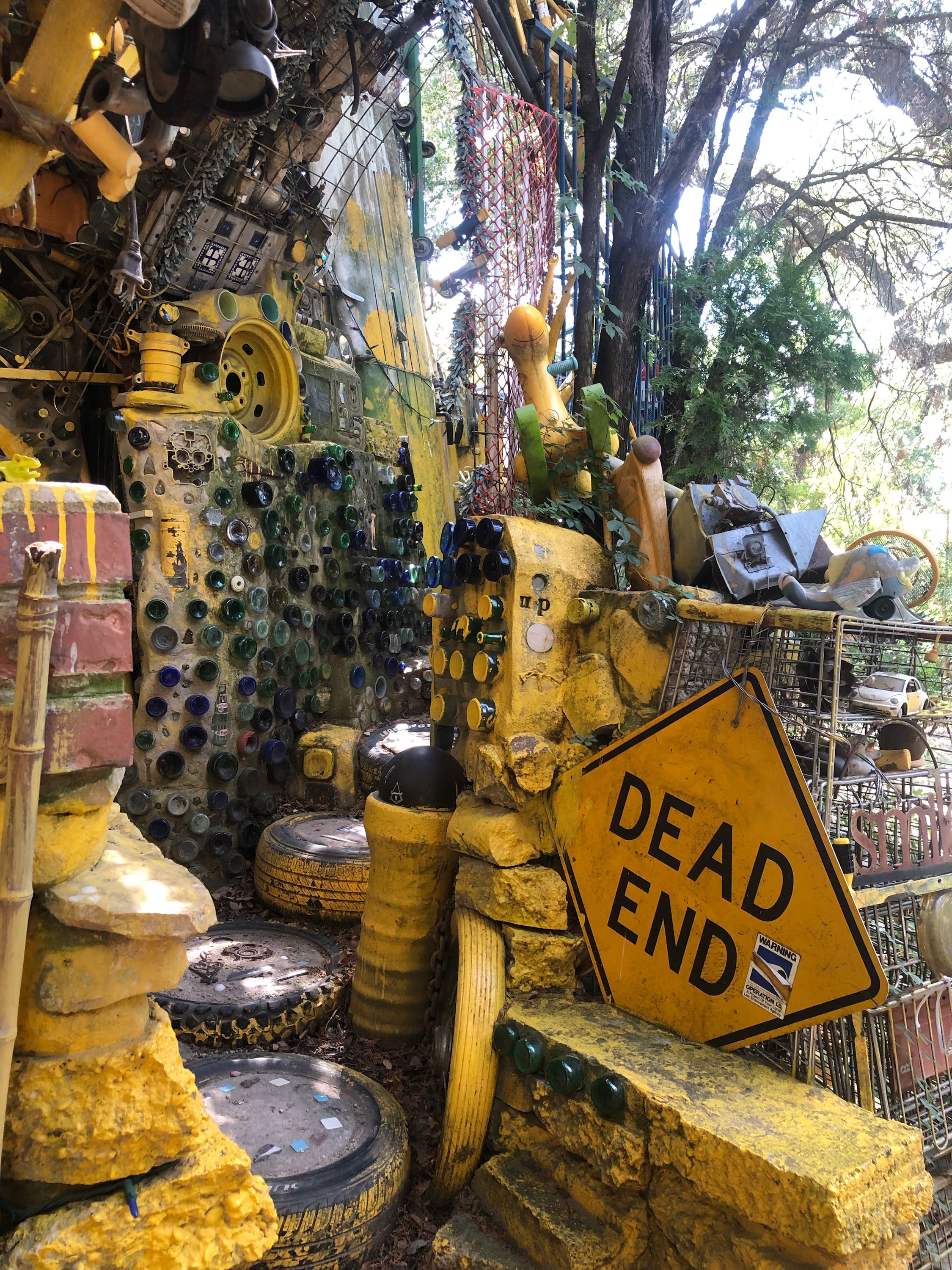
Step inside the Cathedral of Junk and you’ll find dozens of glass bottles poking through the partial cement walls. Light shines through the top of the structure’s frame where rescued treasures have yet to fill all the gaps. Visitors post pictures of themselves outside the installation, next to a “Welcome To Fabulous Trash Vegas” sign or sitting on a throne made of upside-down crutches.
Hannemann explained the layout as best he can, noting it “doesn’t necessarily make any kind of linear sense.”
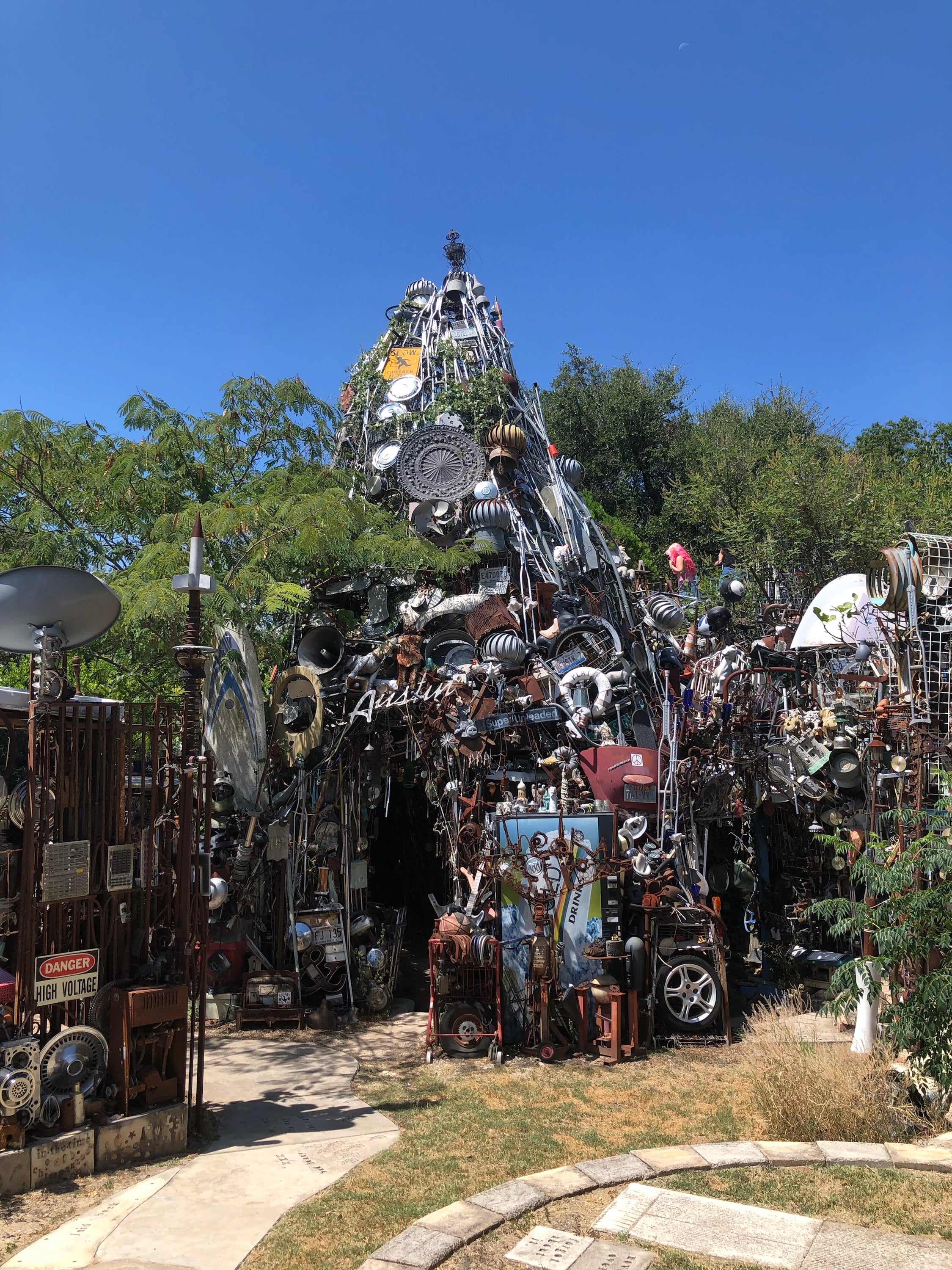
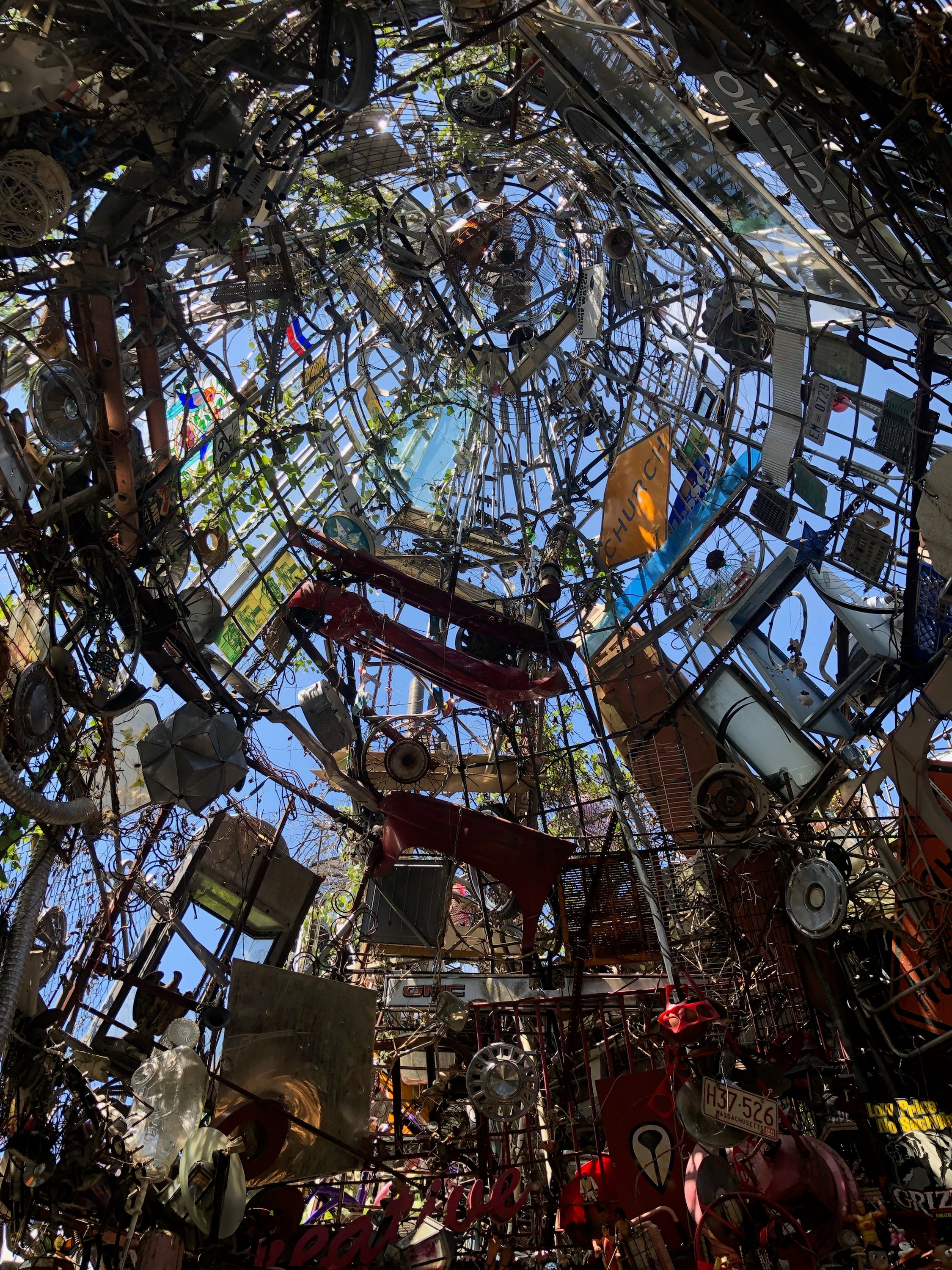
“There's a big domed room up front — it's almost three stories tall and kaleidoscopic, and that would be the biggest room,” he said.
“The rest of it is really a bunch of different staircases that go up to not a whole lot, but there's a second story. You could probably put maybe six or seven or eight people on the second story, and then the third story is mostly a lot of steps,” he explained.
“There's a sitting area at the top for like about three or four people, and that's about it.“
In 1988, when Hannemann was in his mid-twenties, he began building the Cathedral of Junk behind his home without rhyme or reason. He’s been slowly adding objects you would typically find at a scrap yard ever since, with the help of visitors who donate their own junk.
The Cathedral of Junk started as a grouping of individual sculptures “but over time they kind of grew together,” Hannemann said.
When asked about his inspiration for the project, Hannemann explained how his love of art started in childhood.
“I've been building sculptures in the backyard ever since I was a kid, so it's just kind of what I like to do,” he told The Independent during an interview that would at times be interrupted by Hannemann greeting visitors on a busy Saturday.
Hannemann said one of his favorite parts about running the Cathedral of Junk is seeing little kids interact with his relics.
“I had this little girl here the other day, and she was like, ‘Mommy, mommy, look at these old computers,’ and she was pointing at the typewriters,” he said.
Hannemann also recalled a sweet moment with another little girl when she saw strings of CDs hanging and reflecting sunlight: “Her eyes got all wide. She goes, ‘Mommy, fairies!’ And I was like, ‘Aw, that's too cute.’”
Hannemann — who grew up in Santa Fe, New Mexico, before moving to Austin in 1989 — went to college to study architecture for a semester, but “discovered that that was really not my scene.”
“I didn't want to be an architect. That's way too structured for me,” he said.
Hannemann started showing off the Cathedral of Junk in the early 1990s. He finally became a full-time artist in 2008 after Bank of America filmed a nationwide commercial that included a clip of his massive sculpture, giving him residual payments for a year.
“And when that happened, people started asking me, ‘Hey, what do you call that?’ So I didn't know what to tell them,” Hannemann said. “My mom started calling it the Cathedral of Junk, and then that stuck like glue, and it kind of got a life of its own after that.”
He ran into a snag in 2010 when the city of Austin made him get a building permit following a complaint from a neighbor. But he said “times have changed,” and for the last four years his neighborhood association has had its annual party at the Cathedral of Junk.
Hannemann told Austin’s official tourism site that there was no profound meaning behind the sculpture.
“I just did it because I liked it. And when I stop liking it, I'll take it down,” he said.

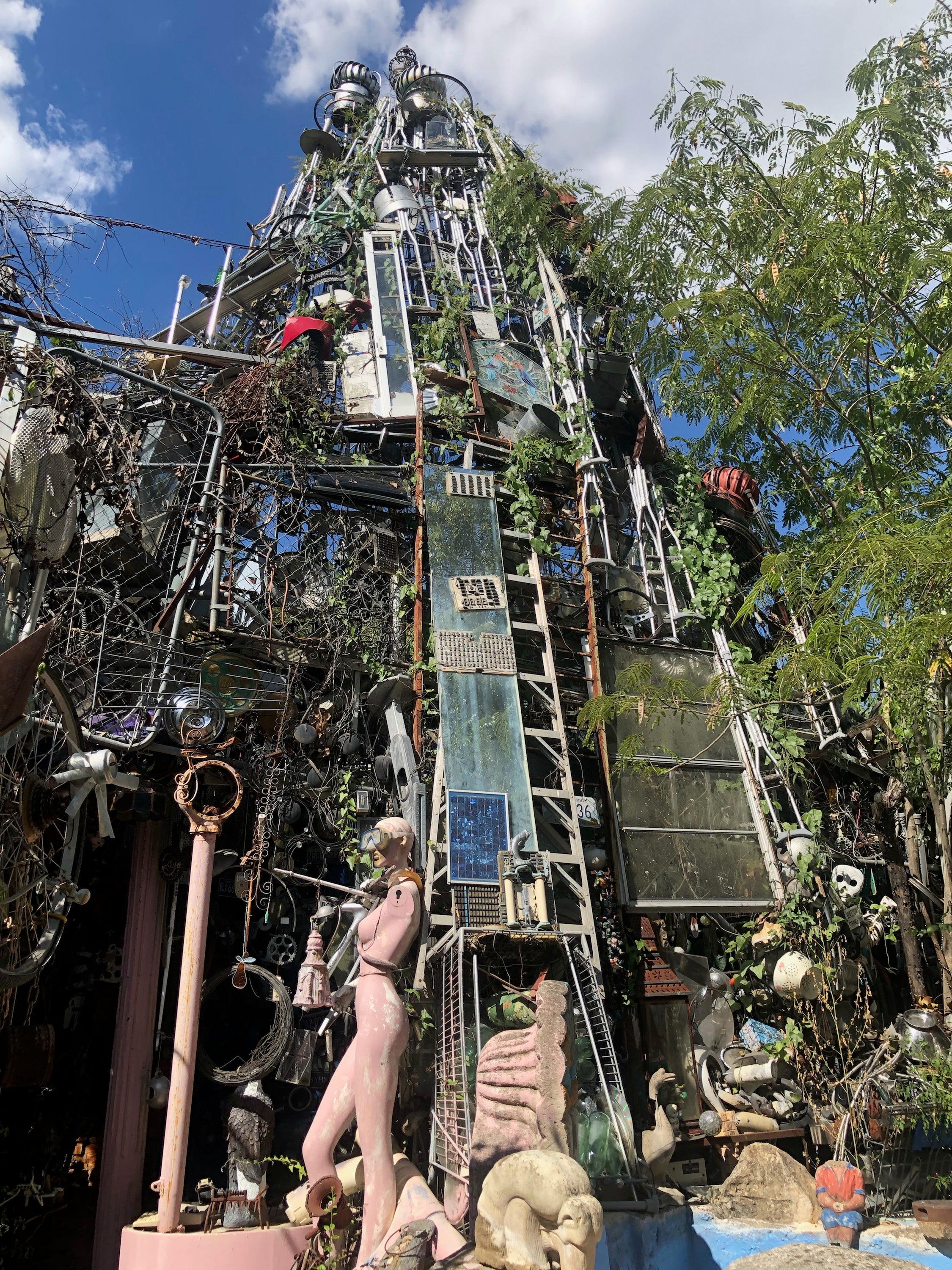
And if you visit the Cathedral of Junk, you could leave a mark. Hannemann accepts donations — that is, if you can part with your old bowling trophy collecting dust in the garage. “That’s where I pretty much get it all from,” he said.
While admission is free, Hannemann said he also accepts cash donations. People from all over the country, and around the world, have stepped inside Hannemann’s backyard to see the Cathedral of Junk with their own eyes.
“Every country, every state, everywhere,” Hannemann said.
Austin travel influencer Yvette Arriaga called the Cathedral of Junk “one of the most exciting and craziest things I’ve ever seen and is a great spot for pictures.”
One unnamed visitor from Ocala, Florida, even took post-wedding photos at Hannemann’s colossal creation in 2024.
Daniel Schramm of Bastrop, Texas, noted on TripAdvisor: “You will find yourself living in the past trying to see everything. It would be impossible to actually count how many crutches he has in his work of art. Truly a masterpiece and thanks to him we still keep Austin Weird!”
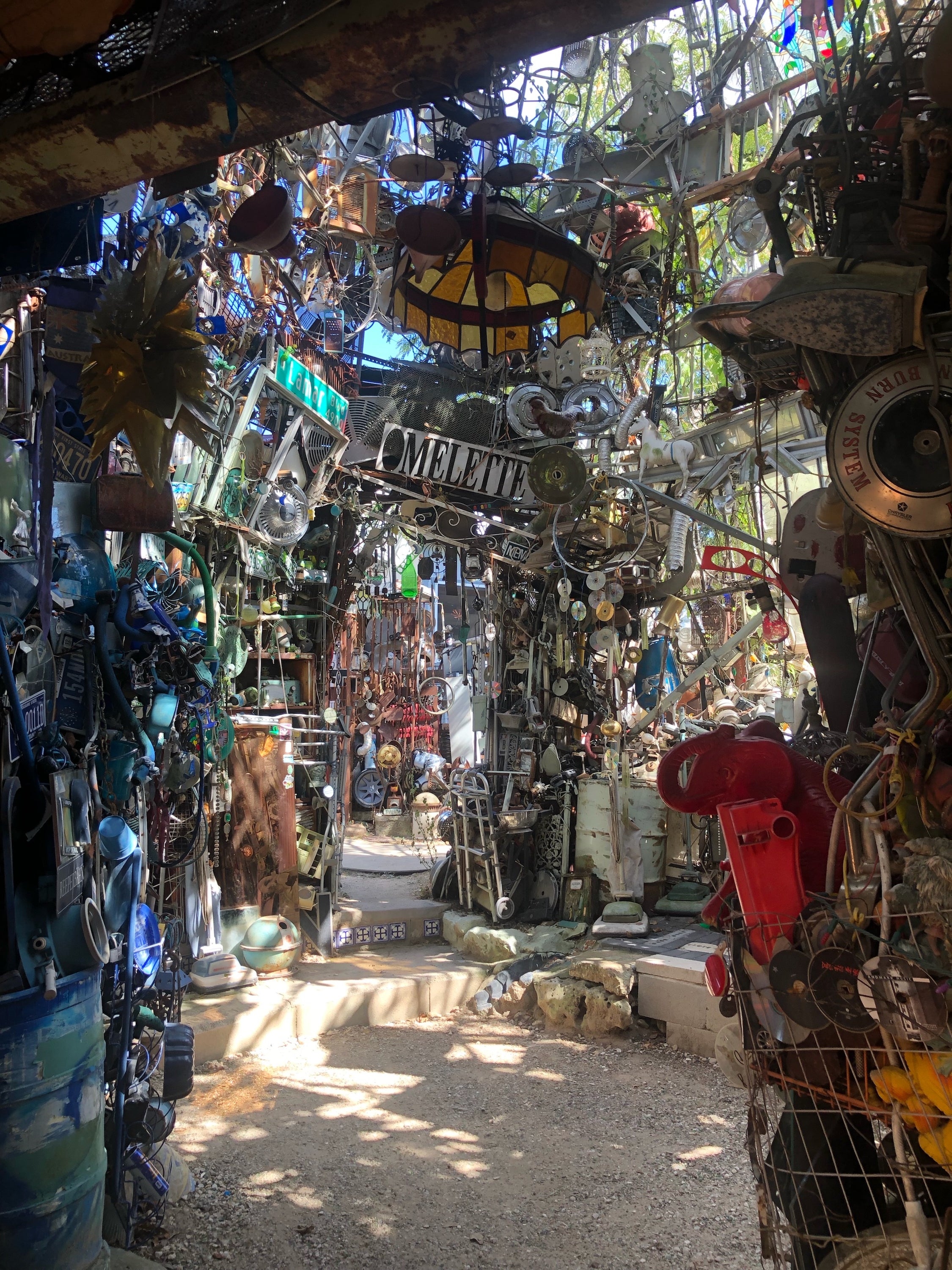
“Keep Austin Weird” is a slogan used by residents to preserve the city’s unique culture by supporting small businesses and local artists.
Austin is also home to The Little Longhorn Saloon, a dive bar where customers can drink beer while playing Chicken Shit Bingo — a game where patrons buy tickets for numbered squares and wait to see if a chicken will defecate on their lucky spot.
There’s even an attraction in Austin called the Museum of the Weird, filled with mysterious relics. “Monsters, zombies, mummies, shrunken heads & the fiji mermaid await you at the Museum of the Weird!” the attraction’s website reads.
And if you visit the city during the summer, don’t be alarmed if you see a colony of bats flying in the sky. Those winged creatures are Mexican free-tailed bats, and they are North America’s largest urban bat population.
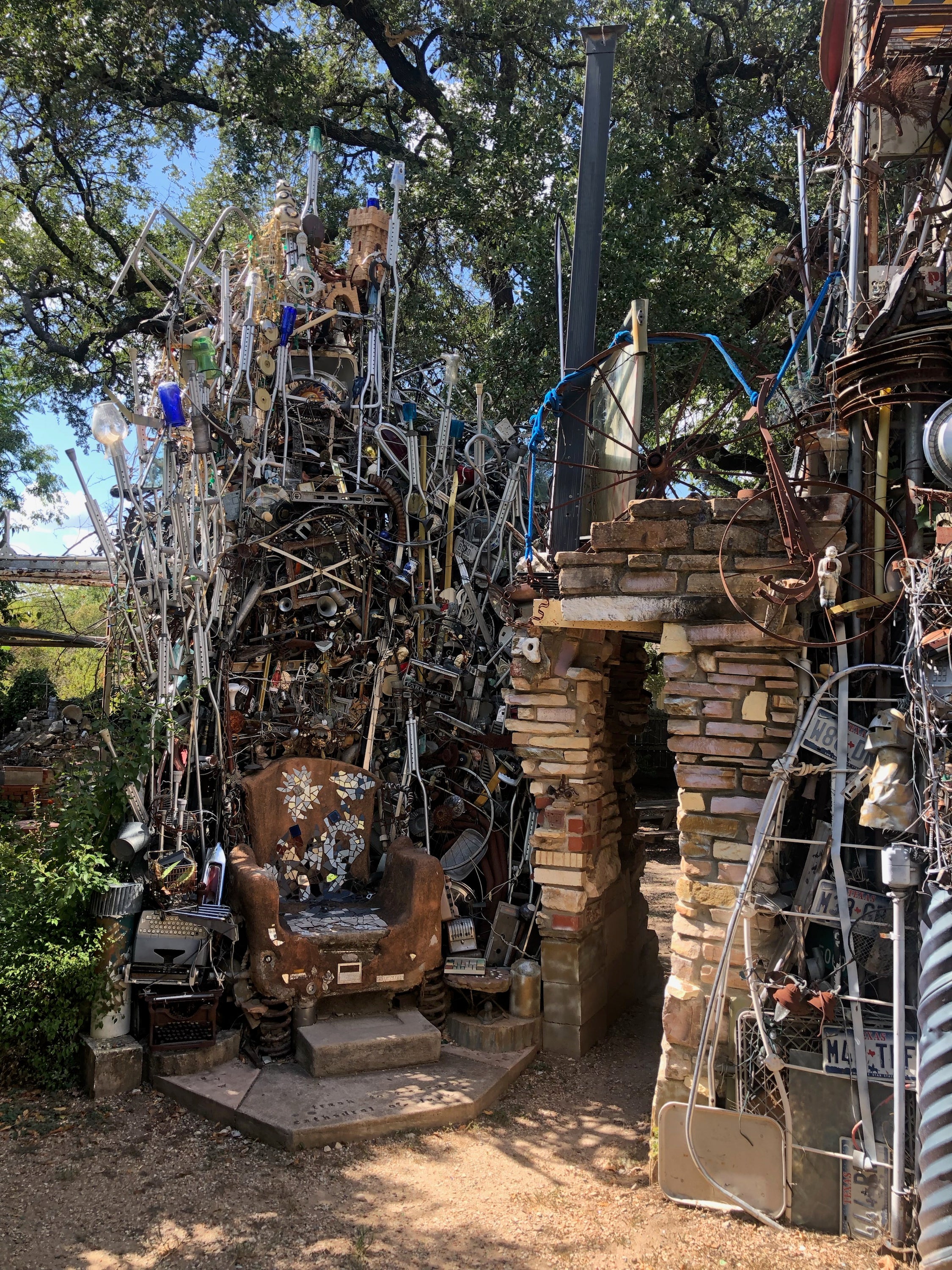
But what makes the Cathedral of Junk so unique is not only the hidden treasures inside the structure but its location.
A visitor from Canberra, Australia, called the Cathedral of Junk a “strange attraction hidden in suburbia.”
“It is both amazing and crazy,” the visitor wrote in May 2024.
Robyn W, from Carlisle, England, wrote in October 2025: “Really cool place! Very Austin! Definitely worth checking out if your in the area.”
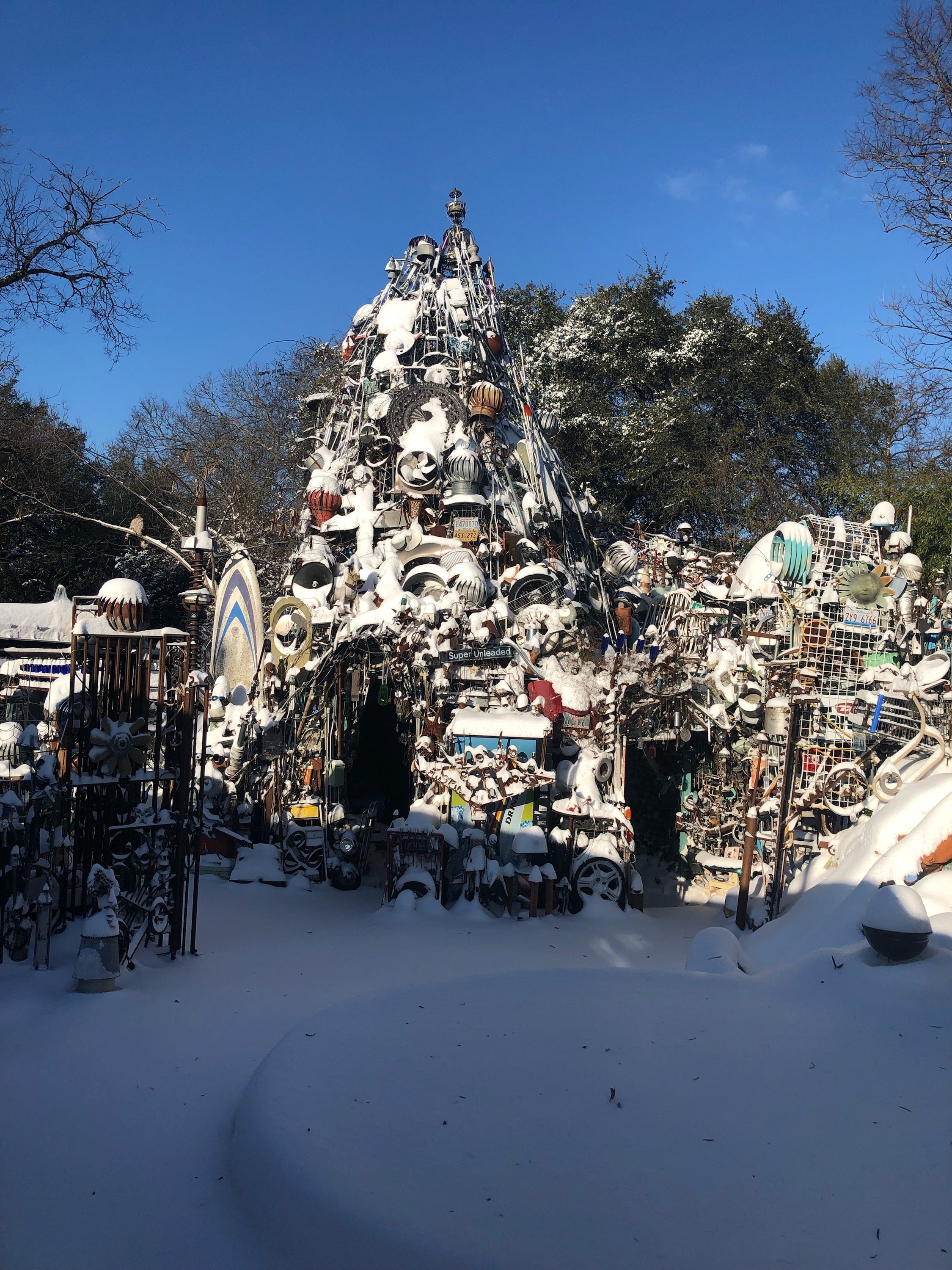
Despite the glowing reviews, there are also some challenges with running a tourist attraction from your backyard.
“There's not a single day that I don't have people show up unannounced,” Hannemann said. “So I had to finally build a second layer of fence up by the street because otherwise people were coming all the way down a little bit too in my space.”
Just like the Cathedral of Junk itself, visiting hours are created on a whim. There are no set times when the backyard is open for business, so it is best to call Hannemann at (512) 299-7413 to find out when he will show it next.