


 Africana55 Radio

This website uses cookies so that we can provide you with the best user experience possible. Cookie information is stored in your browser and performs functions such as recognising you when you return to our website and helping our team to understand which sections of the website you find most interesting and useful.
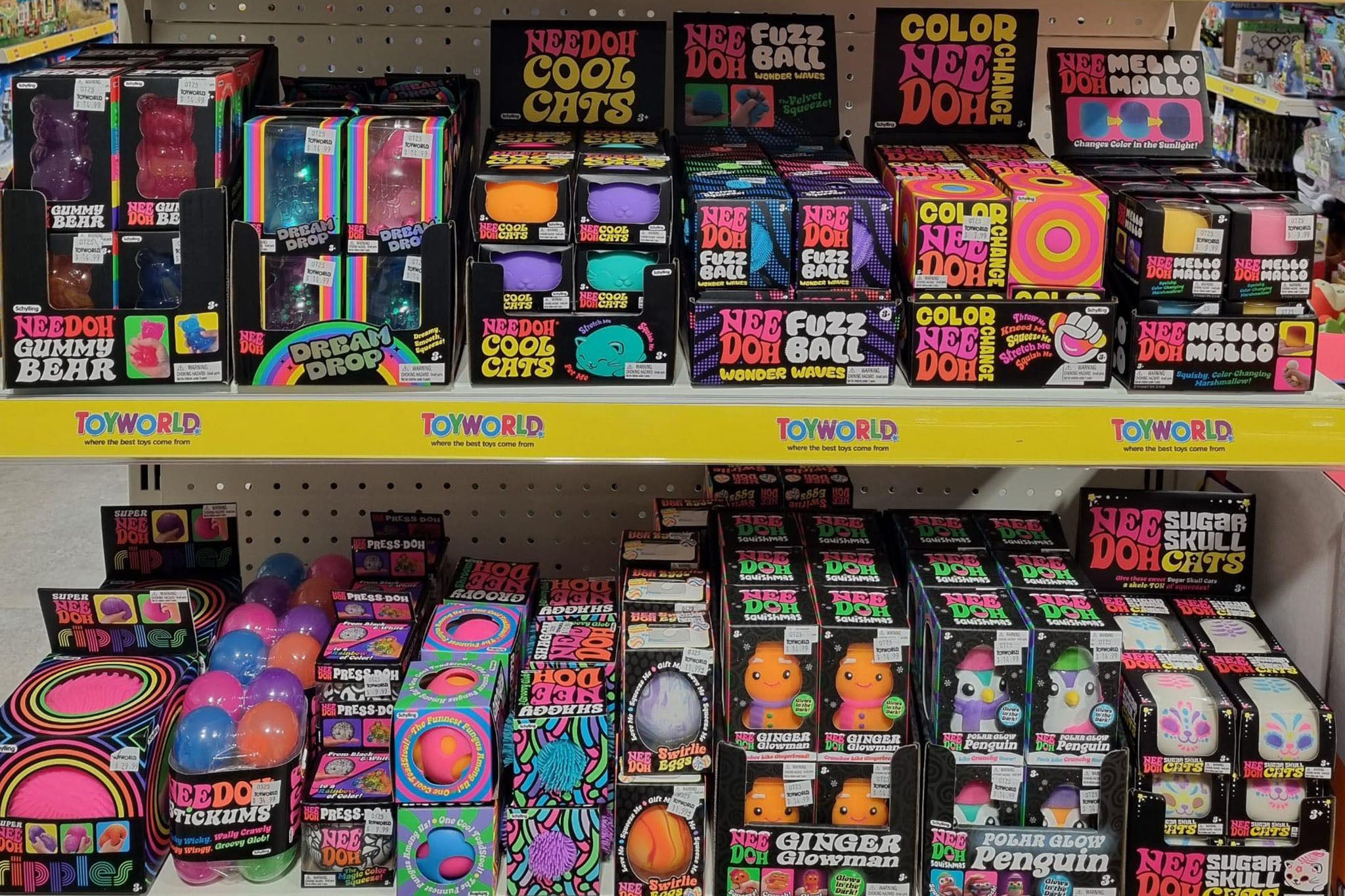
NeeDoh is the latest squishy sensory toy to go viral. Social media is reporting how these blobs of gel are flying off the shelves, and are in short supply.
But squishy sensory toys have been around much longer than this latest fad. You might remember putty, slime or stress balls.
So why are these products so popular? And when are sensory objects more than just toys?
What are these products?
NeeDoh is one of many stress-ball-esque, pliable, squeezable products.
They’re mainly made from a type of rubber or polymer. And their composition affects their consistency, pliability, texture and ability to form shapes.
For instance, they can be soft, stretchy and oozy while still being able to hold a shape. Some form into a ball and can bounce.
Often, the products are said to be non-toxic, durable and satisfying to squeeze repeatedly.
Why do people like them?
People find such products appealing for a number of reasons. This might depend on their personal preference, sensory sensitivity among neurodivergent people, energy levels, or a combination. They might:
- enjoy the tactile experience
- find it makes them feel calm
- allows them to focus more easily
- use these products to avoid other behaviours, such as nail biting.
Neuroscience helps explain some of this.
Brain regions associated with planning and emotional regulation are activated when adults squeeze a soft or medium density stress ball. This might explain why some people can feel calm or say they can focus on a task more easily.
The brain also wants fingers and hands to fidget and tinker, even when doing sedentary activities like reading. So rather than using hands for less accepted behaviours, such as skin picking or nail biting, they can be used to squish these objects. It can be comforting when we see others fidgeting too as it makes it more socially acceptable.
But not everyone likes how these squishable objects make them feel. Others find the sensation unpleasant or even painful.
We have neural circuits in our body and brain responsible for perceiving and processing incoming sensory information from the world around us, such as light, sound, pressure and temperature.
These circuits form a loop between our brain and body to work out if we find these sensations pleasant or unpleasant. If there is too much sensory input at one time, we can even find these sensations painful.
The serious side of sensory products
Sensory objects are more than a marketing gimmick. They are increasingly used in schools, but with mixed results.
There have been no formal studies on the educational benefits of NeeDoh. However, we can look at studies on fidget tools, such as fidget spinners or fidget cubes, in the classroom.
Some studies in primary school-age children show fidget tools increase on-task behaviour, decrease hyperactivity movements for children with ADHD (attention-deficit hyperactivity disorder). However, the results differ based on the type of fidget tool. There’s also limited evidence to show these tools help students accurately complete school work, such as answering a maths question.
About the authors
Susan Rowe is an Associate Professor in Clinical Psychology at Bond University.
Amy L. Kenworthy is a Professor of Management at Bond University.
Daniel Brennan is an Assistant Professor, Transformation CoLab at Bond University.
This article was first published by The Conversation and is republished under a Creative Commons licence. Read the original article.
Different children may also benefit from different types of fidget tool, depending on their needs and how stimulating their environment is. So it’s best to consult a health-care professional who will usually recommend a specific tool for a specific therapeutic purpose.
For instance, a wobble stool may be recommended to reduce hyperactive movement for one child or to increase movement and energy levels for a different child.
But the real benefit from the increased use of sensory objects in classrooms is this can increase acceptance of neurodivergence and make it more acceptable for those who once felt they had to mask their use.
Sensory tools are also being trialled in higher education. Our first-year students at Bond University set up “sensory toolboxes” to help the on-campus experience for neurodivergent students.
These boxes included items in a variety of textures and pliability. Items were “no sound” to reduce noise reverberation, which some people find unpleasant. Items included those that were smooth, bendy, stretchy, tactile and squishy. NeeDoh cubes were the most popular.
But these items weren’t only popular with students. Some educators said they also enjoyed the sensory stimulation of holding items from the box as they taught classes.
In a nutshell
If you enjoy their texture, and how they make you feel, there’s no harm in using squishable objects like NeeDoh.
These remind us that people experience textures and use their hands in different ways, and for different reasons.
But if you or your child want to use sensory tools therapeutically, check in with a health professional and your child’s inclusive-education teacher to match you with the right type. This may not be a squishable one.