


 Africana55 Radio

This website uses cookies so that we can provide you with the best user experience possible. Cookie information is stored in your browser and performs functions such as recognising you when you return to our website and helping our team to understand which sections of the website you find most interesting and useful.

Want to bookmark your favourite articles and stories to read or reference later? Start your Independent Membership today.
Already a member? Log in
“Look ahead and don’t overthink it!” my surf instructor, Ceciliano, instructs as I paddle furiously.
“Show conviction. Crouch. Now stand.” I slide into a warrior position, arms stretched out, navigating the swell. For one glorious second I’m vertical but it’s short-lived – the full force of a wave tips me off balance, spewing me onto the sand seconds later. Needless to say my teenage daughter is much better than me. She skirts the same wave elegantly, effortlessly upright as she reaches the shoreline.
“Come on, mama,” Ceciliano shouts at me. “You can do this. One more time.”
I’m much happier lying on my surfboard, staring at the sweep of sand on Seixal beach. Madeira is often called the Atlantic’s Hawaii and it’s easy to see why. World class surfing, volcanic mountains, misty forest walks and subtropical climate give it a Pacific feeling.
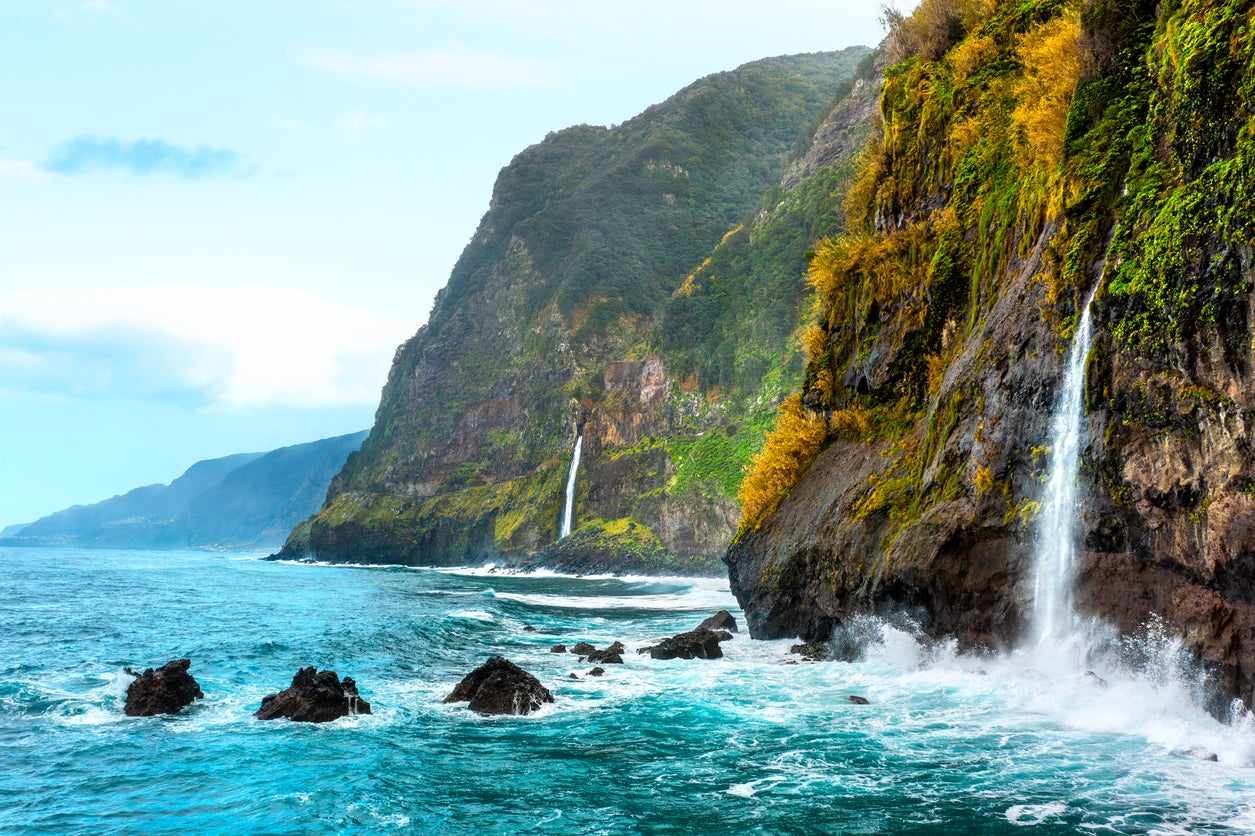
Madeira’s location helps to explain why it feels less like a European island and more like a long-haul destination. Closer to Morocco than mainland Portugal, it sits on the African tectonic plate.
“Every American that flies here says the same thing,” says our taxi driver on the way to the capital, Funchal. “It’s just like Hawaii. Either that or Rio de Janeiro.”
We lounge on the terrace of our hotel admiring the view – a spectacular sweep of lush emerald hills surrounded by ocean. Tearing ourselves away, we head to the harbour to pick up a boat and venture out into the swell of the late afternoon. Madeira may not match the diversity of Hawaii’s coral reefs but, thanks to an exceptionally deep sea close to shore, it’s in the same league for whale and dolphin spotting.
We skim the waves in our speedboat and within half an hour, we’ve made our first sighting: the tell-tale “footprints” of Bryde’s whales circling for fish. When they feed close to the surface, we can only see part of their bodies – a blowhole here, a dorsal fin there – so it’s difficult to get a sense of their true size.
Below the water, these warm-water tropical whales are huge, growing up to 15 metres long, or the size of a large bus. Nearby are pods of bottlenose dolphins. We head back close to the coastline, past the pretty fishing village Camara de Lobos Bay, which Winston Churchill painted during a visit in 1950. Back at the hotel, we tuck into red snapper risotto at their rooftop restaurant and enjoy a dip in the pool.
The next morning, to really experience Madeira’s wild side, we meet our guide, Renaldo, for a Jeep tour. Leaving Funchal behind us and heading north west, we zigzag up a series of narrow inclines too steep for a normal car, surrounded by banana plantations and vertiginous drops into the sea.
“You can plant literally everything here and it will grow thanks to the volcanic soil,” says Renaldo, pointing out mimosa, palms, papayas, passion fruit, mangos and avocados.
Read more: I’m a travel expert and this is where I’d go in shoulder season when prices drop
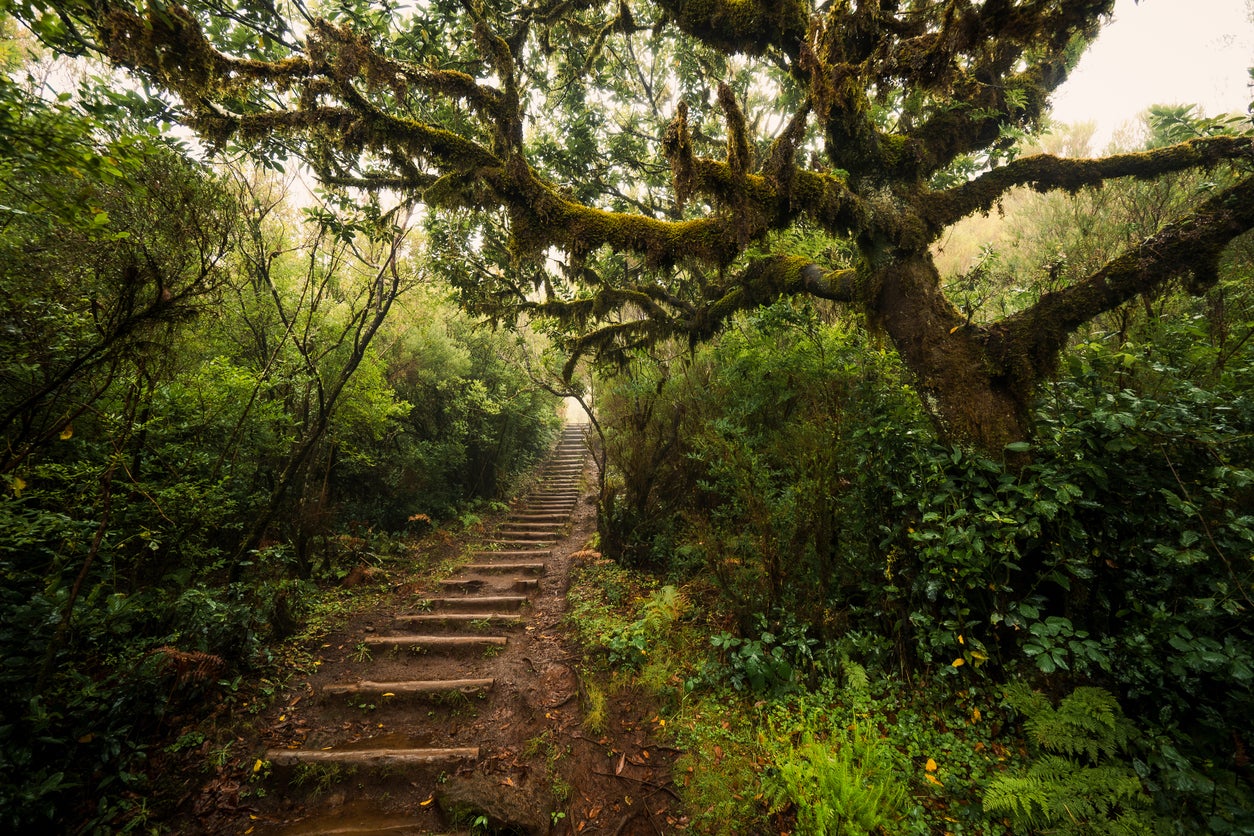
Our next stop is Fanal, a mystical laurel forest on the Paul da Serra plateau. Some of its ancient trees are up to 800 years old. One of the stranger sights is seeing cows roaming freely, as farmers bring their cattle here to graze. As we climb higher, a bank of white cloud settles above us known as Madeira’s second ocean.
It feels eerie and remote, and yet less than 90 minutes later, we’re back in Funchal at the buzzy Three House restaurant, overlooking the harbour. You can sit at the bar as they prepare dishes in their open kitchen. Black scabbard fish and banana guacamole is a highlight, as is their Basque cheesecake.
On our final day, we get a sense of Madeira’s history while hiking the Levada do Rei on the island’s north-eastern side. Levadas are narrow aqueducts, first built in the 15th century to irrigate the sugar cane and vines, and are unique to the island. Many of them pass through Laurissilva, a subtropical forest that dates back millions of years.
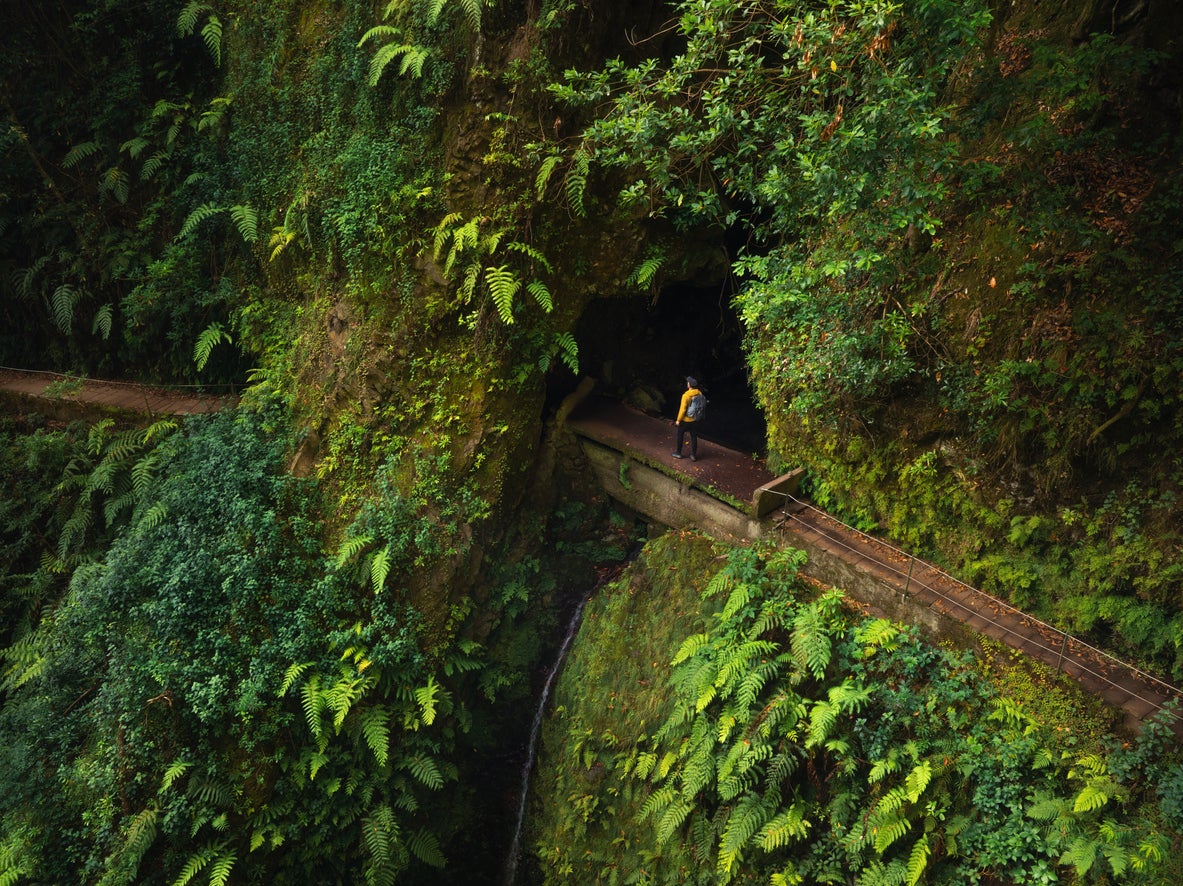
As we climb higher, it feels like a land that time forgot – sunlight glints through the dense canopy above; looping vines, giant ferns and moss drip with humidity and, briefly, we’re soaked as we follow the levada under a cascading waterfall. Eventually the path leads us to Ribeiro Bonito, a ravine deep in the forest where we stop for lunch.
As we retrace our steps back home, our guide tells us how thousands of Madeirans travelled to Hawaii in the 19th century to work on its expanding sugar plantations. Maybe they were drawn to how similar the surroundings were, she says. In which case, comparing Madeira to Hawaii isn’t as fanciful as it sounds.
How to do it
Numerous airlines fly from Britain to Funchal, including Jet2 from Manchester and British Airways from London Gatwick.
Where to stay
The Vine Hotel in Funchal is a contemporary design hotel in the centre of town with a rooftop restaurant and cocktail bar, and views of the ocean from its sleek outdoor pool. Rooms from £177 per night.
Emma was a guest of Visit Medeira