


 Africana55 Radio


This website uses cookies so that we can provide you with the best user experience possible. Cookie information is stored in your browser and performs functions such as recognising you when you return to our website and helping our team to understand which sections of the website you find most interesting and useful.

Want to bookmark your favourite articles and stories to read or reference later? Start your Independent Membership today.
Already a member? Log in
The U.S. has officially surrendered its measles-free standing, international public health authorities announced on Tuesday, after the highly transmissible pathogen spread predominantly among unvaccinated individuals at its fastest pace recorded in more than 30 years.
Mexico has also forfeited its measles-elimination classification following a resurgence of the virus, which included a severe outbreak in Chihuahua state. Bolivia similarly lost its status.
The formal declaration by the Pan American Health Organization carries minimal practical consequences and remains primarily symbolic, yet it underlines a stark reversal for a condition previously restrained by decades of scientific progress. It could also mark the start of a period in which historical illnesses emerge as serious threats to modern societies.
Transmission of the virus has been documented across the Americas since 2024. North American outbreaks originally began within close-knit Mennonite populations before widening into regions marked by lower immunization rates. Canada lost its own measles-free status last year for the first time since 1998.
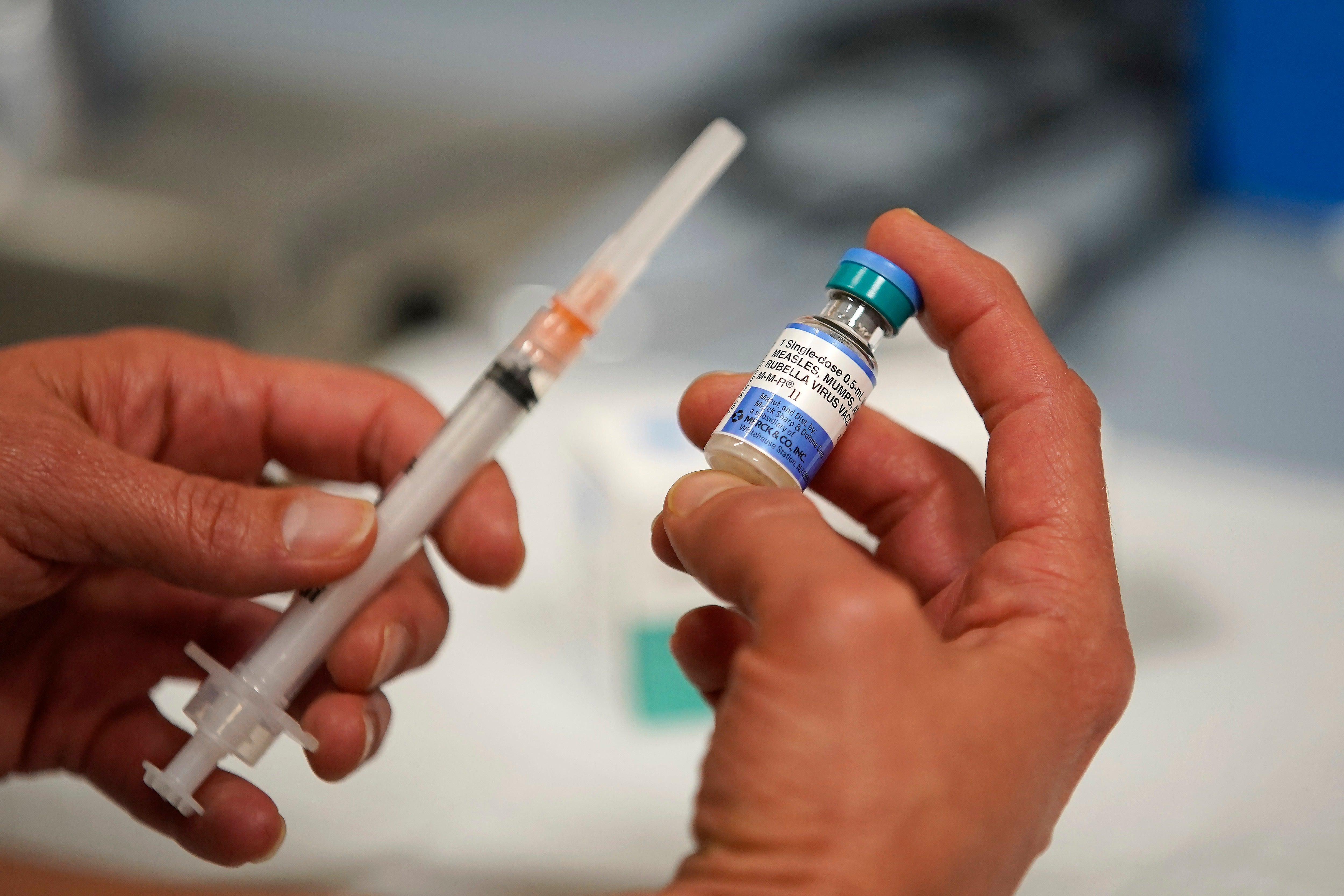
Global health experts define measles elimination as the absence of continuous local transmission among a population. The metric relies on whether any single transmission chain remains active without interruption for 12 months or longer.
Tuesday’s update reflects a clear weakening of public health readiness.
Immunization coverage has been falling across several diseases, both within the U.S. and around the world. As one of the most infectious illnesses in medical history, measles was widely expected to be among the initial vaccine-preventable diseases to return when inoculation numbers drop.
Medical specialists indicate that additional diseases are likely to follow.
"It can be the canary in the coal mine to other things," said Dr. Susan Kansagra, chief medical officer of the Association of State and Territorial Health Officials.
Vaccine rates fall and cases go up
Measles vaccines have safely stopped the virus’ spread in the U.S. for 30 years.
It takes a community vaccination rate of 95% to prevent outbreaks, experts say. But as fewer parents vaccinate their children and federal leaders sow doubt and confusion about the importance of getting vaccinated, the virus has found footholds in communities across the U.S. All but three states have reported a confirmed case of measles this year.
“This humiliating determination is the tragic yet predictable result of an ongoing campaign by grifters, quacks and charlatans to put their own greed and self-worth ahead of the health and safety of children,” said Sen. Ron Wyden, a Democrat from Oregon.
The last two years have been the worst in a generation in the U.S., with more than 7,000 cases and 11 deaths. Nearly all of those people were either unvaccinated or didn’t report whether they were vaccinated. More than 10% of those infected had to be hospitalized.
The illness typically begins with a high fever followed by a telltale rash that starts on the face and neck. Most people recover, but it’s one of the leading causes of death among young children, according to the World Health Organization. Serious complications, including blindness and swelling of the brain, are more common in young children and adults over age 30.
Ten measles-associated deaths have been reported in the U.S. this year. Health officials have not released detailed information on each death, but at least five of the dead were children.
This year’s measles death count is higher than what has been seen in any previous year in more than three decades. And the U.S. is experiencing its worst year for measles illnesses since 1991.
Major outbreaks in Texas, Utah, South Carolina and Pennsylvania
Since the U.S. eliminated measles in 2000, public health officials usually logged less than 200 cases a year, most of them tied to international travel. But since 2025, measles has sickened thousands. It started with a major outbreak in the southwest.
In Texas, more than 760 people got sick and two children died. And in New Mexico, about 100 people got sick and one adult died.
In the summer of 2025, measles exploded in extremely rural border towns in Arizona and Utah. And a major outbreak in South Carolina in the winter and spring sickened nearly 1,000 people to become the fastest growing measles outbreak the nation has seen in decades.
Bad as 2025 was, this year has been much worse. The more than 5,400 confirmed cases so far this year are already double the 2025 tally, driven largely by an outbreak in Pennsylvania that has dwarfed the earlier ones.
And the outbreak tallies are almost certainly an undercount, public health experts say.
Critics say the US response is falling short
U.S. Health Secretary Robert F. Kennedy Jr., who has no formal medical training, was a leading voice in the anti-vaccine movement before President Donald Trump appointed him to oversee federal health agencies.
Kennedy and other federal leaders have argued that vaccination rates were waning for years before Trump took office a second time, that measles is not an “American phenomenon," and that the U.S. government is handling measles better than other countries. In January, a CDC leader told reporters that the loss of the nation's elimination status would be the “cost of doing business” globally.
It's true that other countries are struggling with measles, and some also have lost their measles-elimination status. But some experts say the outcome in the U.S. wasn't inevitable.
The government has been taking some steps. In August and September, the U.S. Centers for Disease Control and Prevention awarded $100 million — in two tranches — to support state and local measles-response work. And Kennedy and CDC Director Dr. Erica Schwartz have made statements that vaccination is the best way to prevent measles from spreading.
But state and local health officials say the cost is far higher than that.
“It wasn't a lot of money, frankly,” said Chrissie Juliano, executive director of the Big Cities Health Coalition, which represents three dozen of the largest U.S. city health departments.
Experts also say the moment demands a louder federal voice — and a bigger push for vaccinations — than Kennedy and Schwartz are providing. Some noted that neither Kennedy nor the CDC has scheduled a news conference for this week to address how they plan to try to regain measles-elimination status.
“When the people at the front of the room are not speaking loudly and frequently in support of vaccination, the program starts to falter. And that's what we're seeing in the U.S.," said Noel Brewer, a University of North Carolina public health professor who chairs a committee that presented an analysis of U.S. measles data to PAHO last week.
“The federal government has had such a ho-hum response," he said. "How many kids have to die before they start getting concerned?
"At what point is this relic of the past, stealing children from us, going to create outrage and action from the federal government?”
What's next?
After hugely successful vaccination campaigns, the Americas became the first region in the world to be free of measles in 2016. Health officials estimate the measles vaccine prevented 6.2 million deaths in the Americas between 2000 and 2023.
Now, the entirety of North America faces the task of earning back the designation.
Some individual countries have achieved, lost, and then regained measles-elimination status. Brazil is one example. Another is the United Kingdom, although it lost its status a second time — this year.