


 Africana55 Radio

This website uses cookies so that we can provide you with the best user experience possible. Cookie information is stored in your browser and performs functions such as recognising you when you return to our website and helping our team to understand which sections of the website you find most interesting and useful.
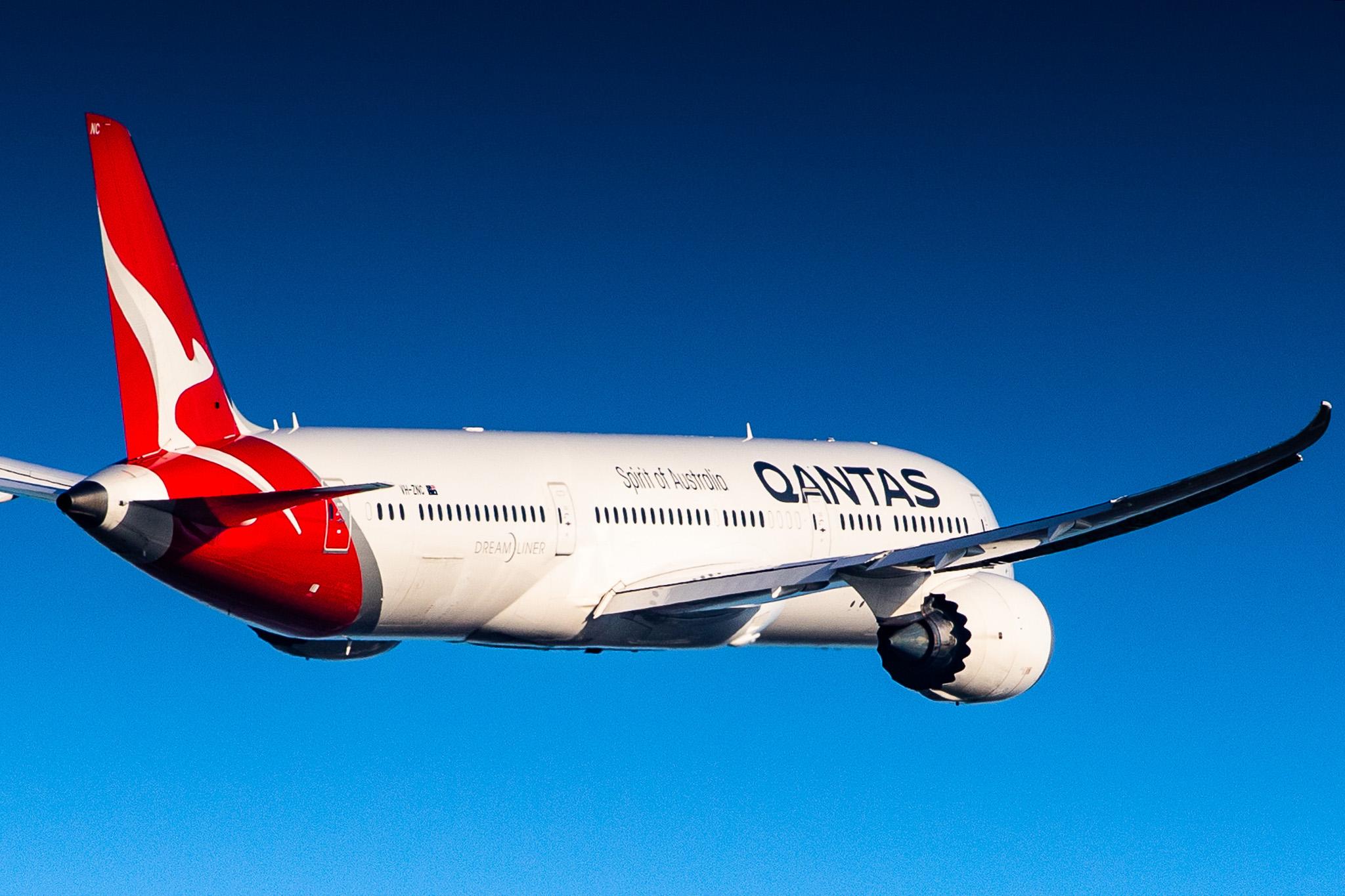
As I write, a Boeing 787 has just cleared the north coast of Western Australia. It is 5.05pm on Tuesday, and the flight from Perth to London Heathrow is due to land in exactly 12 hours. But instead of a civilised early evening departure, Qantas flight QF9 took off just before midnight and is currently four hours late.
I imagine most of the passengers aboard the aircraft registered as VH-ZNI (isn’t the internet wonderful?) are cheesed off. But some will be less annoyed than others: the people occupying the business class cabin of 42 lie-flat beds, who I hope are currently slumbering soundly. They have paid enough for the privilege.
Some, though, may be sleeping smugly as well as snugly: the economy class passengers who successfully bid for an upgrade to business.
Westbound QF9 and its eastbound counterpart QF10 are the only nonstops between Europe and Australia, and the route is mainly operated for the corporate traveller, for whom companies will pay a pretty premium.
I imagine that Qantas keeps a few posh seats deliberately free for selling at high prices to last-minute business travellers at, or close to, the maximum fare of £3,500-plus. (Yes, that is one way.) But airlines are good at predicting loads.
Created with Sketch.
Created with Sketch.
1/20 Qantas
Check up: the Qantas fleet of Boeing 737-800 aircraft are being examined
Qantas
2/20 Air New Zealand
Air New Zealand
Getty Images
3/20 Eva Air
Eva Air
Getty Images
4/20 Etihad
Etihad
Getty Images
5/20 Qatar Airways
Qatar Airways
Heathrow Airport
6/20 Singapore Airlines
Singapore Airlines
Getty
7/20 Emirates
Emirates
AFP/Getty
8/20 Alaska Airlines
Alaska Airlines
Getty Images
9/20 Cathay Pacific
Cathay Pacific
Getty
10/20 Virgin Australia
Virgin Australia
Getty Images
11/20 Hawaiian Airlines
Hawaiian Airlines
Hawaiian Airlines
12/20 Virgin Atlantic
Virgin Atlantic
Virgin Atlantic
13/20 TAP Portugal
TAP Portugal
Getty Images
14/20 SAS
SAS
AFP/Getty
15/20 Royal Jordanian
Royal Jordanian
Björn Strey/Wikimedia
16/20 SWISS
SWISS
Getty Images
17/20 Finnair
Finnair
Getty
18/20 Lufthansa
Lufthansa
Reuters
19/20 Aer Lingus
Aer Lingus
AFP/Getty
20/20 KLM
KLM
Getty
1/20 Qantas
Check up: the Qantas fleet of Boeing 737-800 aircraft are being examined
Qantas
2/20 Air New Zealand
Air New Zealand
Getty Images
3/20 Eva Air
Eva Air
Getty Images
4/20 Etihad
Etihad
Getty Images
5/20 Qatar Airways
Qatar Airways
Heathrow Airport
6/20 Singapore Airlines
Singapore Airlines
Getty
7/20 Emirates
Emirates
AFP/Getty
8/20 Alaska Airlines
Alaska Airlines
Getty Images
9/20 Cathay Pacific
Cathay Pacific
Getty
10/20 Virgin Australia
Virgin Australia
Getty Images
11/20 Hawaiian Airlines
Hawaiian Airlines
Hawaiian Airlines
12/20 Virgin Atlantic
Virgin Atlantic
Virgin Atlantic
13/20 TAP Portugal
TAP Portugal
Getty Images
14/20 SAS
SAS
AFP/Getty
15/20 Royal Jordanian
Royal Jordanian
Björn Strey/Wikimedia
16/20 SWISS
SWISS
Getty Images
17/20 Finnair
Finnair
Getty
18/20 Lufthansa
Lufthansa
Reuters
19/20 Aer Lingus
Aer Lingus
AFP/Getty
20/20 KLM
KLM
Getty
With more than a year’s experience on this route, Qantas presumably knows it will have some spare capacity that it can upsell to economy passengers by inviting them, by email, to bid. Such an auction system is ideal because it avoids revealing fares that wildly undercut the prices paid by “real” business passengers.
The reason I am tracking QF9 this evening is that one traveller on the route has just asked me whether she should try to upgrade at the minimum bid of £900.
The answer will ultimately depend on her sense of value and robustness of credit card – and, of course, it may be entirely academic if her bid proves insufficient.
My response is that it’s good to have that opportunity. However, I’m not sure I would pay £900 – close to £1 per minute – for the privilege of business class on a 17-hour flight. That amounts to some very expensive sleep and slightly better food and drink.
In fact, I am confident I wouldn’t: £900 buys some wonderful travel opportunities, and while sitting upright all night I could always plan those adventures – made possible by not opting for the upgrade.
Yet, if you happen to be travelling with a companion that could change the proposition. If the cabin crew were prepared to allow it, I can see that splitting the business class seat into eight or nine hours each would have some appeal. You could both enjoy some fancy catering (which would generally benefit the person choosing the first half) and decent sleep (the last eight hours would be best).
On any route when you are flying long haul from an airport a long way from the airline’s base, you can ask the manager on duty at the check-in area if last-minute upgrades are possible. Once the final loads are known, it is not beyond the bounds of possibility that something like £500 might do the trick.
Finally, my personal upgrade trick isn’t an actual better seat – just more space. Both going from Perth to London and in the opposite direction, I made sure I was last on the plane, and successfully scoured the economy cabin for two empty seats together.
Currently, there’s a particularly good chance of that. The decision to avoid Iraqi and Iranian airspace requires a sub-optimal flight path, which in turn means that the full payload of economy passengers cannot be carried.
With mandatory empty seats, extra elbow and legroom abounds in economy – which, as the plane battles headwinds towards Christmas Island with another 15 hours to go, is good news for those in the cheap seats.