


 Africana55 Radio

This website uses cookies so that we can provide you with the best user experience possible. Cookie information is stored in your browser and performs functions such as recognising you when you return to our website and helping our team to understand which sections of the website you find most interesting and useful.

Want to bookmark your favourite articles and stories to read or reference later? Start your Independent Membership today.
Already a member? Log in
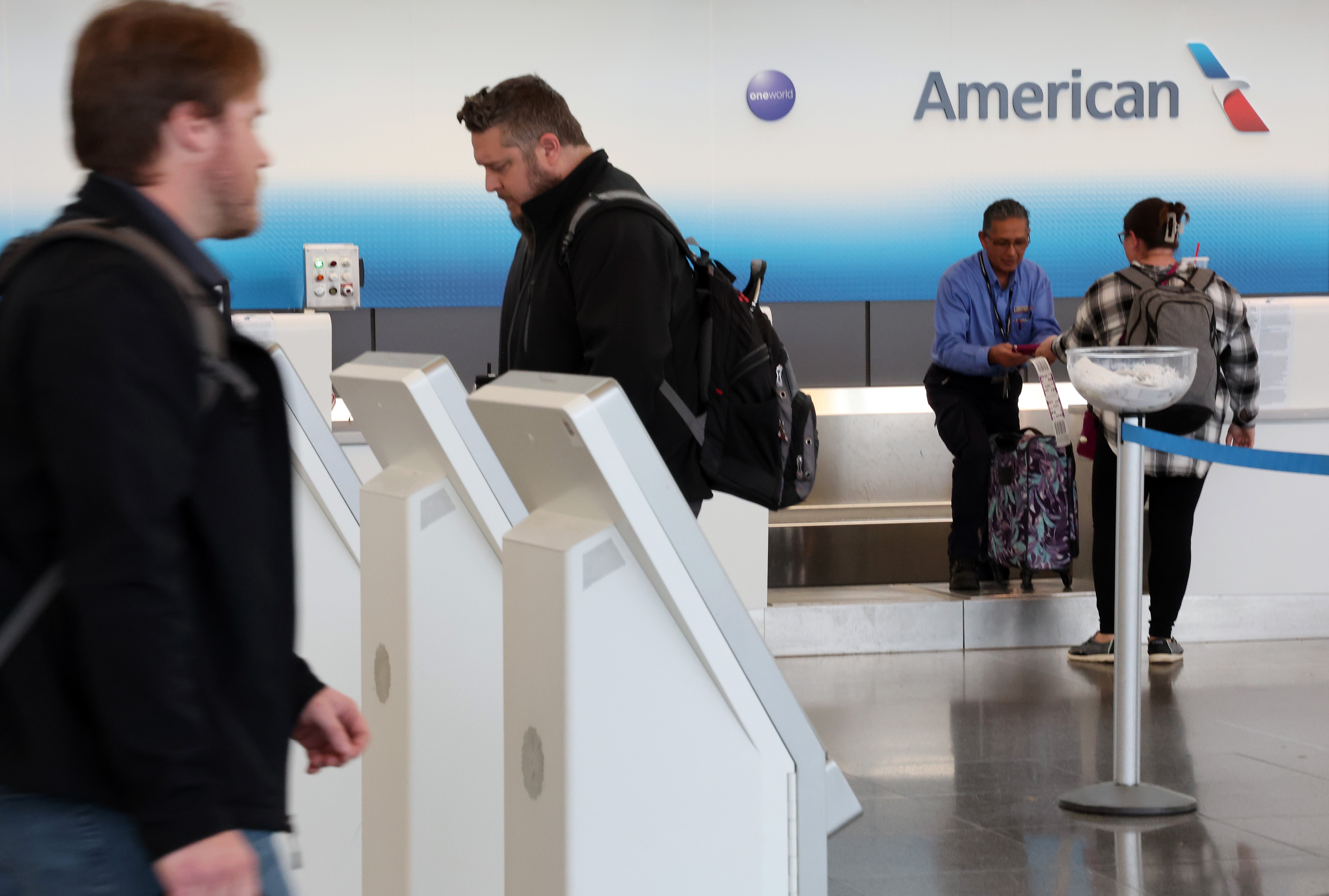
Airline tickets are unlikely to get cheaper even if fuel prices fall, an American Airlines executive has warned, as soaring costs linked to the Iran war push the carrier toward an annual loss.
Jet fuel prices have more than doubled since the Iran war began in late February, forcing airlines to raise fares. But even when fuel prices fall, travelers may not see savings as carriers try to protect their profits and recover higher operating costs.
“If fuel comes down, I think airfares probably stay largely where they’re at right now,” American’s finance chief Devon May told the Financial Times this week. “If fuel prices go up, we need to generate higher yield, we need to generate higher fares to offset that higher fuel price.”
The average base fare, not including extra fees for checked bags or choosing seats, rose from $405 in late 2025 to $428 in the first three months of this year and $436 in the second quarter, according to the Bureau of Transportation Statistics. Fuel prices have fluctuated significantly during the same period, making it difficult for airlines to plan their spending.
“It’s not just the level of fuel costs that is a problem or a challenge for airlines,” Brett House, an economist at Columbia Business School, told The Independent last month. “It’s also the volatility.”
Airlines also sell tickets months before flights depart, limiting their ability to respond immediately to sudden fuel price changes.
United Airlines Chief Financial Officer Mike Leskinen said at an investor conference last month: “I don’t actually care if it stays high. I just need it to stabilize.”
May said Thursday fares had not fully recovered in real terms since the COVID-19 pandemic, leaving airlines room to raise prices.
“This [price increase] ideally should have happened back in 2024, but the industry found itself in an oversupply environment . . . This was the first year that everything came together in a way that we were able to push yields back up to where they were seven years ago in real terms,” May said.
American Airlines’s revenue rose 19 percent in the third quarter compared with the same period last year, as more customers paid for premium seats and business travel picked up. But higher fuel prices added $1.9 billion to its costs, forcing the airline to lower its profit forecast and warn it could lose $1 to $1.60 per share.
Delta Air Lines also lowered its profit forecast, even though its third-quarter revenue rose 16 percent from a year earlier. United Airlines, meanwhile, took a $1.8 billion hit from higher fuel prices but made back 72 percent of that money by raising ticket prices.
Despite the rising ticket prices, passengers are still booking flights, airlines say. Delta said it raised fares by about 20 percent without seeing a noticeable drop in sales, while demand for premium seats, airport lounges and other upgrades has helped carriers boost revenue.
Months of high jet fuel prices linked to the Iran war have pushed holiday airfares to their highest levels in a decade, according to travel-booking company Hopper.
Round-trip domestic flights average $402 for Thanksgiving, up 31 percent from last year, and $452 for Christmas, up 23 percent, the company reported last month. Christmas hotel rates average $197 per night, up 18 percent, while Thanksgiving hotel rates remain steady at $170.