


 Africana55 Radio

This website uses cookies so that we can provide you with the best user experience possible. Cookie information is stored in your browser and performs functions such as recognising you when you return to our website and helping our team to understand which sections of the website you find most interesting and useful.

Want to bookmark your favourite articles and stories to read or reference later? Start your Independent Membership today.
Already a member? Log in
Blocked by a beaver dam, I turn my kayak around and retreat into a long, dark drainage tunnel. I keep compact, head ducked low and paddle stuck out like a barge pole, poking the corrugated metal sides to stay centred.
“When the water’s high, your head almost touches the top,” says my guide, Joe Bryan, paddling ahead. “I’ve had to use my hands to pull me through before – imagine that.”
I try not to, focusing instead on the light ahead.
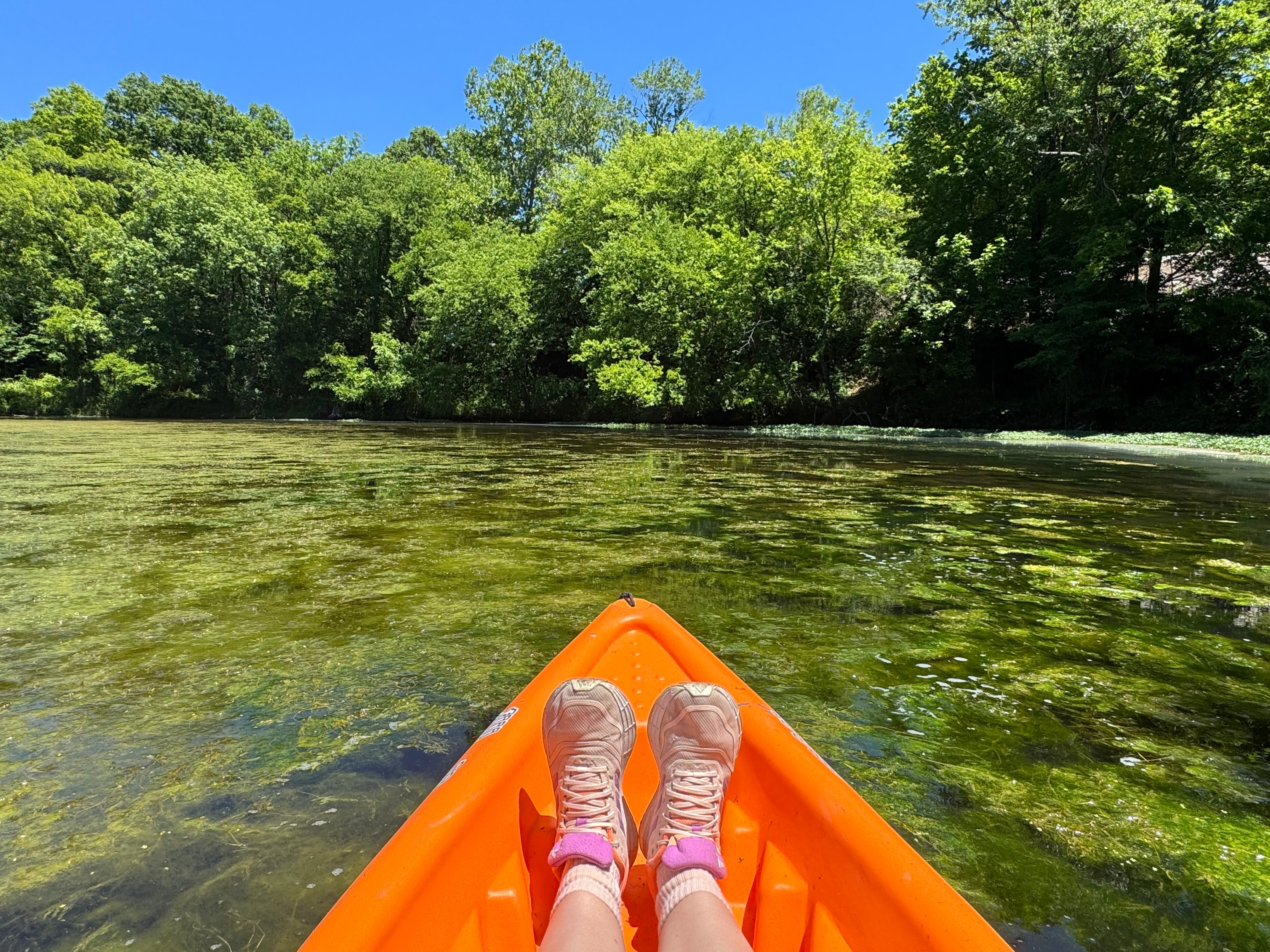
When I emerge, my eyes adjust to a beautifully still lake, bright green from vegetation below and ringed by trees; their branches reaching over the water.
“Some of these trees are estimated to be 250 years old,” says Joe, who was raised around these waters, known locally as the Hidden Meadows. “We call them witness trees.”
An unsettling phrase. But what they witnessed is the reason I have come here to Calhoun, on the north bank of Tennessee’s Hiwassee River. Because this land was not always under water.
Read more: Mitchelville could be the most important place you visit in the USA
I am on a week-long journey across the state, following the traces of a dark period in American history that many visitors, and even many people living alongside it, still overlook: the Trail of Tears.
A chapter of history with no happy ending, it refers to the forced removal of more than 16,000 Cherokee people from their homelands in Tennessee, Georgia, Alabama and North Carolina during 1838 and 1839. It’s a story that feels particularly pertinent as America marks its 250th anniversary this year.
As I paddle across the near-10-acre lake, Joe tells me how soldiers and state militia drove families from their homes, confined them in camps and forced them west by road and river. An estimated 4,000 died during the removal and its aftermath from disease, hunger, exposure and exhaustion.
Beneath my kayak, I learn, is a former detention site for around 3,000 Cherokee people, who were held here before being taken to larger camps and eventually forced west to Indian Territory in what is now Oklahoma.
“People have grown up in this town their whole lives and don’t know this is here,” Joe tells me – a point that resurfaces throughout my trip.
One of the most infamous larger camps was Fort Cass, directly across the Hiwassee in Charleston. Both towns once lay within the Cherokee Nation, but an 1819 treaty shifted the US border to the river: for a time, Charleston remained Cherokee territory while Calhoun became part of the United States.
Locals from both towns later formed the Charleston-Calhoun-Hiwassee Historical Society and created the Hiwassee River Heritage Center, where I head the next day. Its displays recount local Trail of Tears and Civil War history, while plans are under way for an interpretive greenway linking the centre with Calhoun’s riverbanks.
As I move between these small towns, there’s something chilling about their proximity. I start to get a sense of all the communities that must have been torn apart by this exercise of removal. Clearer to me still is that the Trail of Tears was more than a single route people passed along; the whole landscape was one of confinement. I guess that’s why attempting to retrace it feels so scattered – because this history is embedded in every corner of the state and numerous others.
As Ava Lowery, an archaeology specialist at Chattanooga Audubon Society, later tells me: “Anywhere there was a Cherokee person’s front door is the Trail of Tears because they were moved and marched out at gunpoint.”
The expulsion followed decades of pressure on Cherokee land. President Andrew Jackson signed the Indian Removal Act in 1830, and five years later a small minority of Cherokee leaders, acting without authority from the Cherokee government, signed the Treaty of New Echota, surrendering the Nation’s eastern lands. Most Cherokee rejected it, but in 1838 federal troops and state militias began forcing them from their homes.
Ava also points to the 1832 Supreme Court ruling in Worcester v Georgia, which held that Georgia’s laws had no force within Cherokee territory. Jackson’s administration refused to defend Cherokee sovereignty and removal continued.
Read more: How this Alabama town refusing to forget its civil rights story
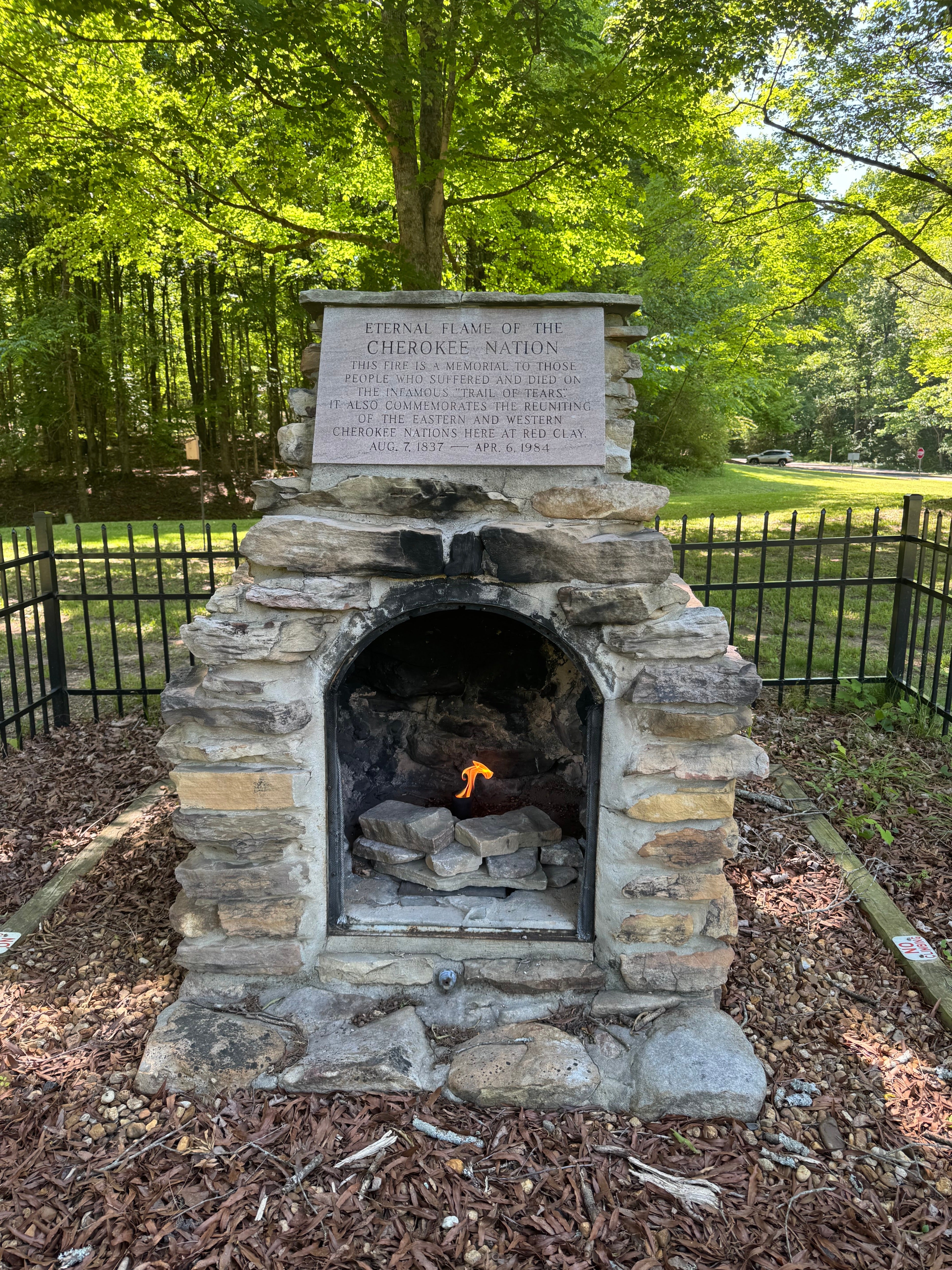
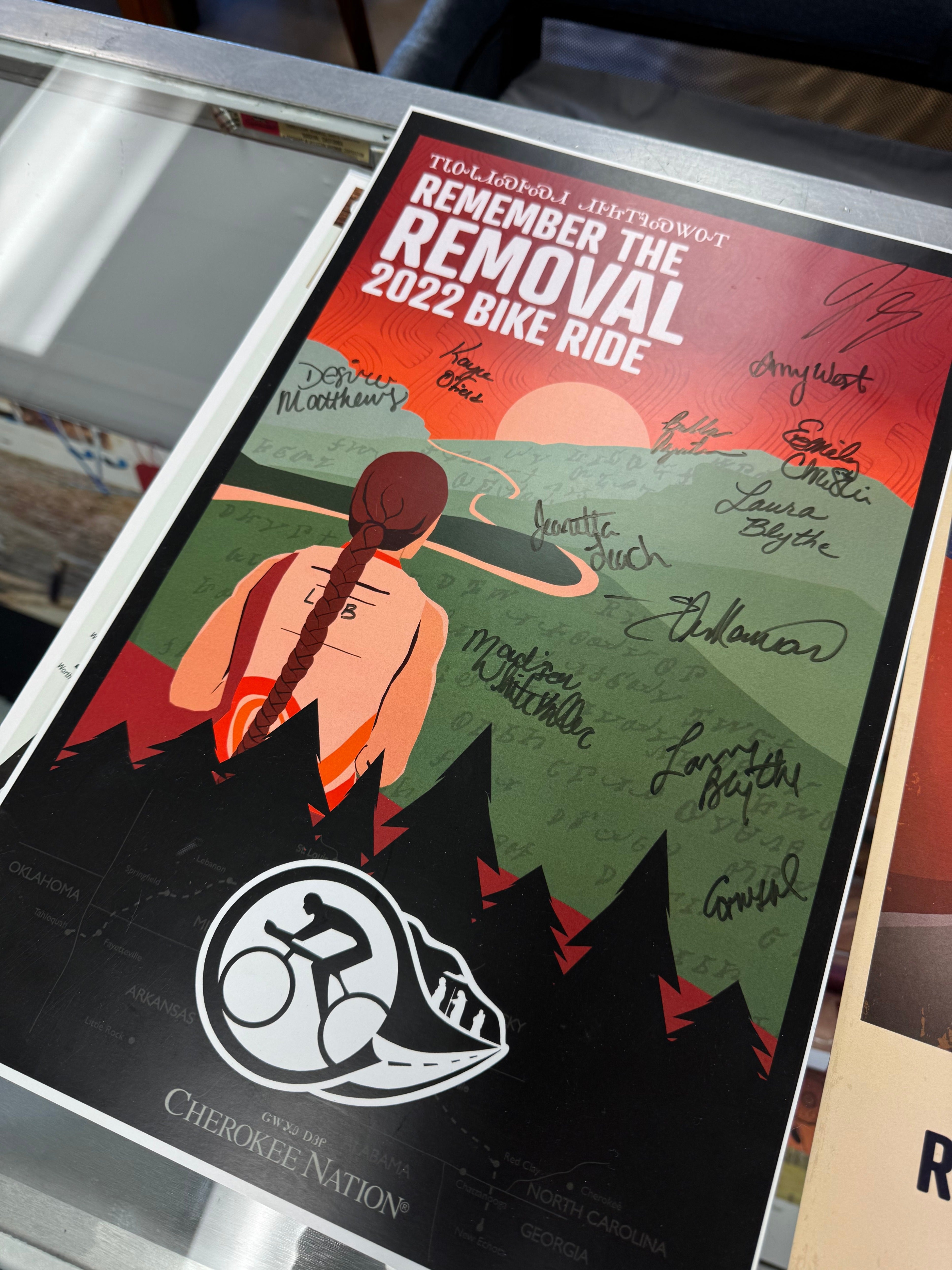
From Charleston, I drive 20 minutes to Cleveland and Red Clay State Historic Park, where the Cherokee Nation made its last stand before removal. Today, visitors come for trails and wildlife, but can also explore replica Cherokee structures, the sacred Blue Hole Spring and an Eternal Flame memorial. Each June, the flame is visited by Remember the Removal Bike Riders from the Cherokee Nation and Eastern Band of Cherokee Indians, who cycle the Northern Route in memory of their ancestors.
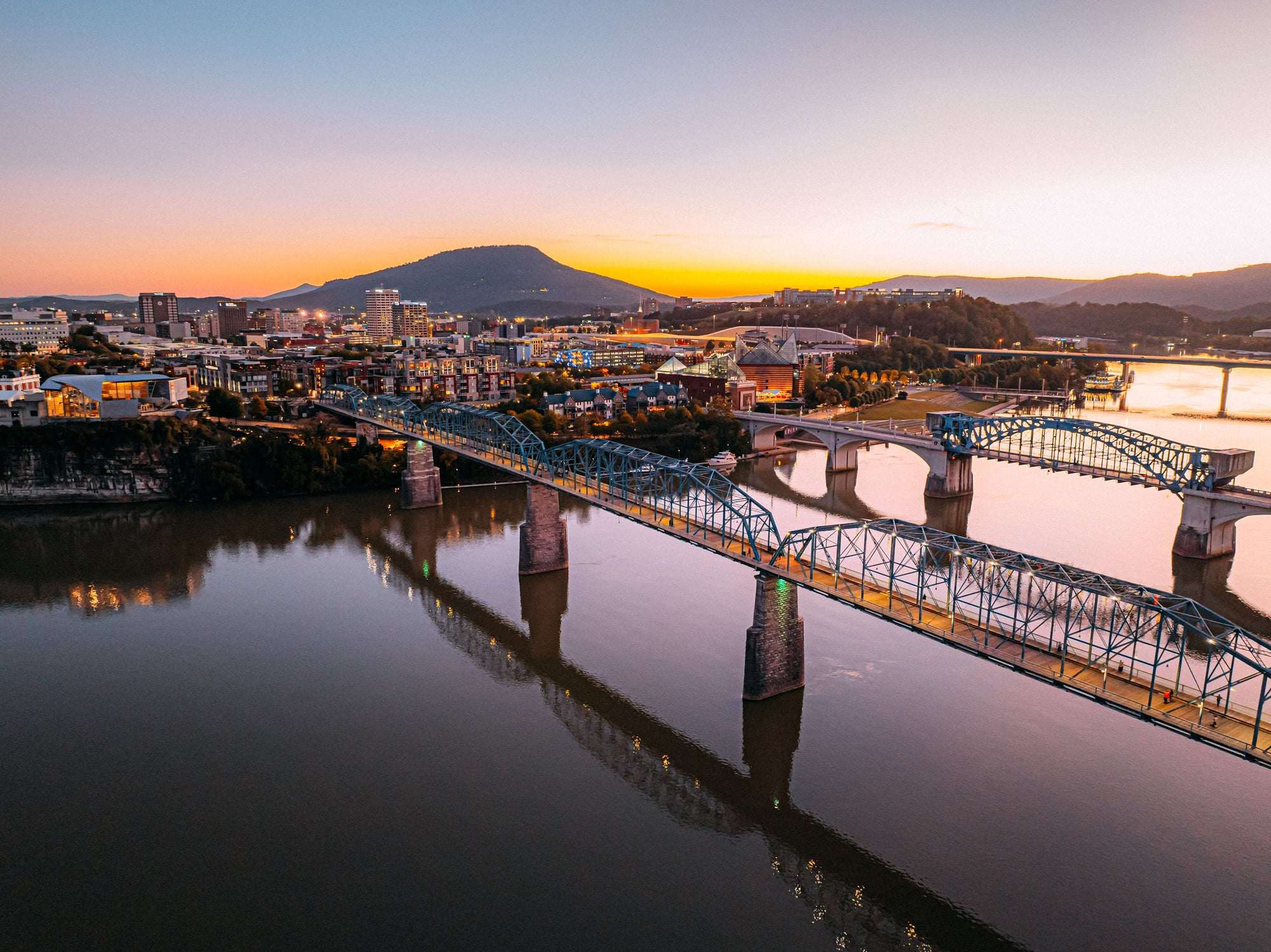
An hour south is Chattanooga. Sat along the Tennessee River at the foothills of the Appalachian Mountains, it’s a city better known for outdoor adventures around the Tennessee River and Lookout Mountain. Yet Native American history is deeply embedded in the landscape.
I start at Moccasin Bend National Archeological District, a peninsula of wetlands and woodland with evidence of 12,000 years of human habitation and a Trail of Tears route crossing through it.
At its northern tip is Williams Island, a 450-acre island accessible only by boat and inhabited over thousands of years by Indigenous peoples, including ancestors of the Cherokee and Muscogee Creek.
Today, it is managed by the Tennessee River Gorge Trust, whose executive director, Eliot Berz, takes me out by boat. The trust is working with groups including the Eastern Band to increase tourism responsibly; eight free campsites can currently be reserved on the island.
“Just to be in a place where you know people have been for so many thousands of years – it feels special to me,” Eliot says. But interpretation, he adds, must be led by the people whose history is being presented. “We want them to tell their story rather than us tell it.”
That balance is delicate. Five minutes after docking, we meet campers whose first questions concern what they might find. An arrowhead, perhaps, or another trace of the island’s earlier inhabitants?
This curiosity is part of a wider challenge in protecting Native American history, Miranda Panther later tells me. She is a Native American Graves Protection and Repatriation Act (NAGPRA) officer for the Eastern Band.
“When undue attention is drawn to sites that are culturally significant to tribes, looting increases,” she says. “But an artefact is a non-renewable resource. Once that artefact is removed, it can’t tell us anything about that site.”
Read more: Visiting the Crooked Road in southwest Virginia
Johi Griffin Jr, a citizen of the Eastern Band, adds: “Our ancestral artefacts and remains have been treated like dinosaur bones – as if we were extinct, so we didn’t matter. But even though we may not physically be there, we have ancestral ties to this place.”
People buried across Tennessee may still have living relatives, he says, and the land remains “more than a possession”. Through NAGPRA, the Eastern Band can seek the return of Cherokee ancestors and cultural belongings held by museums, though opening archaeological sites to visitors remains complicated.
The following day, I drive four hours west to Nashville. Passing between wooded ridges, small towns and broad river valleys, I find it difficult not to imagine the hardship of those forced across this terrain on foot.
Nashville is famous as the beating heart of American country music, but under the honky-tonks and neon-lit bars lies more untold Indigenous history, with the Trail of Tears, unknown to many, passing directly through the capital.
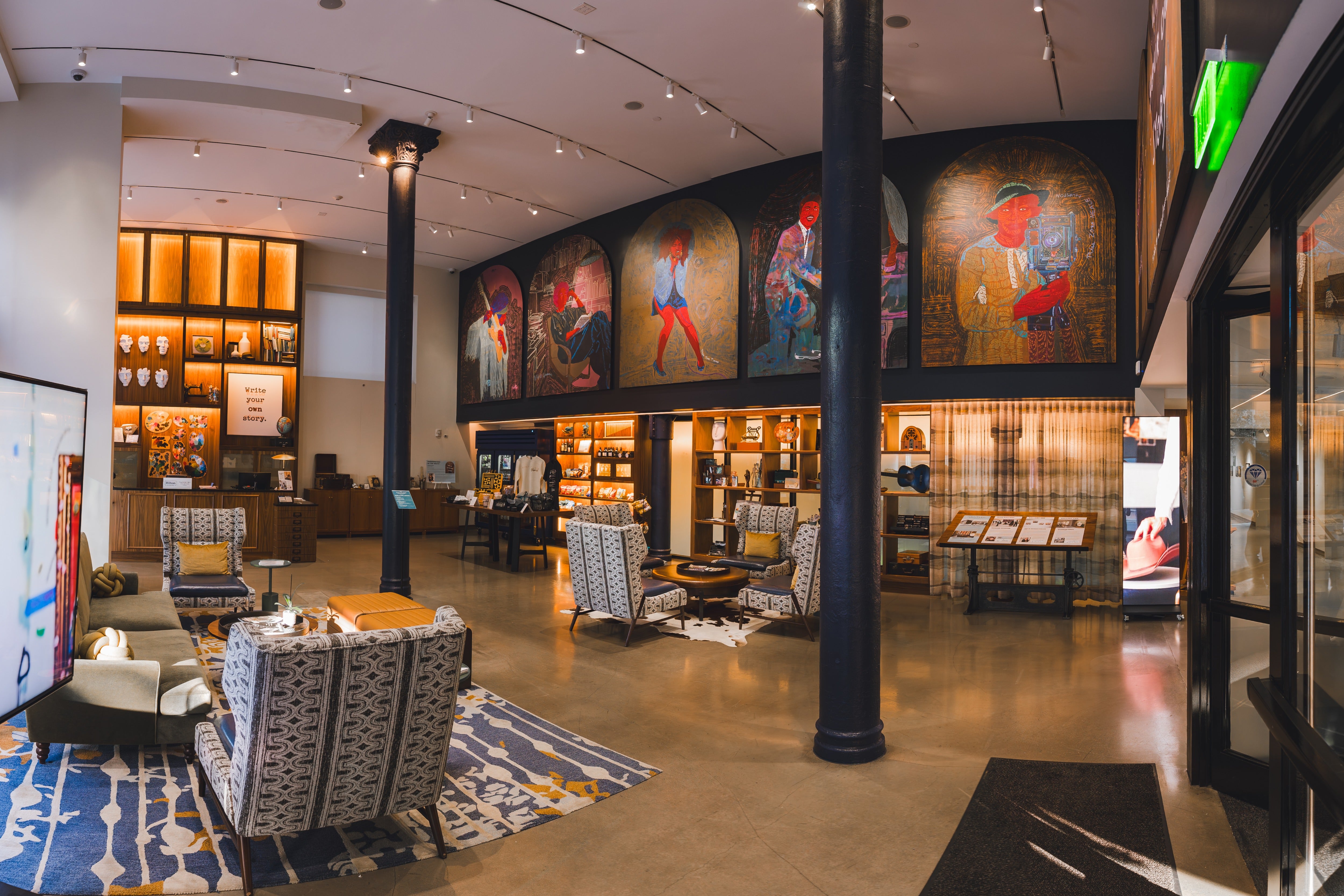
I’m staying at The Untitled Nashville Hotel, which to my surprise is offering a way into that Indigenous history and modern-day culture that I have yet to see on my trip – through contemporary art.
For the second year, it is hosting work connected to IndigeNash, a festival bringing Native artists, performers and speakers to venues across the city each November. An exhibition by artist Benjy Russell runs at the hotel from August to January.
A member of the Choctaw Nation of Oklahoma, Benjy grew up in rural Oklahoma, and his art draws on science fiction and speculative imagery to explore identity, survival and possible futures. His work is also shaped by the HIV and Aids crisis, having lost his partner to Aids and being a long-term survivor himself.
“As a rural-based artist who is so far from any city centre, I very rarely get the opportunity to show work,” he tells me, as he explains the importance of IndigeNash and the hotel’s support in reaching new audiences.
Co-founded by Trenton Wheeler and Joe Clemons, IndigeNash challenges the tendency to present Indigenous people solely through tragedy or as figures from a distant past. As Trenton puts it: “We are reframing Native identity from this historical thing to something modern and contemporary.”
Read more: The six Nashville neighbourhoods you need to know about
It’s a point echoed by Johi’s advice to travellers exploring this history, which stays with me long after we talk: “Don’t be remorseful or sad. That ain’t going to change nothing.”
Instead, he says, recognise the history of the landscape, behave respectfully towards the earth, listen, learn and let the stories live on.
Robyn travelled as a guest of the Tennessee Department of Tourist Development
How to get there
British Airways flies direct to Nashville from London throughout the year. Flight time is around nine hours, and return tickets start at £460.
Where to stay
I based myself in a 165-year-old B&B called Whistlestop Manor in Sweetwater, Tennessee. It’s run by friendly husband-and-wife team Casey and Wendi Olson, who live onsite with their three children, cat and dog. I found the accommodation well positioned to explore this part of the State. Each of the B&B’s three suites has a private bathroom. Prices start at $205 (£154) a night, which includes a homemade breakfast by Wendi.