


 Africana55 Radio

This website uses cookies so that we can provide you with the best user experience possible. Cookie information is stored in your browser and performs functions such as recognising you when you return to our website and helping our team to understand which sections of the website you find most interesting and useful.

UK Prime Minister Andy Burnham and the French president offered to help Spain.
Ceuta, on Morocco's northern coast, is separated from mainland Spain by the Strait of Gibraltar and has long been a focal point for migrants attempting to reach Europe.
Local officials had appealed to Madrid for help after a recent rise in attempted crossings, but there were chaotic scenes on Thursday as border controls apparently broke down.
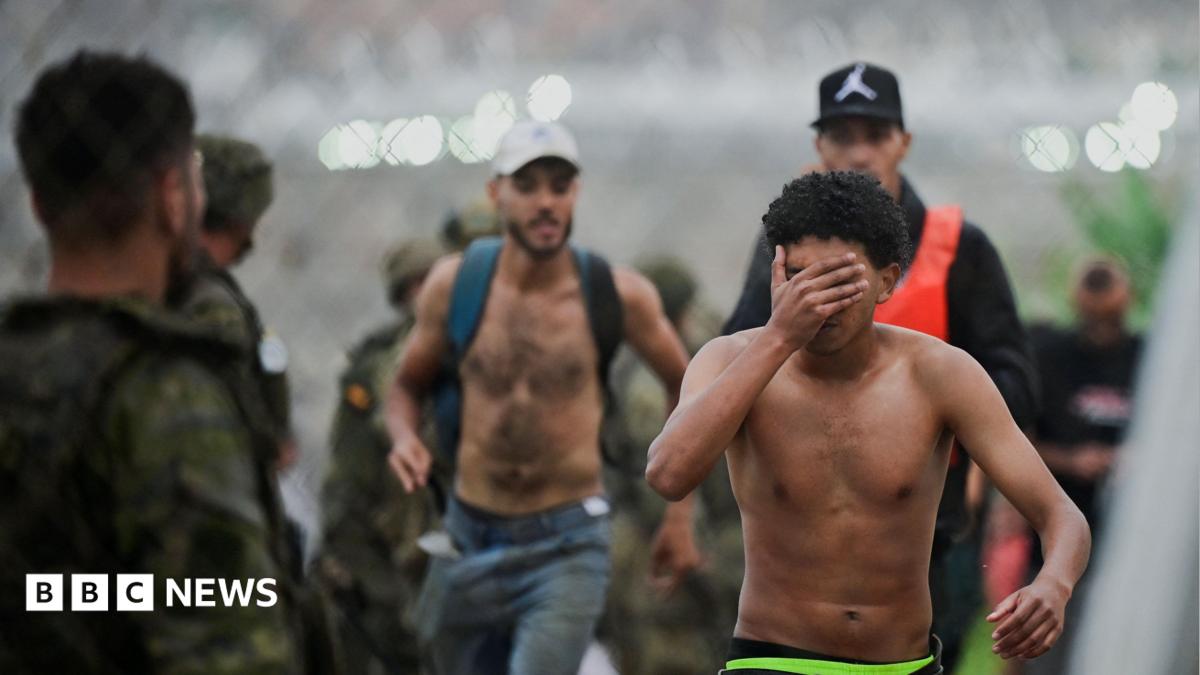
Videos and images from Thursday show thousands of people swimming into the city, while local media reported crossings continuing into Friday.
Juan Jesús Vivas said the situation was "unsustainable" and that the recent arrivals amounted to around 70% of the city's population - which sits at around 83,600 according to the latest local figures.
Spain's Interior Ministry told the BBC that its estimates were slightly lower, citing 50,000 arrivals since the early hours of Thursday.
It also added that more than 25,000 people have left Ceuta en route back to Morocco from Friday morning up to 13:00 local time (11:00 GMT).
The ministry said the rate of departures from Ceuta is at 150 people per minute, though it did not provide any further information on this.
Spain has now deployed its armed forces to bolster security in Ceuta and at its sister city of Melilla, where between 300 to 400 crossings were also reported overnight.
Speaking on Friday during a visit to Ceuta, the prime minister condemned the crossings and said it was an attack on Spain's territorial integrity.
Sánchez added that the government would be looking at reinforcing the border with Morocco.
The prime minister blamed the dangerous events on criminal networks manipulating the Supreme Court's recent ruling, adding that incorrect information had "spread like wildfire in recent hours".
He said authorities in Morocco were co-operating with plans to return those who had entered illegally.
Ceuta and Melilla trace their Spanish past to the 15th Century, and they have enjoyed a limited degree of self-government since 1995.
Coveted by Morocco, they have long been a flashpoint in diplomatic relations between the two countries.
They form the European Union's only land borders with Africa.