


 Africana55 Radio


This website uses cookies so that we can provide you with the best user experience possible. Cookie information is stored in your browser and performs functions such as recognising you when you return to our website and helping our team to understand which sections of the website you find most interesting and useful.

Want to bookmark your favourite articles and stories to read or reference later? Start your Independent Membership today.
Already a member? Log in
There are few places on Earth where the ancient world feels quite so close to the modern one. In Cairo, a sprawling metropolis that seems determined never to sleep, the past rises above the traffic and restless energy of a city that has been reinventing itself for thousands of years.
But it is after dark, beneath the Egyptian sky, that Cairo reveals a different, more youthful personality. I arrived here expecting history. What I found was a city increasingly interested in its future.
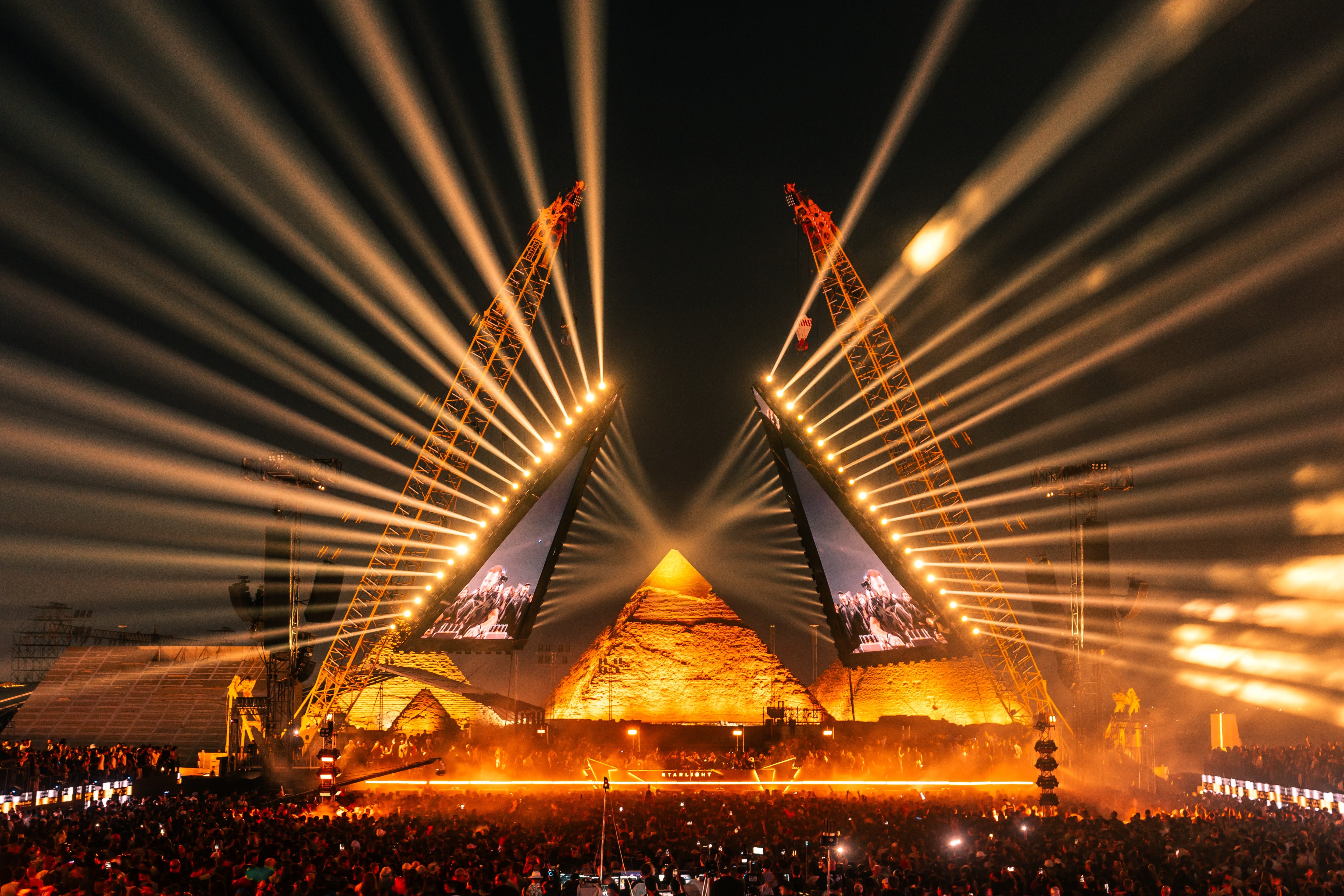
At Giza, the Pyramids emerge from the darkness like something imagined rather than built. For nearly 5,000 years they have watched civilisations come and go. Tonight, however, the soundtrack is rather different. Beams of light sweep across the desert, bass reverberates through the night air, and thousands of revellers gather beneath the silhouettes of the ancient monuments.
I'm at Starlight Festival, a two-day electronic music festival in collaboration between EXIT and P+US, staged on a site overlooking the Pyramids, and the crowd is almost as striking as the setting.
Adriatique, Pete Tong, Michael Bibi and Charlotte de Witte, some of electronic music’s biggest names, deliver blistering sets as an elaborate light show transforms the ancient monuments into a backdrop unlike anything I’ve encountered before. Across huge triangular screens, pharaohs dissolve into shifting geometric patterns. In the crowd, couples kiss and groups of friends, Egyptian and international alike, dance beneath the desert sky.
Read more: This boho Cairo neighbourhood is an escape from the hustle of the city
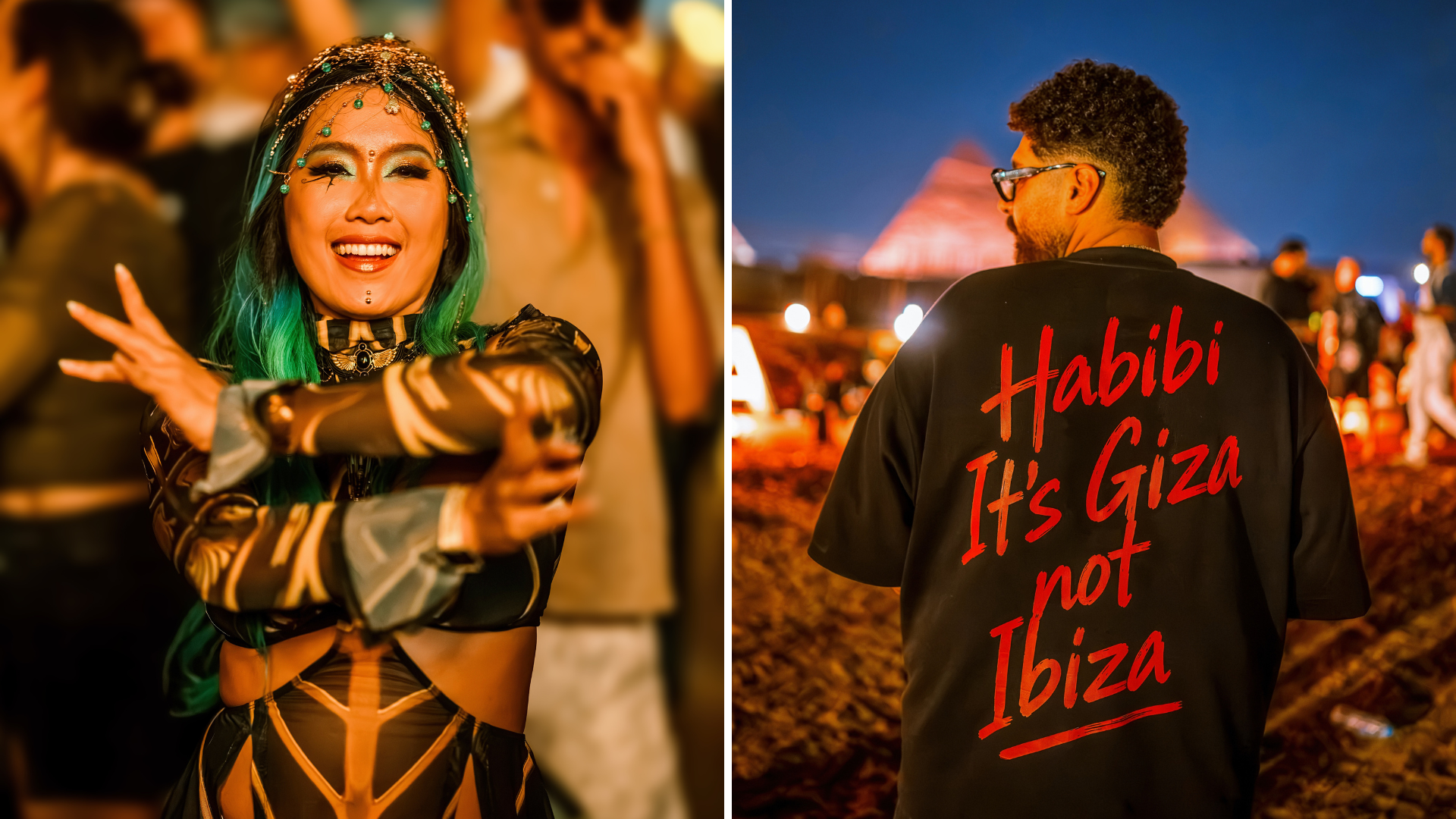
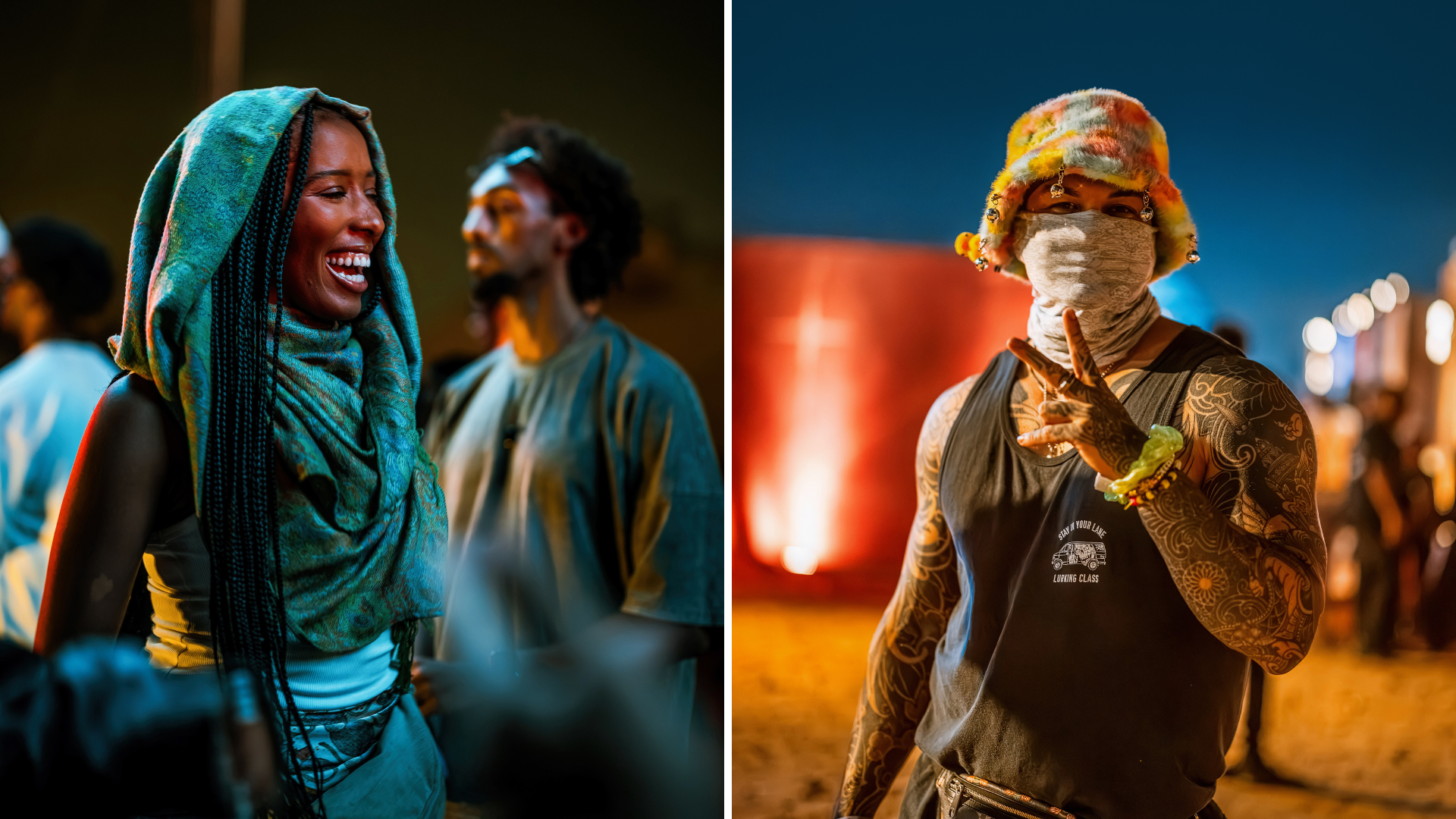
Everyone, it seems, is effortlessly cool. It's The White Lotus meets Cairo Fashion Week, a sea of flowing linen, expensive sunglasses and impeccably assembled outfits. Men wear loose trousers, crisp white vests beneath vibrant shirts and a plethora of gold and silver jewellery. Euro-flow mullets and sharp fades are the haircuts de rigueur. I count a dozen Mo Salah T-shirts in various incarnations.
Among the women, it's as though the Noughties never ended. Low-rise jeans, tiny tops and narrow sunglasses abound, with enough Y2K nostalgia to suggest everyone has arrived via Baden-Baden, circa 2006.
I lose count of the ancient Egyptian tattoos. Eyes of Horus across collarbones. Scarab beetles on wrists. Anubis running down the nape of a neck. Horned vipers, owls and reeds. Each carrying its own meaning, yet all saying the same thing. These young Egyptians wear their history on their skin.
It could almost be Glastonbury after dark. There’s even a Pyramid Stage, of sorts. Except here, of course, the pyramids are real.
For most British travellers, Egypt conjures a familiar collection of images: pharaohs and pyramids, Nile cruises and package holidays beside the Red Sea. Others know it through the turbulence of recent history: the 2011 Arab Spring, the rise of Islamist politics and subsequent military crackdowns.
But Cairo has another identity, one that rarely makes it into the travel brochures. The confidence of its younger generation is striking: comfortable embracing global culture without abandoning the history surrounding them.
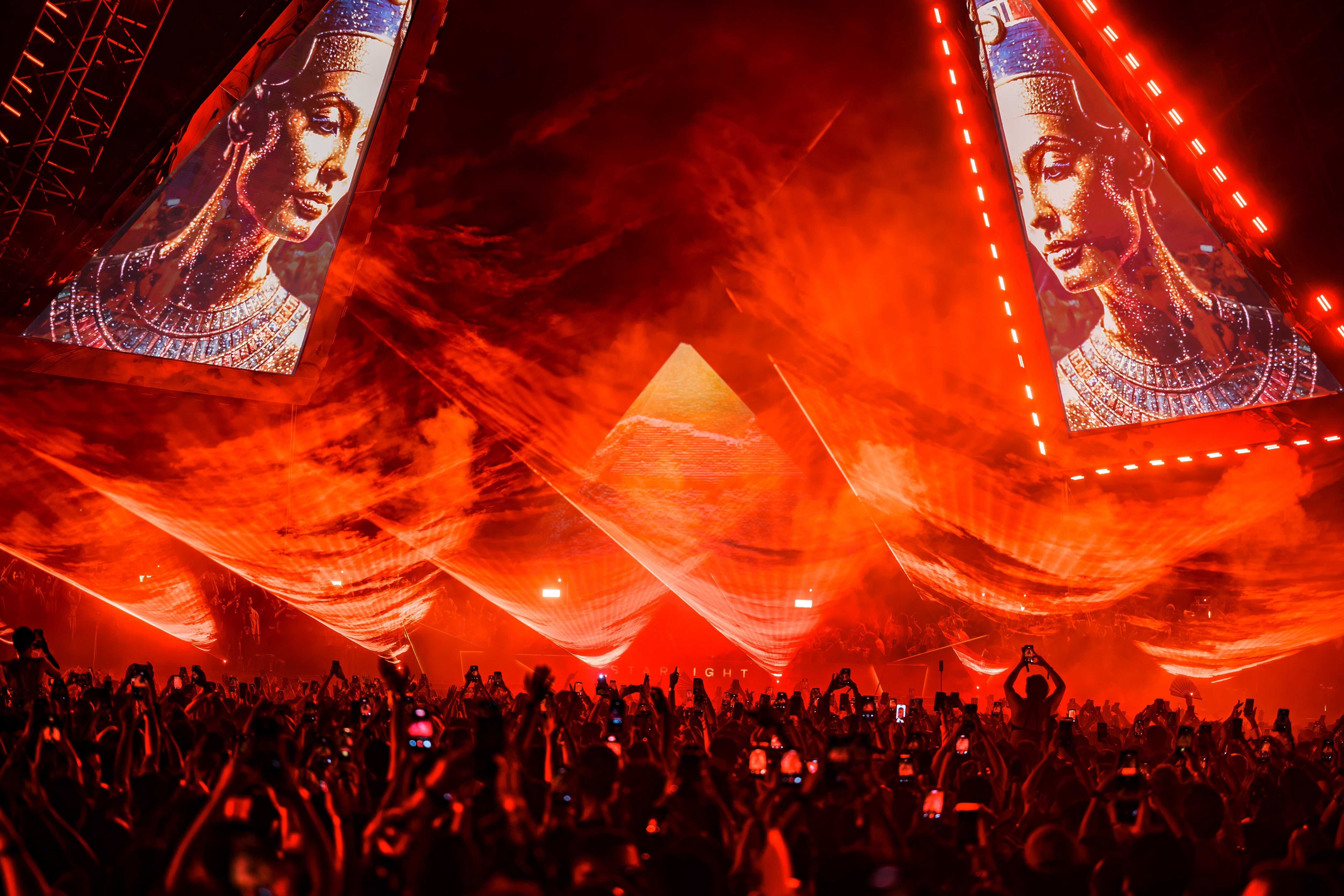
Starlight was organised by Serbia’s EXIT festival alongside Egyptian promoters P+US, bringing international artists and audiences to one of the world's most recognisable landmarks. Its arrival also comes with an unlikely political backstory.
EXIT began 25 years ago amid the student movement against Slobodan Milošević. Its founder, Dušan Kovačević, says the festival was effectively driven out of Serbia after supporting a new generation of anti-government protesters.
The upheaval was deeply painful, he tells me, but it also opened unexpected doors. Invitations arrived from around the world, including an opportunity to stage a festival beside the Pyramids.
Dušan tells me Starlight was the first full-scale, multi-day festival staged at the Pyramids, an undertaking he describes as both an enormous honour and an extraordinary creative challenge.
The achievement marked the culmination of EXIT's international tour, lending its Egyptian debut particular significance for an organisation seeking to establish a new chapter beyond its Serbian roots.
Read more: Southern Sinai’s secluded beach camps offer a different side to Egypt
For the Egyptian organisers, meanwhile, the ambition extends well beyond one spectacular weekend.
Rabih Mokbel, founder of Egyptian events company Venture Lifestyle, believes Egypt has an opportunity to establish its own identity on the international live-entertainment circuit, rather than simply trying to replicate Ibiza or Dubai.
The challenge, he explains, is turning the country's extraordinary international recognition into a sustainable industry, supported by local expertise, infrastructure and a calendar of events that encourages visitors to return.
It is an intriguing proposition. Egypt already possesses something that no amount of investment can manufacture: a landscape and history unlike anywhere else on Earth. The question is how to introduce contemporary experiences into these extraordinary surroundings without diminishing what makes them special.
Staging a festival beside the Pyramids requires negotiations with authorities, extensive logistical planning and cooperation with Egypt’s Ministry of Tourism and Antiquities. The organisers insist that respecting the site’s heritage is central to their approach.
Nonetheless, for all the international production values, the experience retains some of Cairo’s more endearing eccentricities.
Outside the festival, the taxi situation is organised chaos. Drivers, passengers and assorted men who may or may not have any official role negotiate their way through the crowds, improvising an elaborate plan that nobody has quite explained to anybody else.
At times, it’s difficult to tell whether you’re being expertly shepherded towards your destination or have become an unwitting participant in somebody else’s entrepreneurial venture.
Read more: How this 26-year-old ran 550km through Egypt’s Sinai desert
There is also the question of who gets to enjoy this emerging Egypt. International festivals attract affluent visitors, but their success should also be measured by the opportunities they create for Egyptian businesses, artists and audiences.
On our way in, we pass hundreds of Egyptian event workers, almost exclusively men, greeting us with smiles and friendly exchanges. Inside, the staff are equally welcoming, many eager to practise their English. There is a palpable pride in their country and an enthusiasm for visitors to see a side of it that rarely features in the conventional tourist itinerary.
As Michael Bibi performs, I strike up a conversation with a young bartender. We discuss our favourite DJs before turning to life in Cairo and his ambitions.
He wants to become a professional footballer. Failing that, he'll be a doctor. Then he looks towards the stage and considers a third possibility. Or perhaps a DJ, he suggests, after seeing tonight.
For travellers, the appeal is immediately apparent. Few destinations offer a weekend of electronic music’s biggest hitters alongside some of humanity's greatest surviving monuments. And Cairo, for all its intensity, promises something more interesting than another interchangeable luxury resort.
For thousands of years, the world has travelled to Egypt to look backwards.
Standing beneath the stars at Giza, watching the ancient monuments illuminated against the night sky, I wondered whether the country’s next great attraction might be the people and culture flourishing in their shadow.
The Pyramids aren’t going anywhere. But the Egypt growing up around them is changing.
Rod was travelling as a guest of Jukebox PR