


 Africana55 Radio


This website uses cookies so that we can provide you with the best user experience possible. Cookie information is stored in your browser and performs functions such as recognising you when you return to our website and helping our team to understand which sections of the website you find most interesting and useful.

Want to bookmark your favourite articles and stories to read or reference later? Start your Independent Membership today.
Already a member? Log in
The blazing Alabama sun filters through the trees, dappling the park gently. A butterfly lands on an exhibit, and a bright blue lizard scurries past my foot. The chorus of birds and insects rises and falls. In the distance, a train horn bellows hauntingly as it trundles down the same tracks that once carried enslaved people from West Point in Georgia to Montgomery.
I’m gazing up at a 17.5ft bronze statue of a young Black man draped over a horse. He hangs limply, shirtless in jeans and Nike trainers, veins protruding from his forehead. An Archaeology of Silence by New York-based visual artist Kehinde Wiley is speaking to us about the Black lives lost to racial violence throughout America’s history, while invoking imagery of European heroes upon their steeds. It’s both beautiful and devastating.
The artwork is one of more than 50 at the Freedom Monument Sculpture Park in the town of Montgomery, a peaceful 17-acre site overlooking the Alabama River. This space has been dedicated to honouring the lives of nearly 13 million men, women and children who were forced onto ships and brought across the Atlantic as slaves.
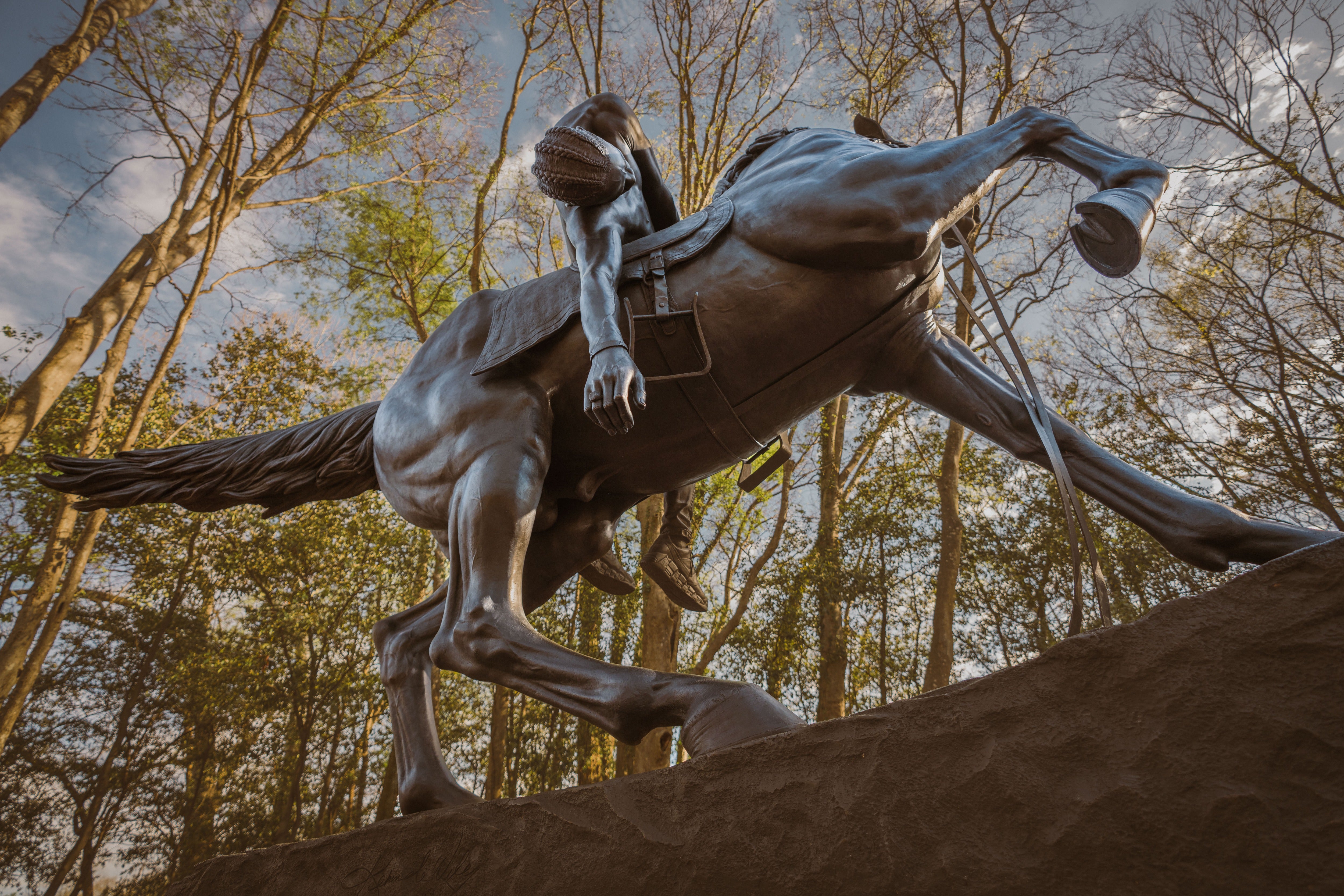
Visiting the park is a raw and deeply emotional experience. No phones, cameras, or food and drink are allowed, and personal reflection is encouraged. The contrast between the gentle setting and the harrowing subject is stark, bringing the sheer brutality of the transatlantic slave trade into sharp and painful focus. I – as I expect is the case with most visitors – am moved to tears as I walk among the exhibits, installations and artwork.
Read more: Mitchelville could be the most important place you visit in the USA
But, remarkably, it is a feeling of hope rather than despair that stays with me as I leave the park, after standing in front of the vast National Monument to Freedom. Around 43ft high and 155ft wide, this wall is dedicated to the four million formerly enslaved Black people who found freedom after the Civil War, engraved with the surnames of some 122,000 of those who survived the horrors of slavery.
The Freedom Monument Sculpture Park is one of four “Legacy” sites created in Montgomery by the Equal Justice Initiative (EJI), a US non-profit dedicated to challenging racial and economic injustice and ending mass incarceration in America.
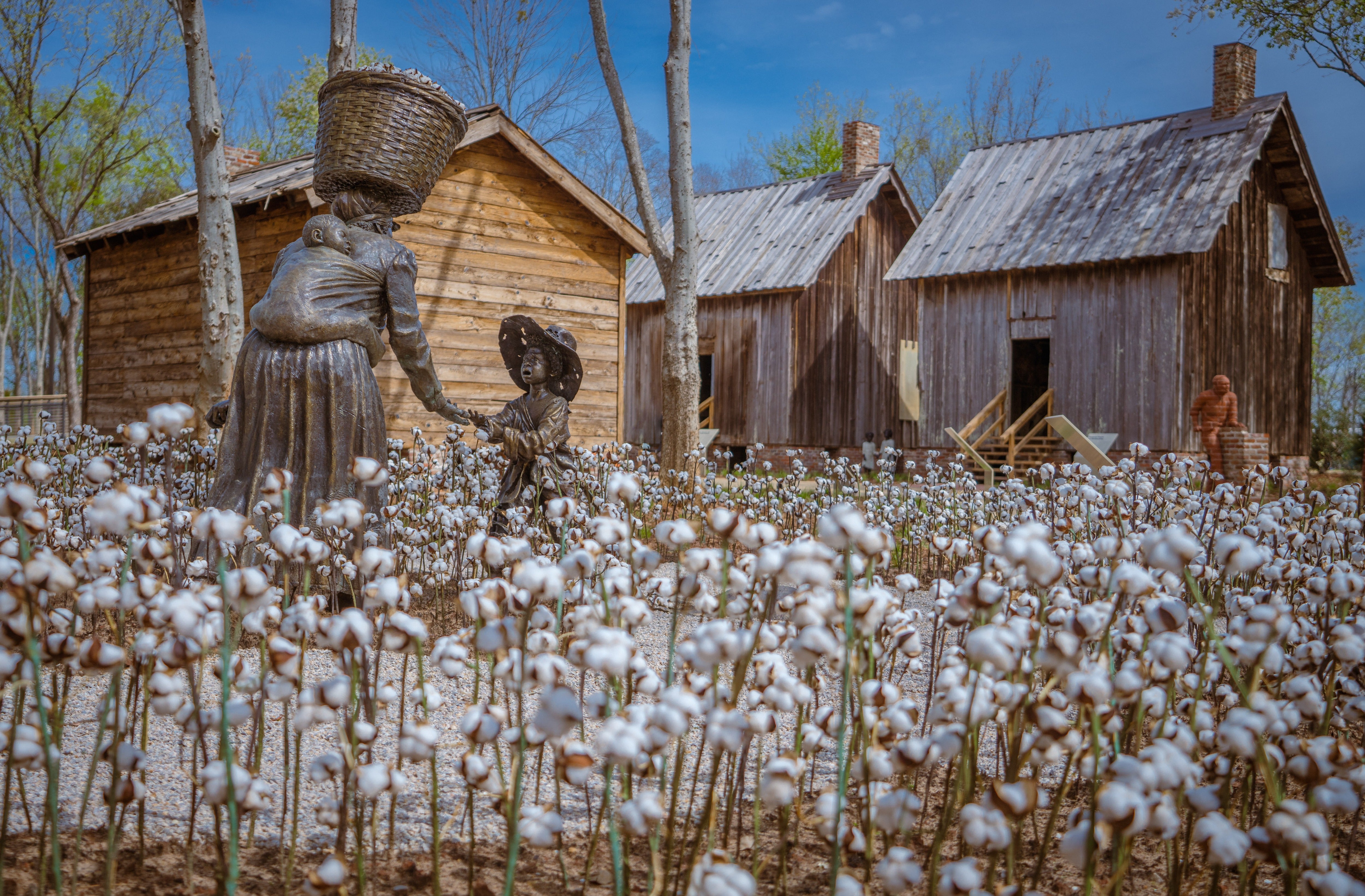
Bryan Stevenson, founder and executive director of the EJI, explains why visitors often leave with a sense of hope and empowerment: “We wanted to create a space with an authentic link to slavery that explored the brutality of enslavement but also honoured the strength and resilience of enslaved people.”
He adds: “Art and sculpture became invaluable in dramatising the hardship and horror of slavery but also allowed us to celebrate the extraordinary love and character enslaved people maintained.”
The Freedom Park sits just outside Montgomery, and I chose to walk the 20 minutes or so along the old train tracks to reach the park. Visitors can also take a boat on the river, following the same path by which African American slaves would have been transported in steamboats coming from New Orleans.
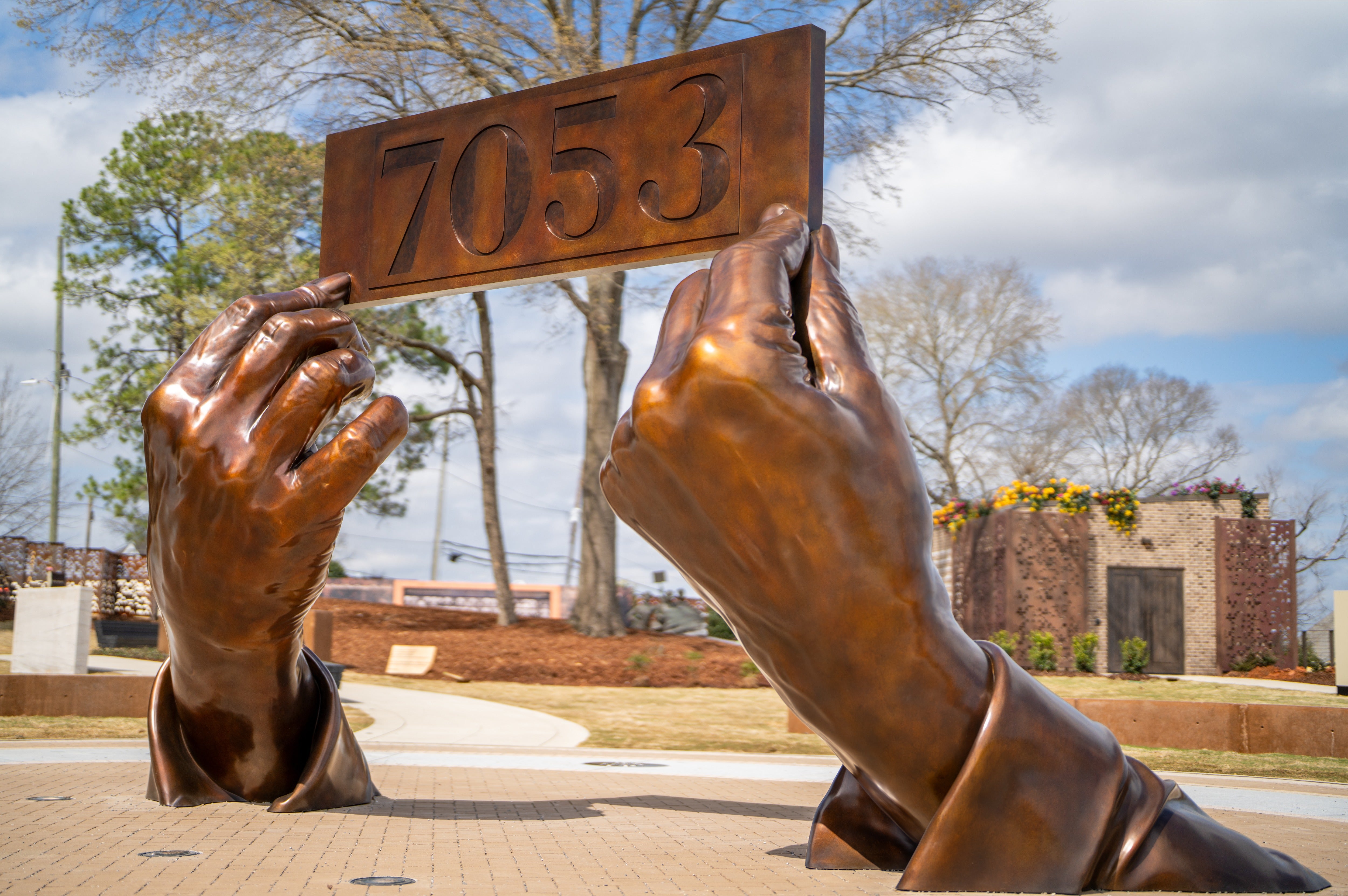
Montgomery played an integral role in the civil rights movement of the 1950s and 60s, best known globally as the place where Rosa Parks refused to move from her seat on a city bus in defiance of Jim Crow segregation laws. Her actions sparked a nationwide boycott that – it is no exaggeration to say – changed American history. The entrance to Montgomery Square, another of the EJI sites, features two hands holding the number 7053 – the booking number issued to Rosa Parks at the time of her arrest.
Mr Stevenson explains that EJI began its work in Montgomery in 1989, providing legal representation to condemned prisoners on Alabama’s death row before the work expanded to assist other people wrongly convicted or unfairly sentenced. In 2012, EJI began narrative work and research that focused on America’s history of racial injustice and ultimately evolved into the Legacy Sites, which opened in 2018.
While the park is the site that sticks with me most, all four are remarkable, taking an unflinching look at the darkest moments of America’s past.
Read more: How Scottsboro is refusing to forget its civil rights story
Mr Stevenson says: “Understanding the harms of our history is essential in creating a healthier future. Regressive movements that restore bigotry, racial bias and abuse of human rights will prevail without a deeper engagement with our past. Especially in this moment when the politics of fear and anger are raging.”
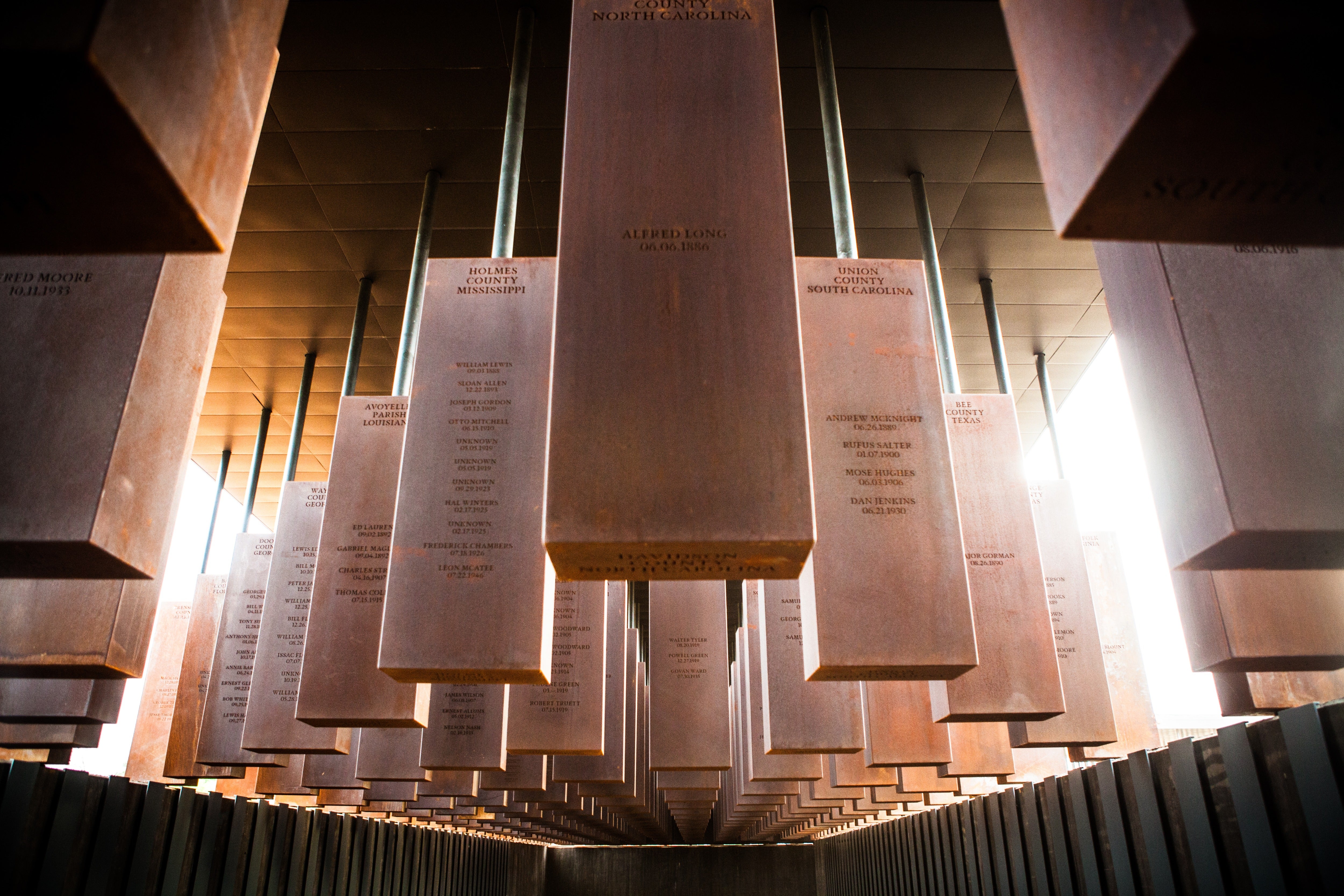
A third site, the National Memorial for Peace and Justice, commemorates more than 4,400 Black people killed in racial terror lynchings between 1877 and 1950, with 800 steel monuments (one for each county where lynching occurred) engraved with the names of those murdered.
The Legacy Museum is the fourth site. It is built to take the visitor on an immersive journey from the slave ships crossing the Atlantic to racial terror and enforced segregation, right up to the present-day crisis of mass incarceration.
Mr Stevenson says: “We hope visitors will leave our sites with a greater awareness and deeper commitment to creating a world where racial bigotry and bias are never tolerated. We want guests to leave informed and inspired to fight against bigotry and the injustice of racial bias."
It is this sense of inspiration that leaves visitors with a feeling of hope. Perhaps it is best summed up by a quote from civil rights activist Mary McLeod Bethune, which is displayed in the Legacy Museum.
It reads: “If we have the courage and tenacity of our forebears, who stood firmly like a rock against the lash of slavery, we shall find a way to do for our day what they did for theirs.”
Annabel’s trip was supported by Alabama Travel