


 Africana55 Radio

This website uses cookies so that we can provide you with the best user experience possible. Cookie information is stored in your browser and performs functions such as recognising you when you return to our website and helping our team to understand which sections of the website you find most interesting and useful.
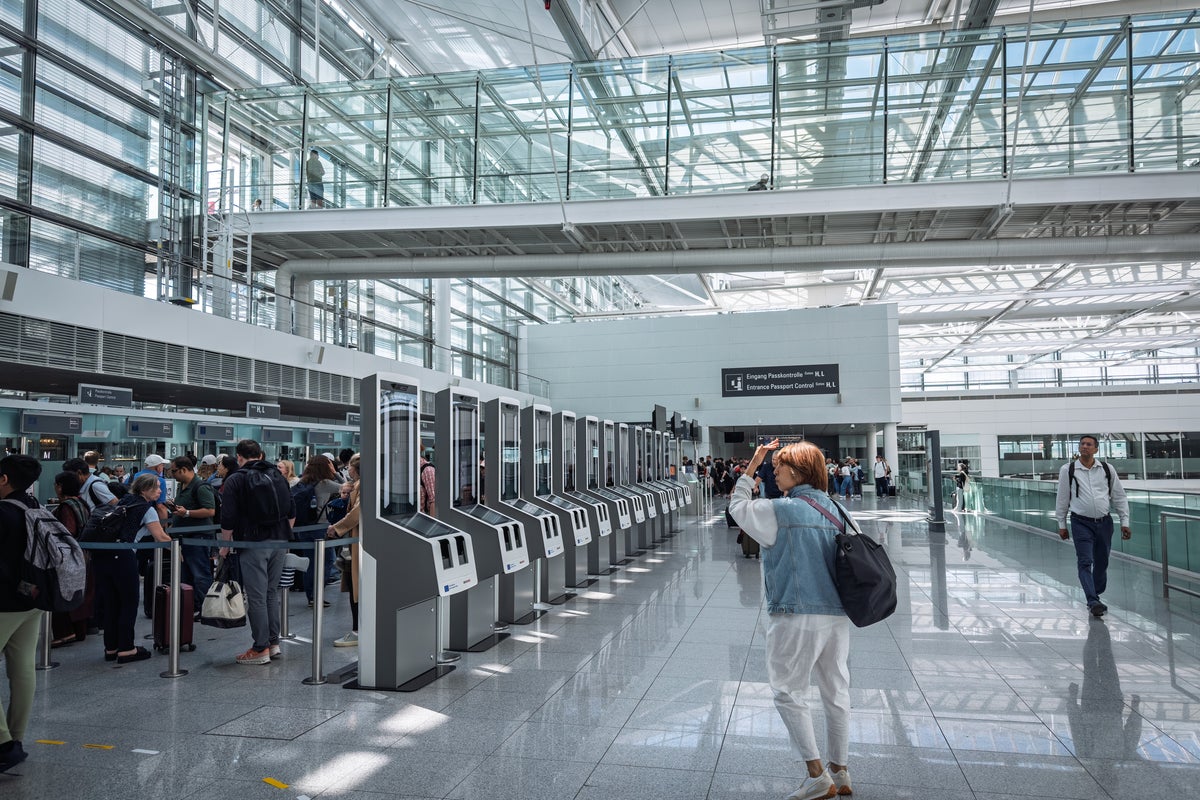
Airports in Europe that are struggling with long border queues could temporarily shut down the new EU biometric system if wait times become unmanageable.
British travellers have been warned of queues up to six hours due to the new EU entry-exit system (EES) rollout, which requires them to give biometric information such as fingerprints and a photo upon first entry into the Schengen Area.
Delays have already been seen in several European countries, including Portugal, Spain and Italy, following the initial EES rollout.
Officials at Frontex, the EU border and coast guard agency, however, have indicated that countries could choose to temporarily suspend EES as a last resort for the worst pinch points.
"We have until the end of the summer the possibility during the tourism season to lift the biometric controls or the biometric registration temporarily,” deputy executive director of Frontex Uku Särekanno, said, according to the Mirror.
“If there is a peak hour, you see that there are hundreds of people queuing, their queues are getting too long, then member states still have the possibility to lift biometric registration,” he explained.
“The EU has considered, for the period of summer, to make sure that there is still some relief for the worst-case scenario."
The Frontex boss clarified that any temporary relief that countries choose will end in September, with there being “no intention” of any further easing of EES rules.
A spokesperson for Frontex clarified to The Independent that biometric registration can be lifted temporarily, but this decision needs to be taken by individual EU states rather than Frontex, as the border force’s role is only supportive, offering training and guidance, whereas the member states implement and operate EES through their own staff.
“The EES regulation includes a contingency flexibility so that national authorities can suspend biometric registration where queues become too long, particularly during the summer peak.”
Echoing Mr Särekanno’s explanation, the spokesperson added that the system is working, with tens of millions having already registered.
“The heavier moment is that first enrolment, when fingerprints and a facial image are taken. After that, repeat trips within the retention period are faster.”
He added that a temporary lift of EES rules would be a “last resort”, as member states are working to keep queues down through other means first, such as extra staffing, self-service kiosks and pre-registration tools.
Speaking at a conference by Abta, the travel trade association, Mr Särekanno said that biometric registration is “probably the most challenging part” of the EES rollout. He said it could take as long as two years for EES to start operating as smoothly as possible.
"Within the next two-year period, we will see that the first enrollment will be done. A significant number of visitors will not have to enrol biometrics anymore, so it will be a big relief for them,” he said.
"We are putting a lot of effort into that to ensure that the practices will be harmonised.”
A European Commission spokesperson also confirmed that the EES system can be paused this summer in “exceptional circumstances”.
“The entry-exit system is fully operational across all Schengen countries and works well at almost all border crossing points. The new system makes our borders more secure and protects EU citizens.
“And we continue to see very good results: since October 2025, almost 90 million entries and exits were registered, as well as around 40,000 refusals of entry, of which almost 1,000 persons were identified as posing a security threat to the Union.
“EU law foresees flexibilities and fall back procedures to address any exceptional situations,” the spokesperson continued. “The suspension of the collection of biometric data is possible at specific border crossing points and for a limited amount of time in cases of exceptional circumstances that lead to excessive waiting times. This possibility will cover the needs of the entire peak summer travel period.”
“While the Commission will continue providing the necessary support, it is up to member states to ensure the proper implementation of the EES on the ground.”
Read more: British travellers told to prepare for six-hour airport queues due to EU entry-exit checks