


 Africana55 Radio

This website uses cookies so that we can provide you with the best user experience possible. Cookie information is stored in your browser and performs functions such as recognising you when you return to our website and helping our team to understand which sections of the website you find most interesting and useful.
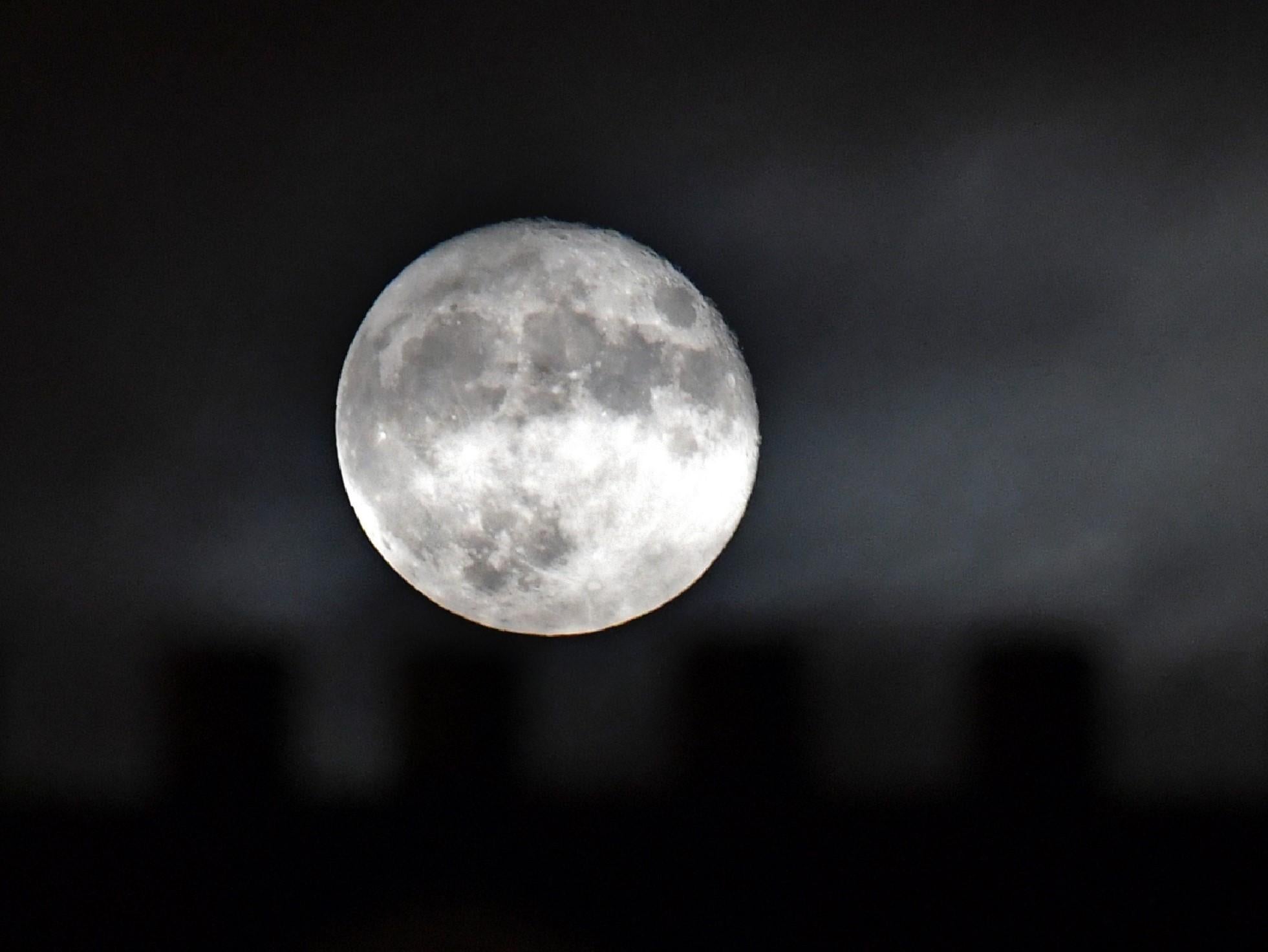
The final supermoon of 2020 will take place next month, offering sky gazers one last chance to see the full moon at its biggest and brightest.
The rare celestial event – officially referred to as a perigean moon – will see the moon pass by Earth at the closest point of its monthly orbit.
On 7 May, the full moon will pass within 360,000km (224,000 miles) of Earth, making it the fourth moon in a row to be classed as a supermoon.
The time of year means May's full moon is also traditionally known as a Flower Moon, as it coincides with spring blossoms in the northern hemisphere.
April's supermoon is known in folklore as the Pink Moon, and lit up the skies over the UK unusually brightly thanks to good weather and lower-than-average air pollution.
Even without a telescope or binoculars, it was possible to view craters, basins and other features due to its proximity to Earth.
The moon appeared at its largest at moonrise and moonset as a result of an optical illusion that makes it seem relatively bigger when viewed beside buildings and other objects on the horizon.
Created with Sketch.
Created with Sketch.
1/20 London
Getty
2/20 County Laois, Ireland
PA
3/20 Skopje, North Macedonia
EPA
4/20 Cambridgeshire
PA
5/20 New York
Reuters
6/20 Notre Dame, Paris
Reuters
7/20 Golden Gate Bridge, San Francisco
Reuters
8/20 Milton Keynes
Reuters
9/20 Chilterns
Reuters
10/20 St Louis, Missouri
AP
11/20 The Shard, London
Reuters
12/20 Edinburgh
PA
13/20 Golden Gate Bridge, San Francisco
Reuters
14/20 Dolomites mountain range
EPA
15/20 Worthing
Getty
16/20 London
PA
17/20 Windsor
PA
18/20 Dublin
PA
19/20 Falkirk
PA
20/20 Sunderland
PA
1/20 London
Getty
2/20 County Laois, Ireland
PA
3/20 Skopje, North Macedonia
EPA
4/20 Cambridgeshire
PA
5/20 New York
Reuters
6/20 Notre Dame, Paris
Reuters
7/20 Golden Gate Bridge, San Francisco
Reuters
8/20 Milton Keynes
Reuters
9/20 Chilterns
Reuters
10/20 St Louis, Missouri
AP
11/20 The Shard, London
Reuters
12/20 Edinburgh
PA
13/20 Golden Gate Bridge, San Francisco
Reuters
14/20 Dolomites mountain range
EPA
15/20 Worthing
Getty
16/20 London
PA
17/20 Windsor
PA
18/20 Dublin
PA
19/20 Falkirk
PA
20/20 Sunderland
PA
May's supermoon will also have an effect on the Earth's ocean, with the extra gravitational pull causing extra-high tides in the days following its closest pass.
This can occasionally result in coastal flooding, though only when it coincides with severe weather events.
According to long range forecasts by the Met Office, the weather for early May is not expected to be particularly unsettled.
"Although confidence is low during this time period, the most probable scenario is that dry weather should dominate, with some interludes of more changeable weather at times," the weather agency stated.
"Towards the end of the period, there appears to be some signals that it may be more unsettled towards the north of the UK, with drier weather to the south."