


 Africana55 Radio

This website uses cookies so that we can provide you with the best user experience possible. Cookie information is stored in your browser and performs functions such as recognising you when you return to our website and helping our team to understand which sections of the website you find most interesting and useful.
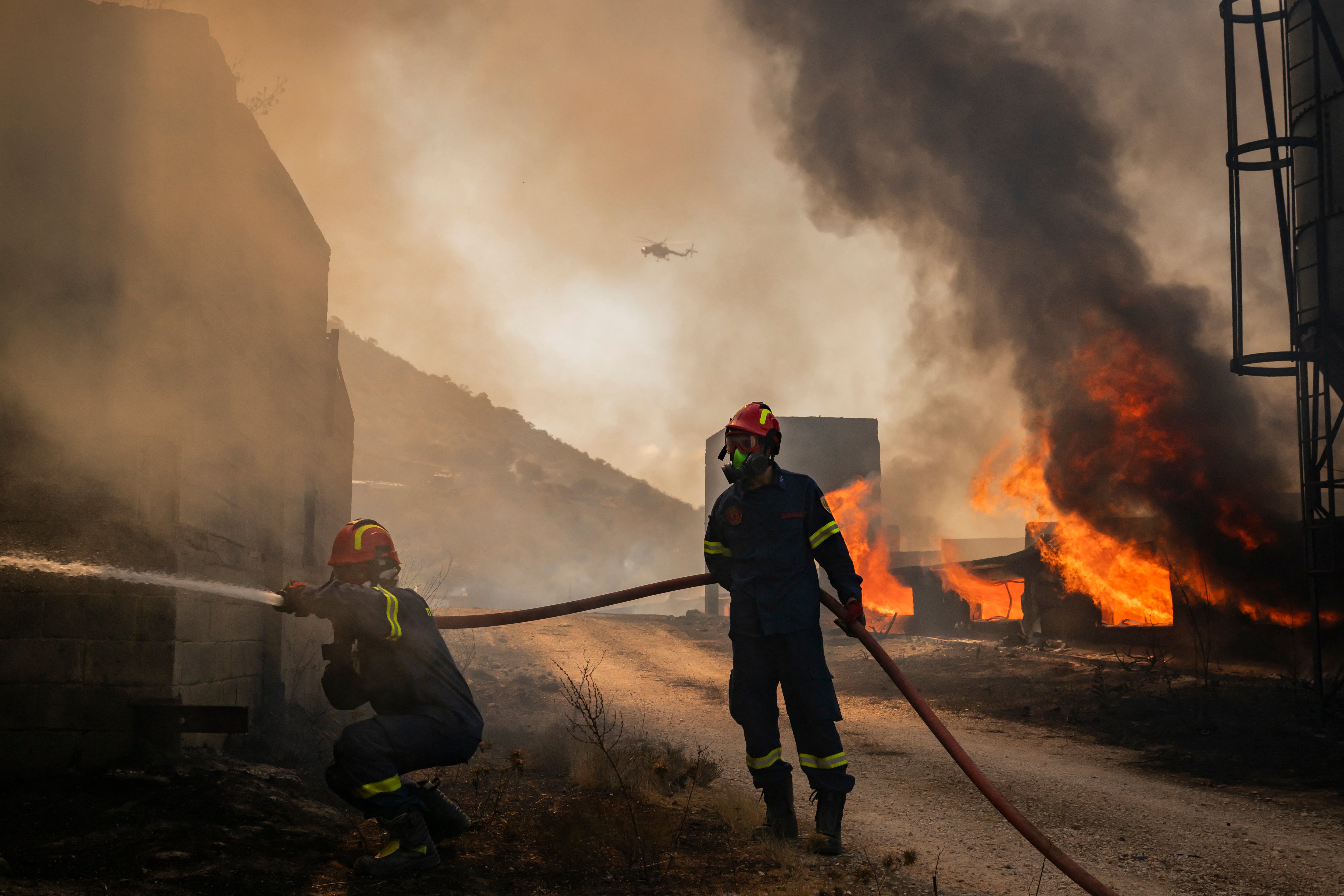
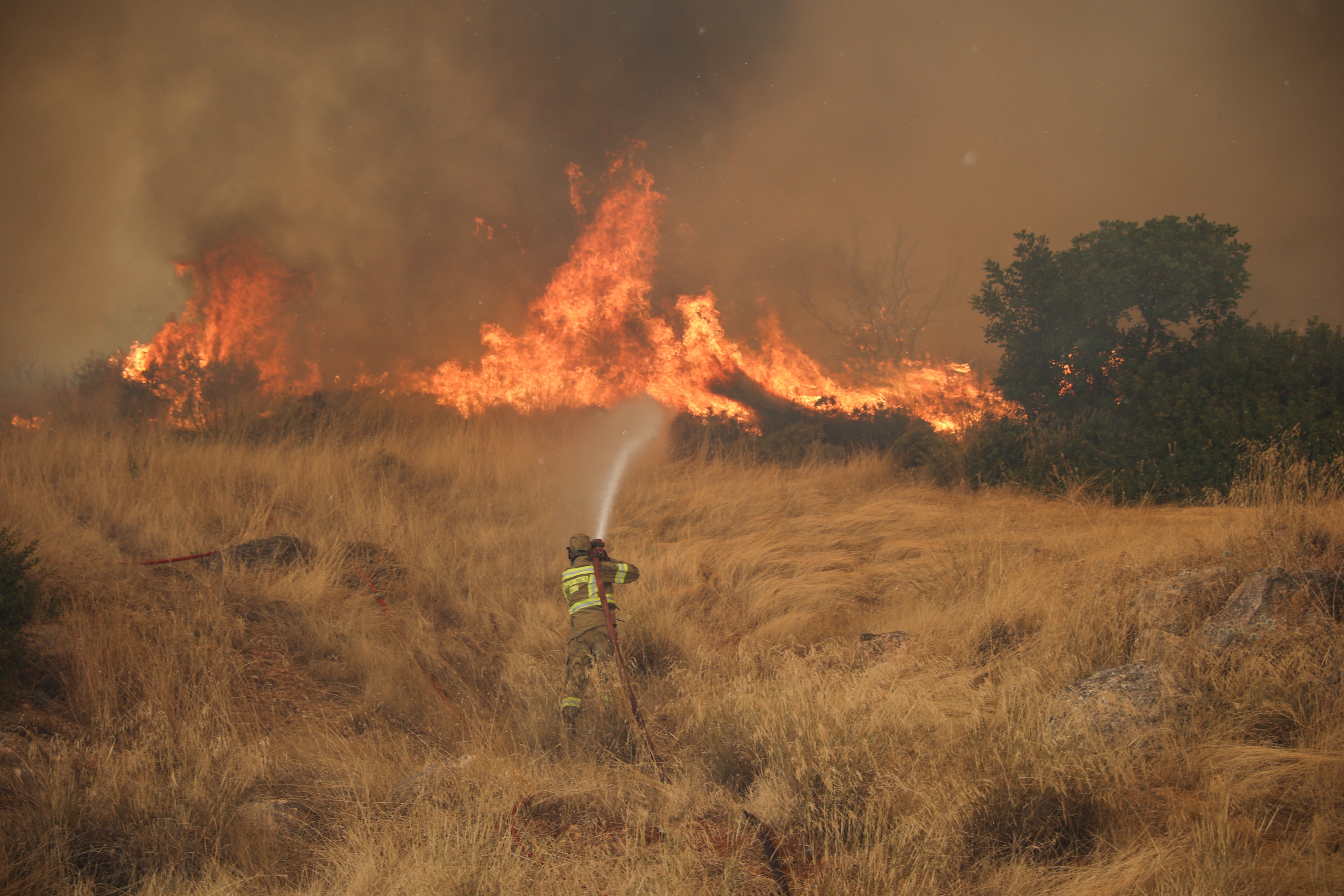
New wildfires have erupted in Greece as the summer’s extreme heatwaves continue to create tinderbox conditions across Europe.
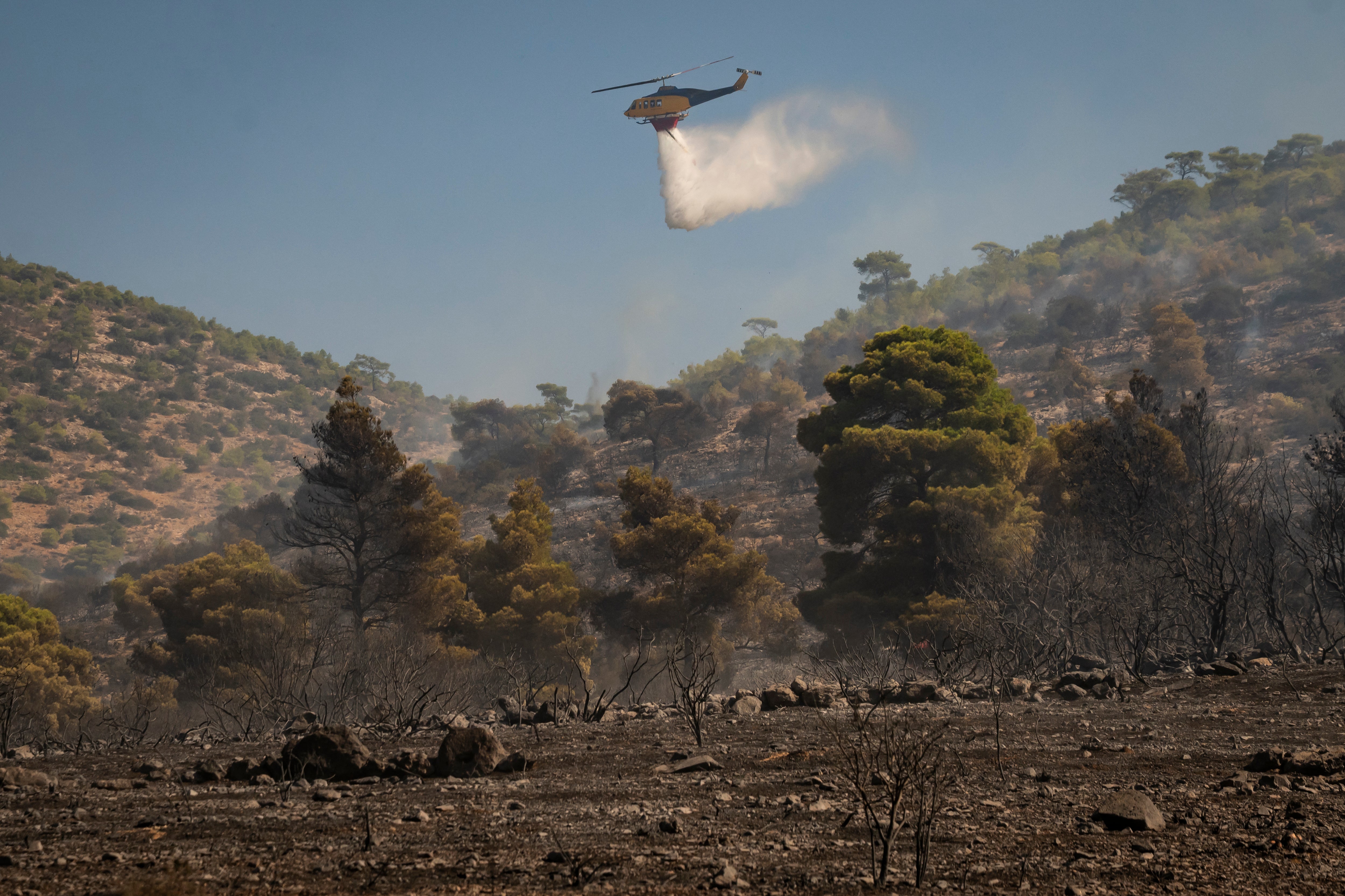
Just days after Greek firefighters gained control of a deadly blaze in the Attica region, around 200 are tackling new outbreaks southeast of Athens.
At least five firefighters have been killed fighting the fires that have gripped Greece in recent days.
Large parts of the south of the country are already at an “extreme” or “very high” risk of wildfires, with the risk zones expected to expand as temperatures reach 35C later this week.
Fires started by sparks from the electricity grid have reportedly been responsible for as much as 75 per cent of the land burned in Greece this year, according to data from the Fire Service’s Arson Crimes Directorate.
More than 30,000 hectares have been scorched so far, the European Forest Fire Information System (EFFIS) said.
Greek authorities declared a category 4 threat on Monday in several regions including Greater Athens, the Peloponnese, Crete and Attica.
It comes as Europe is suffering its hottest summer on record, with average temperatures 2.79C higher than the 1991 to 2020 average.
The blistering heat has led to 25,000 related deaths this year, according to Bloomberg research covering Spain, France, the UK, the Netherlands and Switzerland, exacerbating wildfires that have burnt more than 550,000 hectares of land.
It has raised questions over the safety of Greece’s energy infrastructure in fire-prone areas, especially with its prevention efforts having been significantly hindered by the stringent austerity programme last decade which saw major cuts to fire prevention staff.
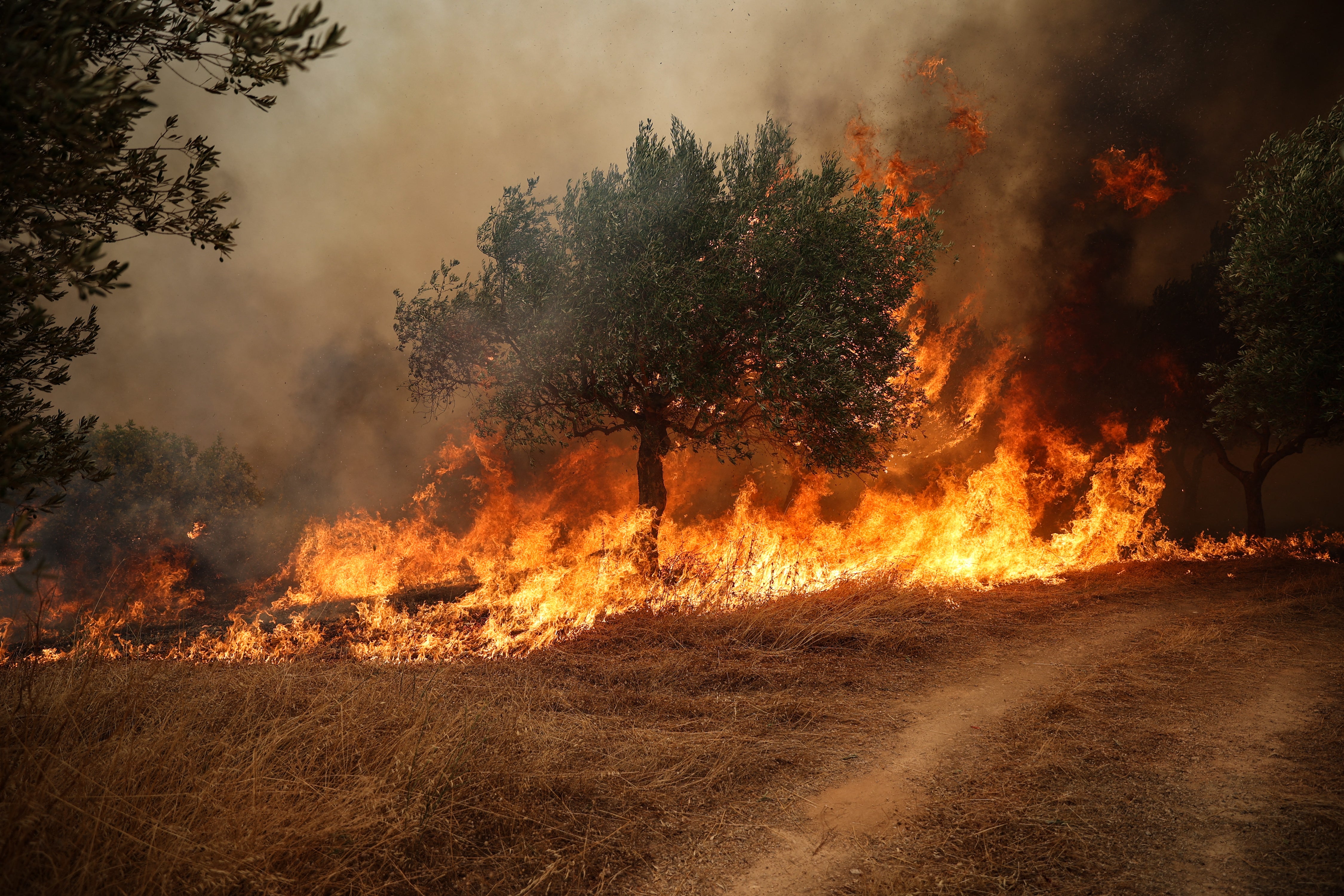
Early investigations into the Attica fire suggested that it started in the region of Boeotia after sparks from conductors on a private network transmitting electricity generated by wind turbines to the main power grid, the eKathimerini website reported.
The fire in Attica took five days to bring under control, with fast gusts of wind up to 130kmph enabling its rapid spread.
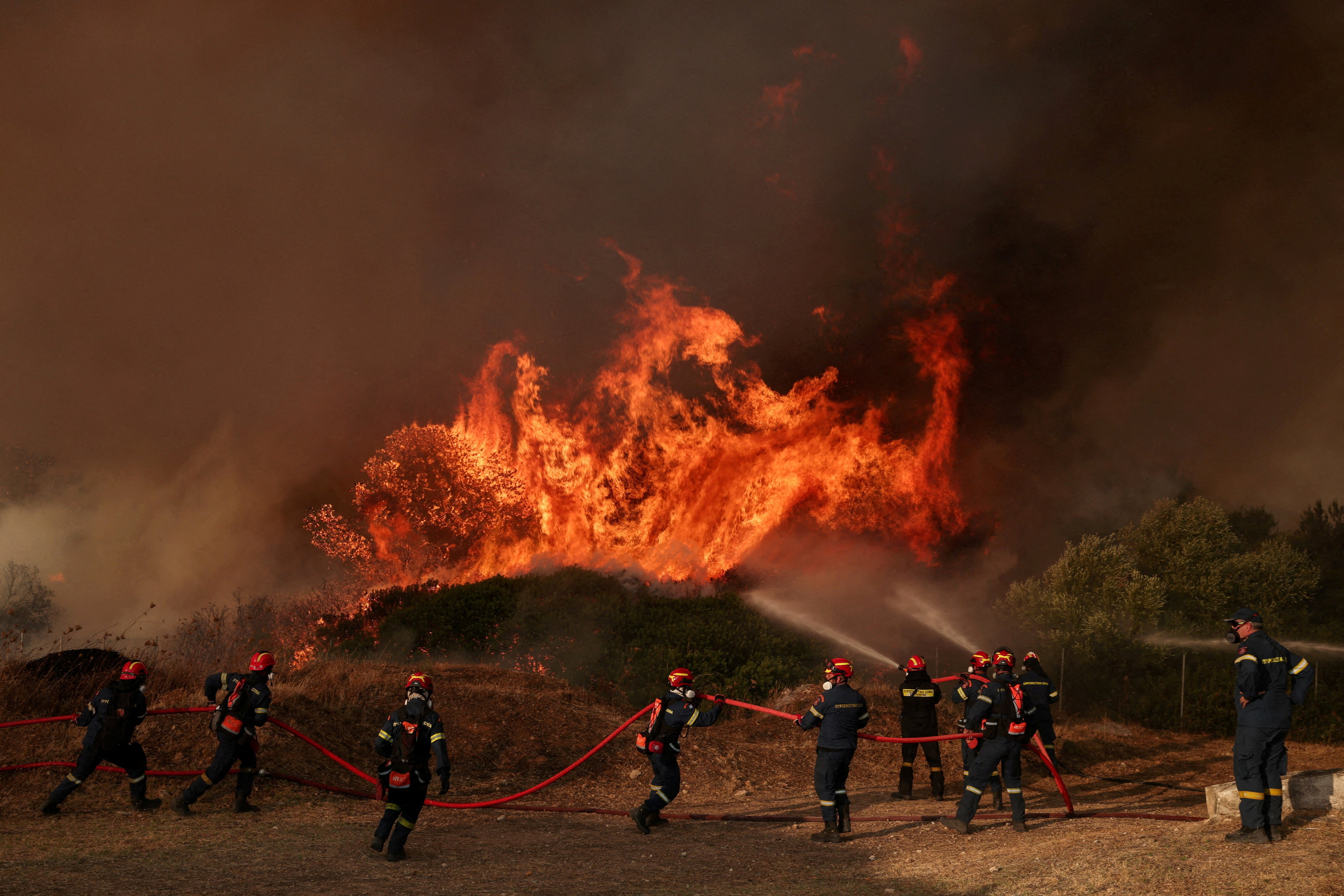
Two emergency workers were killed after two firefighting helicopters collided as they battled the fire, with one spinning and crashing to the ground in a fireball. It followed three deaths just days earlier, two in Crete and one in the southern Peloponnese port town of Gytheio.
After the early investigations, two Greek nationals were arrested on suspicion of negligence in connection with the Attica fire while another suspect remained at large, the eKathimerini report said last week.
A nationwide investigation into windfarms has been ordered by Greek prosecutors following the Attica fire, which will look into whether the farms are operating with the necessary permits and are following the rules governing their operation.
This year’s wildfires are not the worst on record in Greece, data according to the European Forest Fire Information System (EFFIS).
The 30,493 hectares that have so far burned pale in comparison with blazes in 2023 that torched 173,774 hectares, the 130,744 hectares in 2021and 271,715 hectares in 2007.
But the country remains vulnerable to devastating blazes, as a result of a decade of significant underfunding for prevention efforts, which could yet see the figure for this year significantly increase.
Forestry service officials told Reuters earlier this year that understaffing was hindering efforts to prevent fires or deal with their aftermath, after their funding was shrunk even as nearly 2.5 million acres of land have burned in Greece, according to government figures.
This was in large part owing to the austerity programme that followed a sovereign debt crisis last decade, with the number of staff dealing with fire prevention and mitigation more than halving since the year 2000 to fewer than 3,000 today.
Vangelis Gountoufas, director general of forests in Greece's environment ministry, said the industry has been “through a period of complete abandonment”.
Gountoufas said the government now recognises the problem. After more than two decades without permanent hires, the forestry service has added some 300 staff since 2024. Greece now seeks to catch up, using hundreds of millions in EU funding to pay for thousands of firefighters and equipment this decade.
“It is not always easy to fill within two or three years a gap made over two decades,” said Stathis Stathopoulos, who runs the forestry service at the ministry.