


 Africana55 Radio

This website uses cookies so that we can provide you with the best user experience possible. Cookie information is stored in your browser and performs functions such as recognising you when you return to our website and helping our team to understand which sections of the website you find most interesting and useful.
For Apral Jack, dinner plans are now dictated by supermarket sales, a stark reality reflecting the soaring cost of groceries across the United States.
The 50-year-old meticulously checks apps for deals at her local supermarket before shopping, and once in store, scours weekly circulars for overlooked coupons.
If shelf prices seem too high, she actively seeks cheaper alternatives elsewhere. "The apples went up here, the ones I eat, so now I’m not going to get them here," Jack explained, pushing her trolley through a Stop & Shop in Lexington, Massachusetts.
These new habits – couponing, comparison shopping, and foregoing favourite foods – are now commonplace for millions of Americans grappling with the most significant surge in grocery prices in half a century.
Government figures reveal that the cost of food consumed at home has climbed by a staggering 33 per cent since the beginning of 2019.
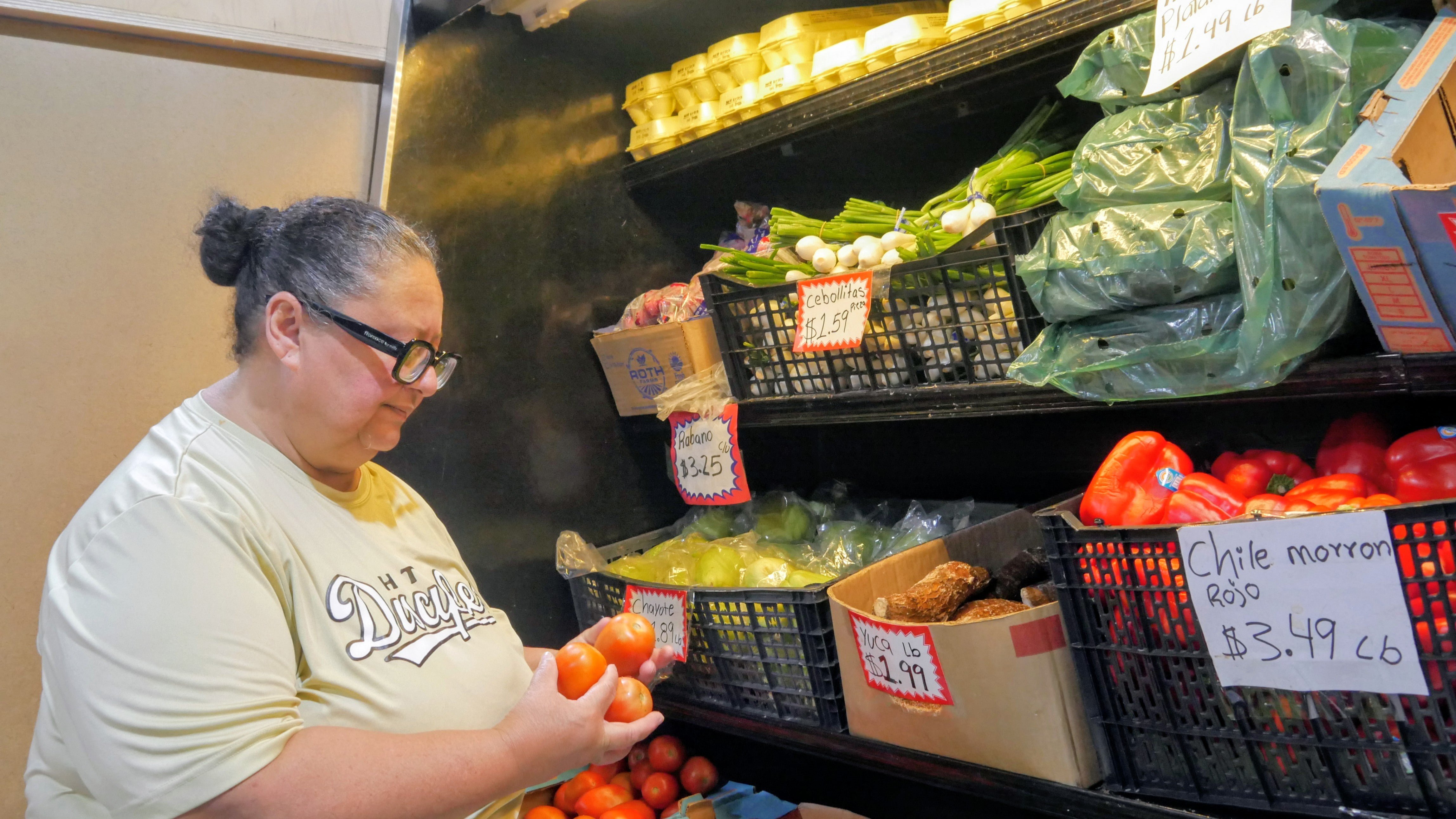
With ongoing conflict in the Middle East adding further pressure to prices, the expense of stocking refrigerators, freezers, and pantries has propelled affordability to the forefront of the upcoming autumn midterm elections.
Residents of four urban areas where food inflation has exceeded the national average shared how steadily rising prices are changing the way they shop. They described hunting for discounts, switching to store brands and feeling grateful for food banks. Some are buying less meat and skipping nonessentials like cookies. Others are buying less food overall.
Meat becomes a luxury for a family in Texas, the nation's top beef producer
Beef epitomizes out-of-control grocery prices for many Americans. The price of a pound of ground beef reached $6.82 in June, which is 79 per cent more than at the beginning of 2019, according to Bureau of Labor Statistics data.
Ada Torres, 60, who lives 45 miles northeast of Houston in Cleveland, Texas, is one of the people no longer buying it. She does the grocery shopping and cooking for the home she shares with her daughter and three grandchildren.
“Prices are sky-high. One hundred dollars’ worth of groceries these days is nothing,” Torres said.
Chicken and cold cuts are the family's main source of animal protein now that fresh meat is a luxury, she said. Her grandchildren, ages 12, 15 and 16, miss eating lasagna with ground beef, beef fajitas and steak with plantain chips.
Torres' daughter is the family’s main provider. Her work for a mobile car-washing service dwindles during the rainy season; the family only can afford one full meal a day, Torres said.
Shopping outside Boston takes research and multiple stores
Apral Jack, a care provider and part-time Amazon worker, has fewer mouths to feed now that her three daughters are adults. But she spends more cautiously than she once did.
Instead of shopping at Whole Foods, she builds her weekly menu around discounts and digital coupons.
“Typically, I’ll try to pick the meals based on that. So like chicken fajitas: there was a three-day sale on chicken” Jack said.
Nabisco Ginger Snaps and Nilla Wafers are off her shopping list. Jack won't buy store brand replacements. To her, they don't taste the same.
Three generations share food pantry basics to get by in San Francisco
San Francisco has a reputation as foodie city. Food preoccupies 33-year-old Jack Chang for other reasons. The self-employed barber has three young children and a partner who is unemployed.
"Since I have five mouths I have to feed, basically — and then sometimes my mom, too — it’s a lot on me financially,” Chang said.
Their family is not one that goes out for boba milk teas or artisanal ice cream. They visit a Japanese entertainment center with $1 ice cream cones. Milk is the only organic product they consume.
“I look at my credit card every month and I’m like, ‘Wow, how am I going to pay this?’ So I’m a little behind on bills, honestly,” Chang said.
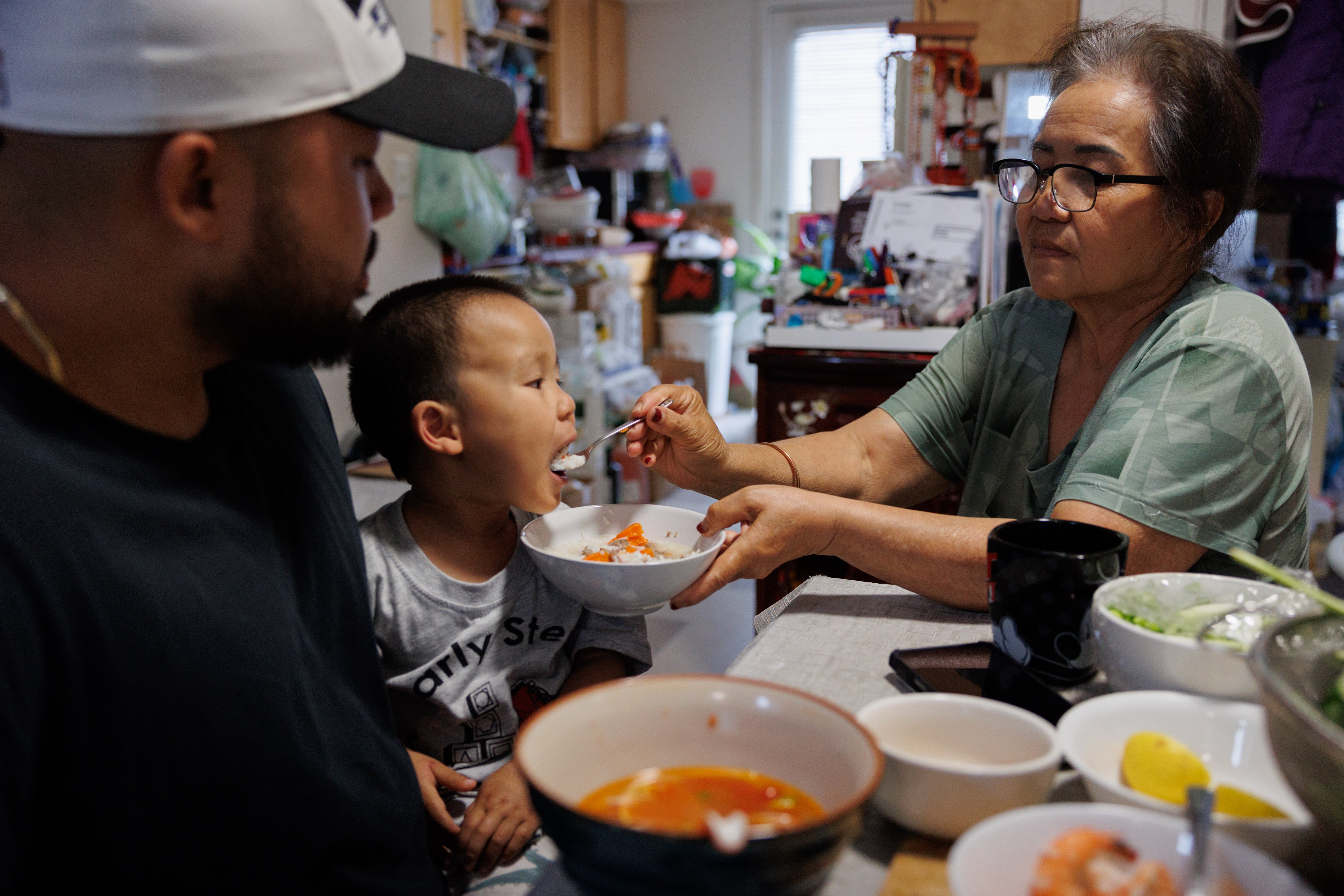
When their 4-year-old daughter’s preschool has leftover meat or bread, Chang's partner, Tina Chhous, offers to take it. Chhous also receives monthly food assistance through the federal Supplemental Nutrition Assistance Program, or SNAP.
“Without that, I don’t know what I would do,” Chang said.
Chang's 77-year-old mother, Lien, receives SNAP aid, too, and visits two food banks each week. She shares the canned food, eggs and produce she gets with the rest of the family.
Prices in Honolulu keep a pastry chef from shopping and eating local
High grocery bills come with living in Hawaii. The state gets nearly all its food from cargo ships that have traveled thousands of miles, making prices vulnerable to oil market spikes.
Local products also got costlier this year. The cost of shipping goods between the Hawaiian Islands skyrocketed amid rising fuel prices tied to the Iran conflict.
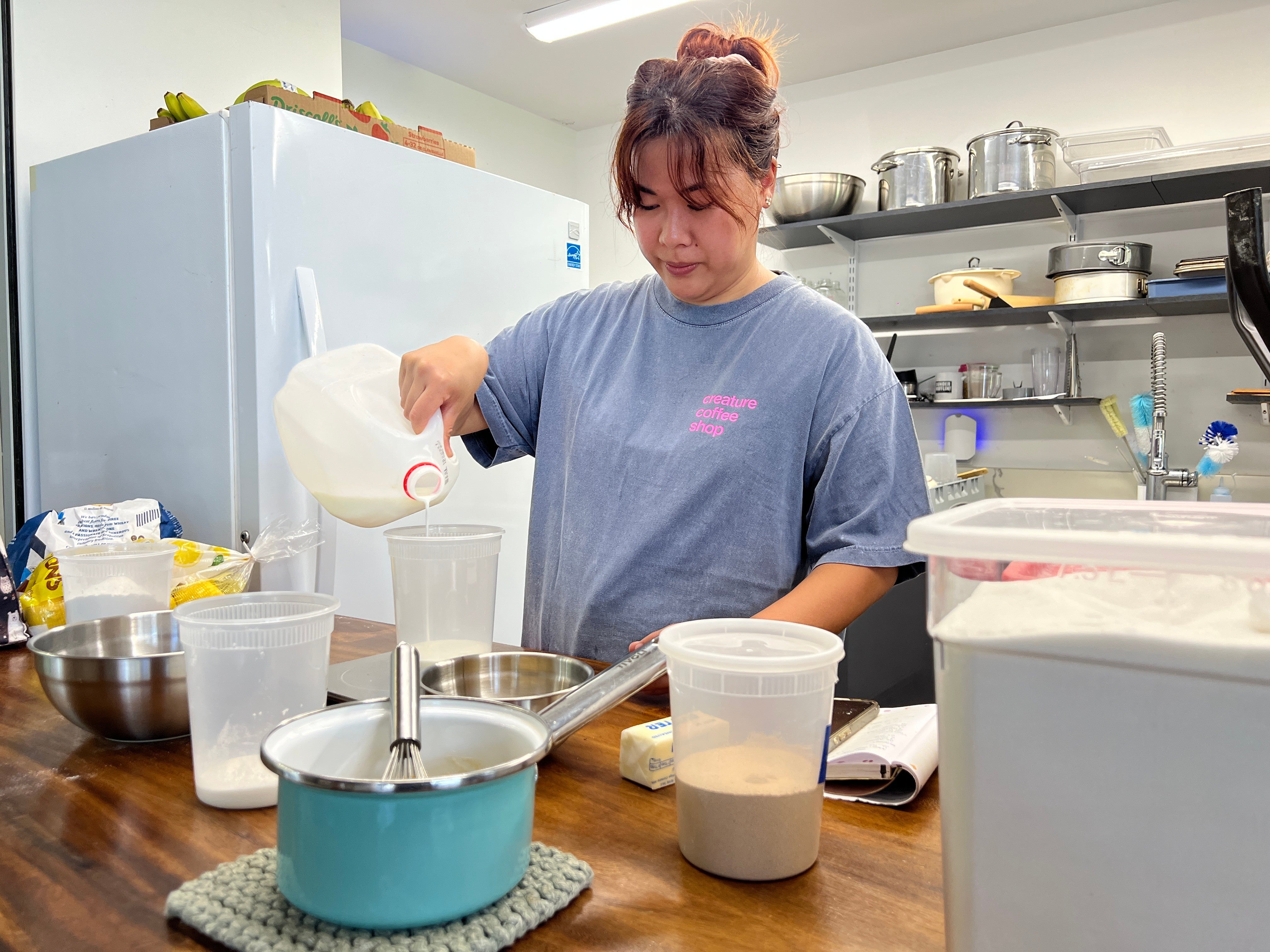
Amanda Tabadero, 28, a pastry chef on the Hawaiian island of Oahu, remembers buying Maui-grown strawberries and blueberries for $7.99 per pound in 2024. Now that they cost $11, she buys berries from California or Mexico at Costco for $5 when she bakes.
Tabadero also doubts she will buy lychee again anytime soon. Kaimana lychee, the variety grown in Hawaii, mostly comes from the Big Island. Tabadero said an iced coffee and a bag of fruit she recently purchased in Honolulu's Chinatown came to $30.
“It makes me sad,” Tabadero said. “I want to use local stuff.”