


 Africana55 Radio

This website uses cookies so that we can provide you with the best user experience possible. Cookie information is stored in your browser and performs functions such as recognising you when you return to our website and helping our team to understand which sections of the website you find most interesting and useful.
As I approach the border guard at Copenhagen airport, he asks what brings me to the city. I tell him that I’m actually here for Roskilde Festival, held in the capital’s quieter, less flashy neighbour. His previously stern face lights up with a grin. He’s a proud local, he tells me, and Roskilde is a beautiful place to live. He waves me through the gate, but only once he’s jokingly – I think – warned me to be quiet when I leave the festival site. I smile sheepishly and butcher a Danish tak in response.
I’m far from the only tourist arriving for the festival. Its origin story is the stuff of legend: in 1971, a group of Danish high school students set out to recreate the hippie values and folk-rock line-up of Woodstock, pooling their resources to build something special. The inaugural festival was a hit: some 12,000 fans bought tickets, with plenty more scaling the fences for a free glimpse of the action.
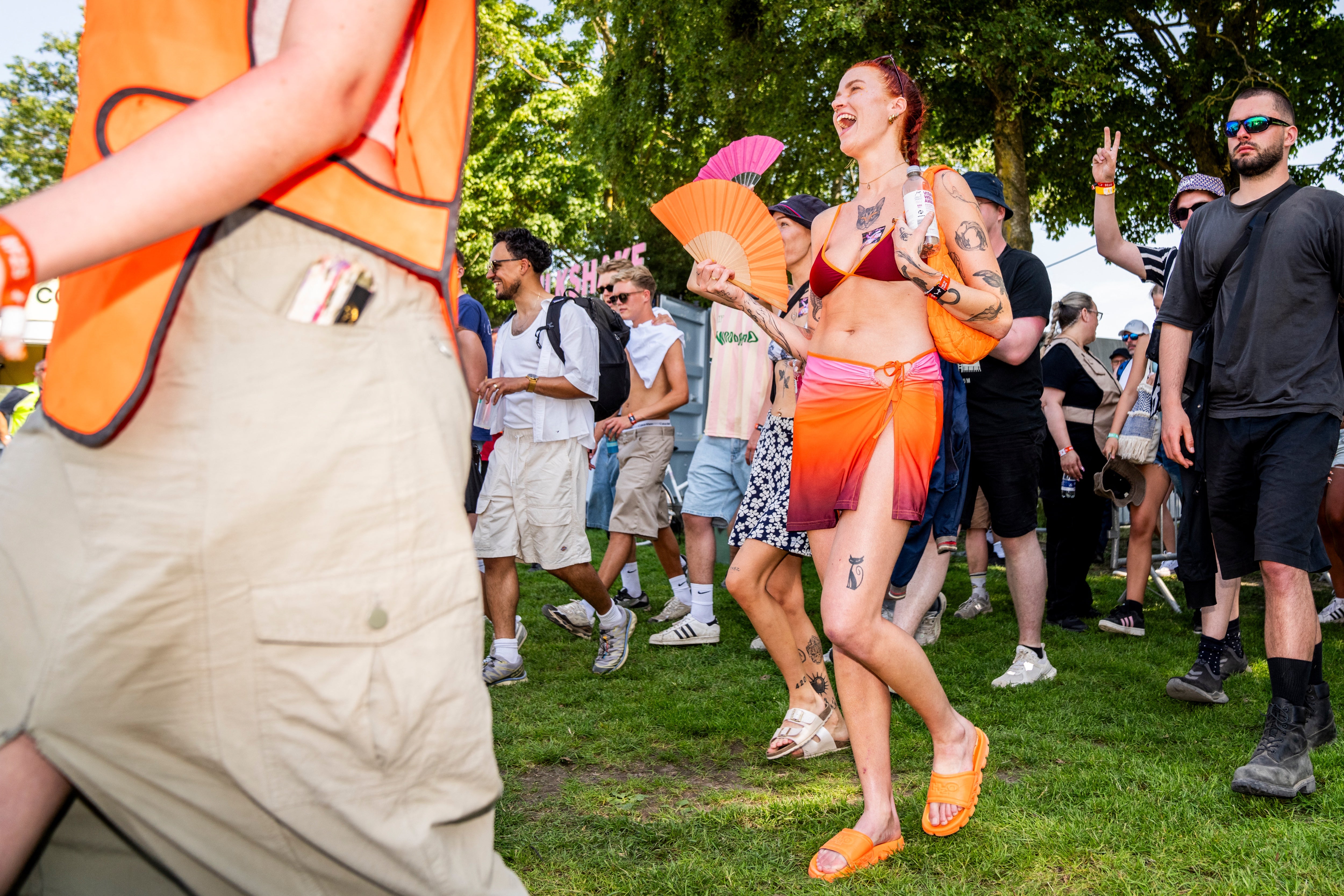
Fast-forward five decades and Roskilde Festival is a global heavyweight, with this year’s line-up including The Cure, Zara Larsson, David Byrne and Lily Allen. Attendance has swelled from 12,000 to more than 130,000. Better yet, it’s still non-profit. The festival generates millions of kroner annually for key projects in Roskilde city, focused primarily on youth wellbeing and creativity, as well as sustainability. The team is still crunching the 2026 numbers, but Kara Djurhuus, the festival’s Head of Philanthropy, tells me happily that this year looks set to be the most profitable yet.
Everyone I speak to at the festival tells me it’s rare for attendees to spend time in Roskilde itself. I’m guilty of this; it’s my third time and I’ve never been further than the nearby Lidl for a snack restock. I decide to extend my trip and explore, but ironically, I end up staying at the luxurious, sustainability-focused 1 Hotel Copenhagen as the closer hotels being fully booked for the festival. Luckily, it’s just a 30-minute train ride between the two cities, making Roskilde the perfect daytrip destination.
This is especially true for history buffs. Roskilde was a key sea port city during the Viking Age, and when Christian missionaries first trickled into Denmark throughout the 700s and 800s, they grew enchanted by Roskilde’s sacred springs, to which the kilde in its name refers.
Roskilde became the Danish capital in 1020, a reign which endured until 1416. The Royal Family made the city their permanent residence and construction plans for an elaborate, Romanesque cathedral were drawn up in the 1100s, before being abandoned and redrawn in the increasingly popular Gothic style. To this day, it’s the de facto mausoleum for Danish royals.
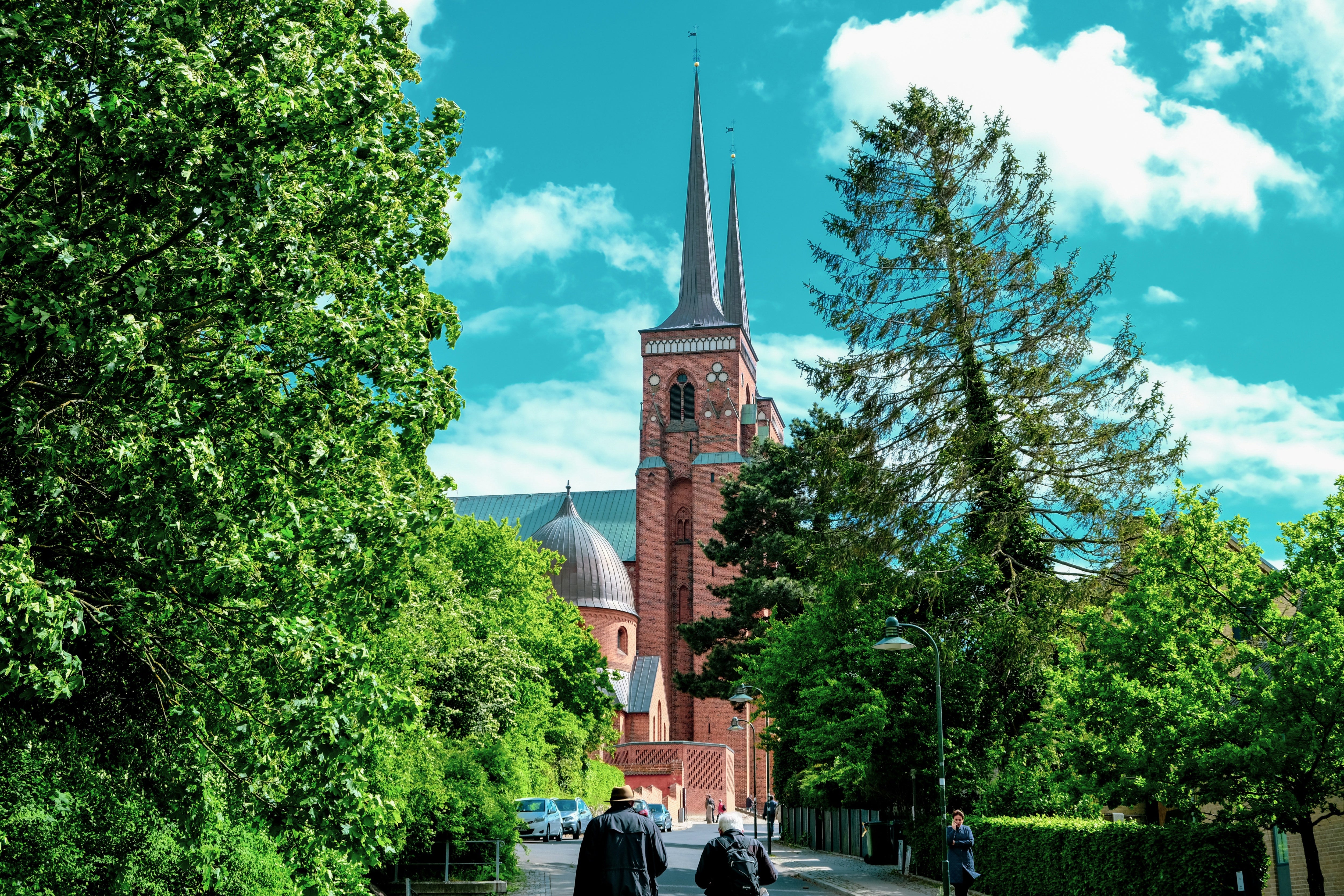
Traces of this storied past are still intact. Roskilde Cathedral remains the star of the city, designated in 1995 as a Unesco World Heritage Site. It’s an awe-inspiring structure, one of the oldest brick-built cathedrals in Northern Europe, made distinctive by its towering twin spires. It’s perched on a hill which overlooks the fjord and another tourist hotspot, the Viking Ship Museum.
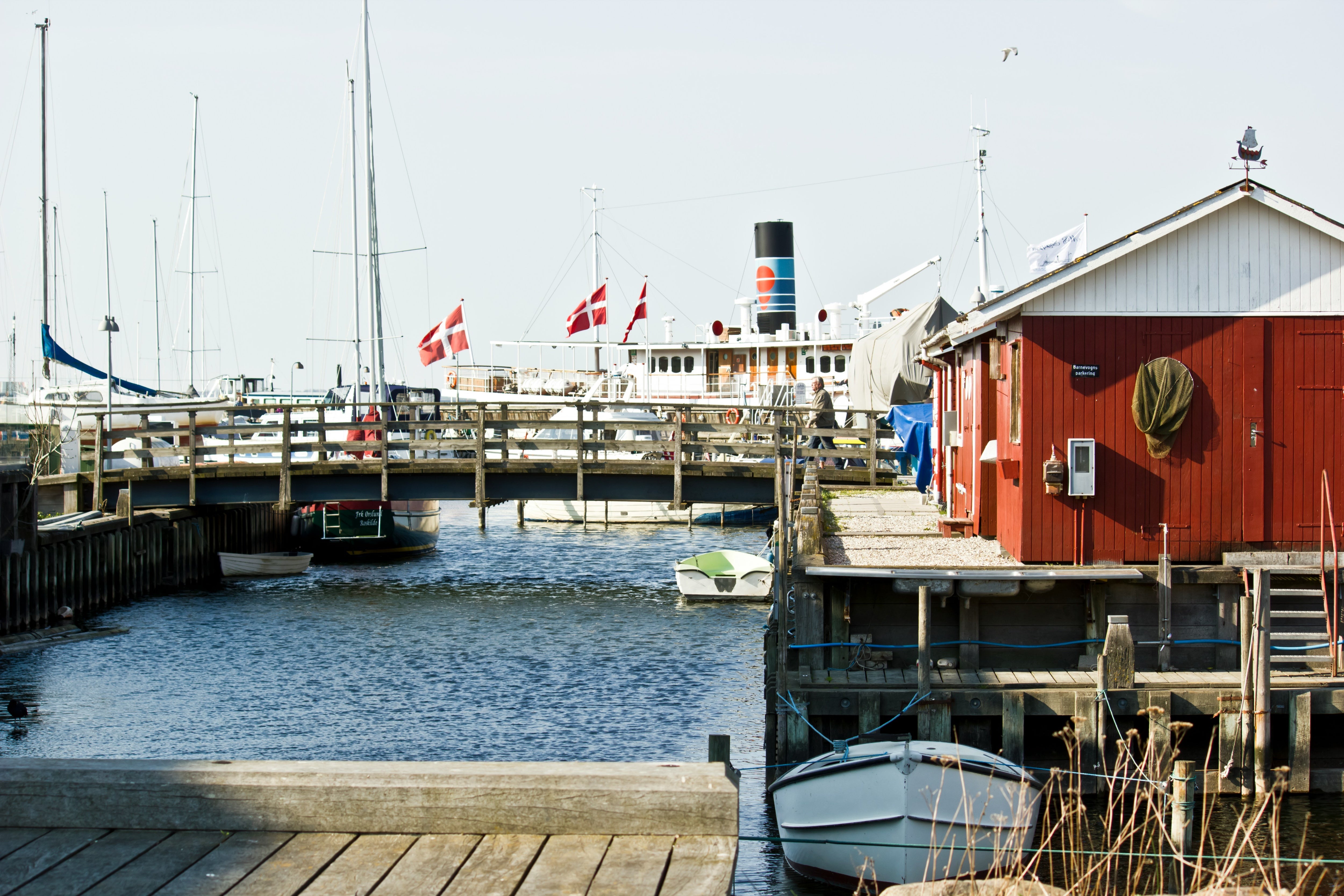
Usually, visitors can board a voyage across the fjord, but I’ve arrived to heavy rain and wind, so the ships stay docked. There’s still the museum itself, which houses the mammoth carcasses of immaculately-preserved Viking vessels, and children can join in dress-up games and watch engaging craft demonstrations. These techniques are being preserved by local people, whose toil is evident on the work-in-progress ships docked throughout the harbour.
The walk to the museum from the compact city centre is equally impressive. St John’s Spring, a holy water source whose current outflow dates back to 1834, provides a soothing aural backdrop for the brief downhill walk, which passes the cathedral and winds through Byparken, a spacious park soundtracked by streams and fountains. I take a scenic walk by the fjord in the drizzling rain, gazing in wonder at the rows of ships which offer a window into the past.
Read more: Discover Norway’s majestic fjords
Roskilde is also a city shaped by creativity. There are summer concerts in the cathedral and in Byparken. Local-favourites, such as Cafe Selvskab, offer strong coffee and delicious pastries alongside facilities for lino-printing and paper flower-making. There’s INSP!, a community hub which offers workshops as well as a bustling cafe, plus electronic music gigs. Roskilde Festival also played a key role in establishing the Rock Museum, whose interactive exhibitions are a tribute to Danish music history.
Cafes line the centre’s main streets, offering trays of smørrebrod piled high with creamy prawns and sliced eggs, but I head to Cafe 48 and eat a delicious club sandwich almost as large as my head topped off with a dollop of spicy curry mayo. I sink three cappuccinos as I read under the shelter of its awnings, waiting for the rain to pass. It’s worth noting here that being a Briton in Denmark is not cheap; you can expect to pay anywhere from £5-7 for a coffee, with an added non-EU card charge of 3 per cent.
After spending my trip walking between Roskilde and the festival site, sleeping in a tent and showering all too infrequently, I shed a tear of joy when I first stepped into the vetiver-scented lobby of 1 Hotel. Opened in 2025, it’s a masterpiece in sustainable design.
.jpg)
Lush, green plants flank the reclaimed wood staircase up to the lobby (also accessible by lift); there’s no single-use plastic in the rooms and energy-efficiency informs every design choice. There’s even a filtered water tap and touch-screen temperature control, a welcome break from the muggy summer heat. Here, the devil is in the details. At the breakfast buffet, for example, there’s a wooden bowl for discarded banana skins, which chefs transform into crispy vegan bacon.
The young woman at the front desk is upbeat and chatty: she found herself unexpectedly free last night and secured a last-minute Roskilde Festival ticket. She describes it as a kind of rite-of-passage for Danish teens, which makes perfect sense; the crowd skews young and, from what I’m told, local, as plenty of teenagers volunteer in exchange for free tickets.
We wax lyrical about Zara Larsson’s closing set and joke about my croaky voice, the result of too much screaming. I’m glad to have finally explored beyond the festival, and find myself romanticising the rainy fjord and cobbled streets of Roskilde. It’s a quaint, historic and quiet city, one that’s community-focussed and enthusiastically creative, thanks in no small part to the festival’s annual investment.
How to do it
There are regular flights from the UK to Copenhagen airport, and regular non-stop trains from the airport to Roskilde. Flights start at £75 return, and train tickets start at around £6.
Where to stay
1 Hotel Copenhagen is a luxurious, sustainability-focused hotel with various rooms available from around £318 per night.
Jake was a guest of Roskilde Festival and 1 Hotel Copenhagen